If You're Curious About These Questions...
You should listen to this audiobook
- What's the secret to breaking down 50 years of diplomatic barriers between the US and Cuba?
- Have you ever wondered why the US and Cuba have been at odds for so long, despite numerous secret negotiations?
- What if you could uncover the hidden history of back-channel diplomacy that's been shaping US-Cuba relations for decades?
Listen to Back Channel to Cuba — Free Audiobook
Loading player...
Key Takeaways from Back Channel to Cuba
- Discover how Fidel Castro's initial desire for an independent Cuba clashed with US financial interests, leading to a breakdown in early goodwill after a public snub by President Eisenhower.
- Understand the pivotal events that pushed Cuba into the arms of the Soviet Union, including the explosion of the La Coubre freighter and devastating US sugar embargoes.
- Learn how President John F. Kennedy maintained a fascinating dual-track policy toward Cuba, simultaneously green-lighting covert assassination plots while exploring secret diplomatic rapprochement.
- Find out how early back-channel diplomacy took surprising forms, such as Che Guevara using a gift of Cuban cigars to a US aide to signal a desire for normalized relations.
- Explore how the disastrous Bay of Pigs invasion forced the US to rely on ace negotiator James B. Donovan, using high-stakes prisoner release talks to keep diplomatic doors open during the Cold War.
Learning Tools
Reinforce what you learned from Back Channel to Cuba
Mind Map
Back Channel to Cuba
Origins of Hostility (1959-1961)+
Kennedy Era (1961-1963)+
LBJ, Nixon & Ford (1963-1976)+
Carter & Reagan (1977-1989)+
Post-Cold War (Bush Sr. & Clinton)+
21st Century (GW Bush & Obama)+
Core Themes of US-Cuba Relations+
Quiz — Test Your Understanding
Question 1 of 11
Why did relations between the United States and Fidel Castro's new government initially begin to sour in 1959?
Question 2 of 11
How did President John F. Kennedy approach relations with Cuba following the disastrous Bay of Pigs invasion?
Question 3 of 11
What unintended effect did the end of the Cuban Missile Crisis have on US-Cuba relations?
Question 4 of 11
Who were the key non-governmental figures that helped maintain back-channel negotiations during the Kennedy administration?
Question 5 of 11
Why did Secretary of State Henry Kissinger want to pursue secret back-channel talks with Cuba during the Nixon administration?
Question 6 of 11
What major international action by Cuba caused President Gerald Ford to halt all secret negotiations in 1975?
Question 7 of 11
What 1980 event severely damaged President Jimmy Carter's chances of re-election?
Question 8 of 11
How did domestic politics heavily influence President Bill Clinton's Cuba policy?
Question 9 of 11
What was the legislative consequence of the Cuban military shooting down two 'Brothers to the Rescue' planes in 1996?
Question 10 of 11
During President Obama's first term, what covert US action complicated relations and led to the arrest of an American citizen?
Question 11 of 11
According to the book, what is the primary underlying reason US-Cuba negotiations repeatedly fell apart over the last 50 years?
Back Channel to Cuba — Full Chapter Overview
- 1Recommendation
- 2Modern US-Cuba relations began with the 1959 revolution.
- 3By the end of Eisenhower’s presidency, formal diplomatic talks were no longer possible.
- 4Even as secret operations against Castro escalated, John F. Kennedy continued peaceful negotiations.
- 5The Cuban Missile Crisis stalled hopes for normalization, but prisoner negotiations kept the door open.
- 6James Donovan and an ambitious reporter kept the possibility of negotiations alive.
- 7John F. Kennedy’s assassination and the Johnson administration weakened ongoing negotiations.
- 8Richard Nixon refused to negotiate with Cuba, but Henry Kissinger saw things differently.
- 9Henry Kissinger tried to sustain back-channel talks during Gerald Ford’s difficult presidency.
- 10Jimmy Carter tried to open talks with Cuba, but another crisis ended his term badly.
- 11Ronald Reagan and George H.W. Bush negotiated with Cuba only when they had to.
- 12For Bill Clinton, politics shaped dealings with Cuba.
- 13After a deadly incident, Clinton ended his presidency with better US-Cuba relations.
- 14George W. Bush kept pressure on Cuba, while Obama advanced a different approach.
- 15Obama’s first term fell short on improving relations, but his second began with encouraging signs.
- 16Final summary
Back Channel to Cuba Summary & Overview
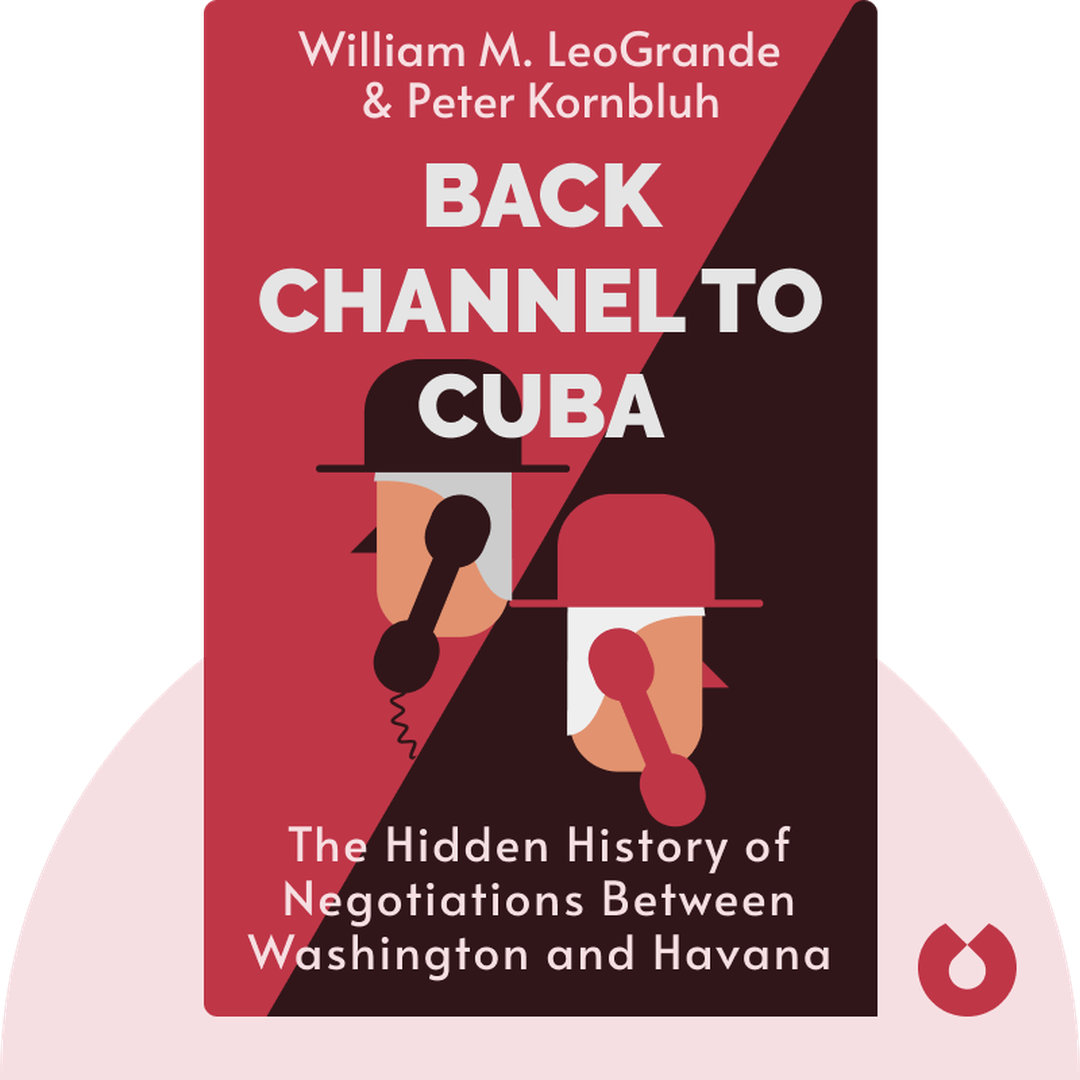
With unprecedented access to declassified documents, Back Channel to Cuba (2014) reveals the long and bumpy road of diplomatic relations between the United States and Cuba. Find out how 50 years of unsuccessful foreign policy have kept Cuba and the United States at odds despite the efforts of secret, back-channel negotiations that have been taking place since the Eisenhower administration.
Who Should Listen to Back Channel to Cuba?
- History buffs interested in one of the longest US conflicts
- Politicos wanting a behind-the-scenes look at foreign policy
- Aspiring diplomats in search of the dos and don’ts of diplomacy
Books Similar to Back Channel to Cuba
Readers who enjoyed this also liked these titles.