If You're Curious About These Questions...
You should listen to this audiobook
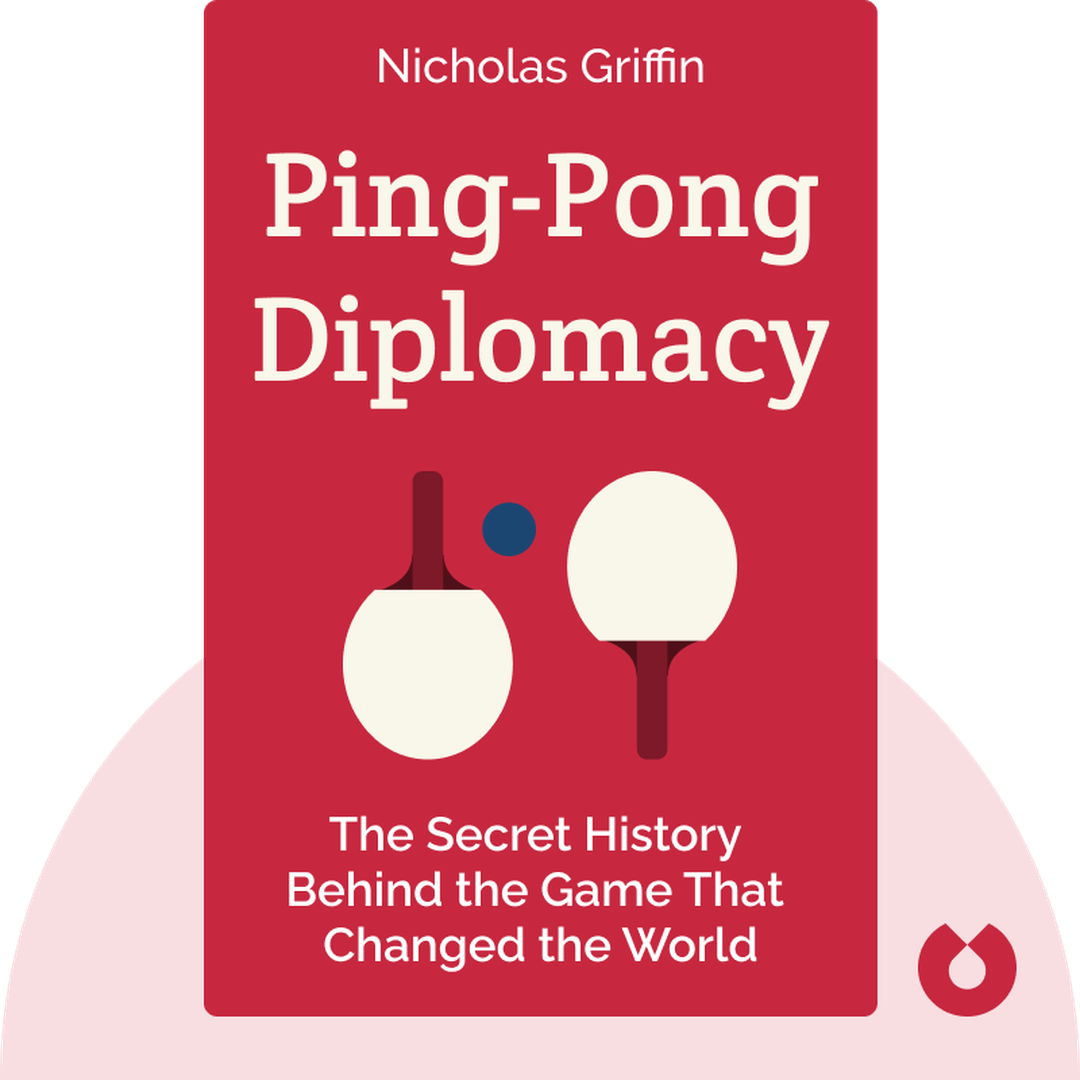
- Did you know that the secret to ending twenty years of diplomatic silence between two global superpowers was found not in an embassy, but on a ping-pong table?
- Have you ever wondered how a sport designed for leisure became a high-stakes weapon of political manipulation and international intrigue?
- Are you curious about the eccentric aristocrat who envisioned ping-pong as the ultimate tool for communist revolution?
Listen to Ping-Pong Diplomacy — Free Audiobook
Loading player...
Key Takeaways from Ping-Pong Diplomacy
- Discover how a simple after-dinner parlor game was transformed into a powerful tool for Cold War diplomacy between the United States and China.
- Uncover the bizarre true story of Ivor Montagu, an English aristocrat who single-handedly modernized table tennis while secretly operating as a Soviet spy.
- Learn how the modern rules of table tennis were created to bypass corporate trademarks and make the sport accessible to the working class.
- Understand how the grassroots spread of ping-pong by soldiers during World War Two laid the groundwork for its eventual use as an international political bridge.
- Explore how international sports federations were leveraged during the Cold War to promote a positive view of communist states and foster unexpected global alliances.
Learning Tools
Reinforce what you learned from Ping-Pong Diplomacy
Mind Map
Ping-Pong Diplomacy
Ivor Montagu's Influence+
China's Adoption of Ping-Pong+
1961 Beijing World Championships+
The 1971 Nagoya Encounter+
Diplomatic Triumphs+
Quiz — Test Your Understanding
Question 1 of 7
What were the two main passions of Ivor Montagu that ultimately shaped the global history of ping-pong?
Question 2 of 7
Why did Ivor Montagu dissolve the Ping-Pong Association and create the Table Tennis Association in its place?
Question 3 of 7
How did post-World War II Japan influence China's approach to table tennis?
Question 4 of 7
In the 1950s and 60s, what was Chairman Mao's primary political motivation for promoting table tennis internationally?
Question 5 of 7
During the 1961 Beijing world championships, what strategy did the Chinese team use to help secure victory?
Question 6 of 7
What was the catalyst for the diplomatic breakthrough between the US and China at the 1971 world championships in Japan?
Question 7 of 7
What was the ultimate geopolitical outcome of the Ping-Pong diplomacy initiated in 1971?
Ping-Pong Diplomacy — Full Chapter Overview
- 1Recommendation
- 2Young aristocrat Ivor Montagu grew deeply passionate about ping-pong and socialism.
- 3As a young man, Montagu standardized and promoted ping-pong.
- 4Young Montagu became a Soviet spy, using ping-pong to further the communist cause abroad strategically.
- 5Postwar Japan showed China that ping-pong could serve as a force for good.
- 6China’s leaders pushed table tennis as a path to international acceptance.
- 7In hard times, Beijing’s world championships projected a positive image of China abroad.
- 8The Chinese sought to contact Americans at the 1971 world championships tournament.
- 9The US table-tennis team’s trip to China was a pivotal political breakthrough.
- 10Ping-pong diplomacy brought enduring change to relations between the United States and China forever.
Ping-Pong Diplomacy Summary & Overview
Ping-Pong Diplomacy (2014) is the tale of how China and the United States ended two decades of diplomatic silence and antagonism. This breakthrough did not originate in embassies or politicians’ offices. Instead, it began at the ping-pong table. These blinks show how a sport shaped by a communist-leaning aristocrat changed politics forever.
Who Should Listen to Ping-Pong Diplomacy?
- Those with an eye for unusual history
- People who are interested in ping-pong and politics
- Sports fans interested in how their passion can change the world
Books Similar to Ping-Pong Diplomacy
Readers who enjoyed this also liked these titles.