Theme Song
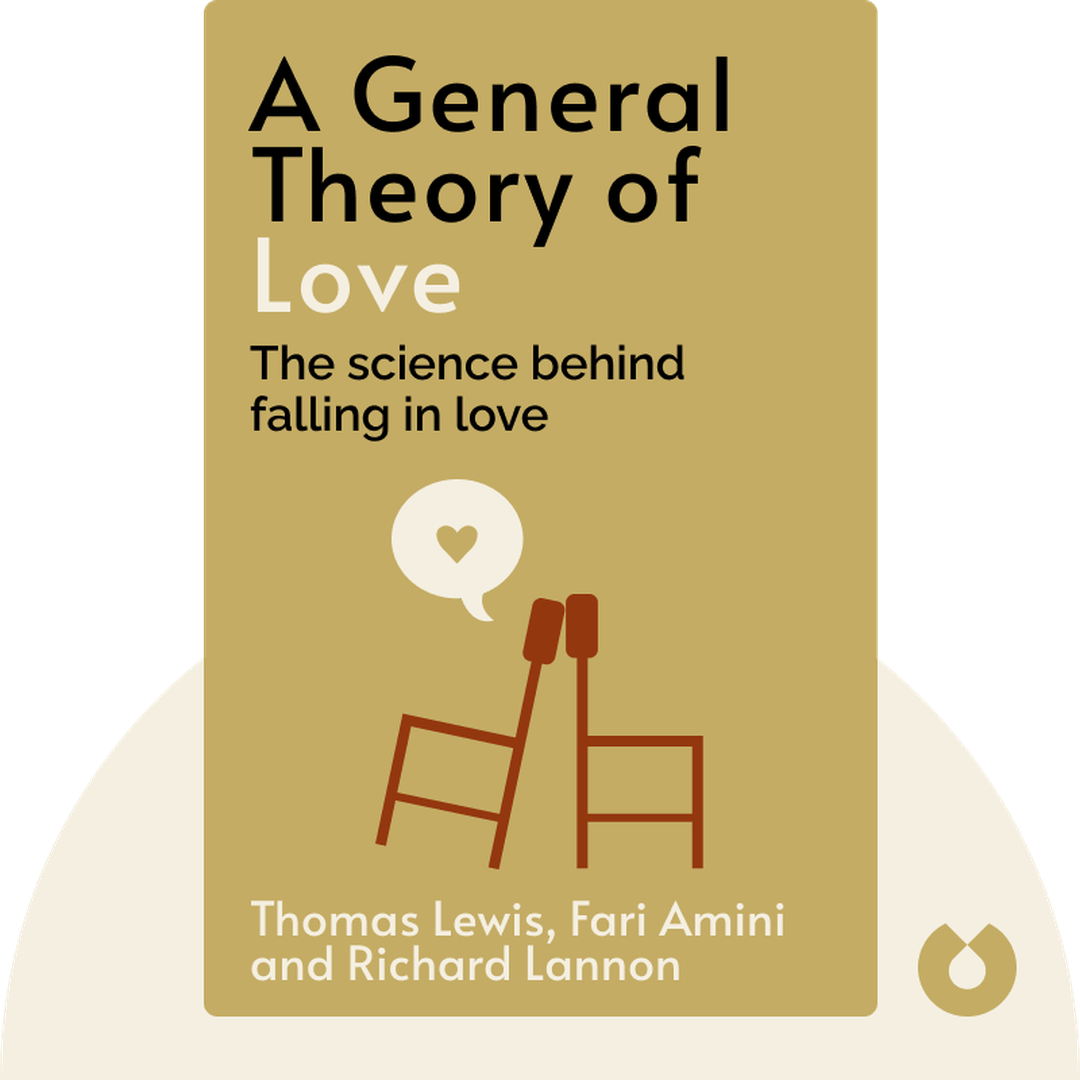
A General Theory of Love
Start ListeningDownload Try free on iPhoneScan to start in 5 seconds
Categories:
If You're Curious About These Questions...
You should listen to this audiobook
- Have you ever wondered why your childhood experiences still dictate how you feel and act in your adult relationships today?
- Did you know that love isn't just a feeling, but a complex biological process that physically reshapes your brain's wiring?
- What if you could unlock the secret to 'unlearning' old emotional programming to finally build the healthy, lasting connections you've always wanted?
Listen to A General Theory of Love — Cinematic Audio Edition
Loading player...
Key Takeaways from A General Theory of Love
- Understand how the evolutionary development of the human brain into three distinct sections—specifically the Limbic Brain—enabled mammals to form attachments and experience love.
- Discover why profound feelings of love and attachment are actually driven by neurotransmitters like serotonin and oxytocin, which regulate everything from letting go of bad relationships to lifelong monogamy.
- Learn how the brain's opiate system evolved to numb both physical and emotional suffering, revealing the tragic biological mechanism behind why some individuals resort to self-harm during trauma.
- Find out how interconnected neural memory networks called 'Attractors' govern your perception, actively influencing how you perceive your environment and process emotional experiences.
- Realize that love is a measurable biological process rather than just a poetic mystery, meaning you can use this scientific understanding to rewire your brain and cultivate healthier adult relationships.
Learning Tools
Reinforce what you learned from A General Theory of Love
Mind Map
A General Theory of Love
Brain Evolution & Structure+
The Chemistry of Attachment+
Emotional Programming+
Psychotherapy & Limbic Revision+
Being in Love vs. Loving+
Quiz — Test Your Understanding
Question 1 of 8
According to the text, what evolutionary advantage did the development of the Limbic Brain provide to mammals?
Question 2 of 8
What did Thomas Insel’s study of two species of voles reveal about the neurotransmitter oxytocin?
Question 3 of 8
Based on the book's explanation of human evolution, why do some teenagers who experience severe emotional trauma resort to physical self-harm?
Question 4 of 8
How does the concept of "Attractors" explain our ability to easily read messy handwriting or autocorrect typos?
Question 5 of 8
What does the text suggest about "limbic regulation" in adults?
Question 6 of 8
According to the authors, what is the most critical factor for successful psychotherapy?
Question 7 of 8
What is the fundamental difference between "being in love" and "loving," as described in the text?
Question 8 of 8
From a neurological perspective, why do people who lose a long-term partner often say, "A part of me is gone"?
A General Theory of Love — Full Chapter Overview
- 1Recommendation
- 2The human brain’s evolutionary history is reflected in its three main parts.
- 3Feelings of attachment arise from brain neurotransmitters like serotonin and oxytocin.
- 4Neurotransmitters called opiates help ease both physical and emotional pain.
- 5Our memories and emotions rely on brain connections known as Attractors.
- 6Attachment is essential for healthy emotional development.
- 7Long-term therapy can improve our brains by strengthening emotional connection.
- 8The cultural myth that being in love and loving are the same leads to disappointment.
- 9Two loving people’s brain structures change so they begin to experience the world similarly.
- 10Final summary
A General Theory of Love Summary & Overview
In A General Theory of Love, three psychiatrists take a scientific look at the phenomenon of love. Arguing that our emotional experience in adulthood is profoundly influenced by our childhood relationships, the authors suggest ways to undo this emotional “programming” and establish healthier relationships with friends and romantic partners.
Who Should Listen to A General Theory of Love?
- Anyone interested in the psychology of love
- Anyone interested in neuroscience
- Anyone who wants to know what love is
Books Similar to A General Theory of Love
Readers who enjoyed this also liked these titles.