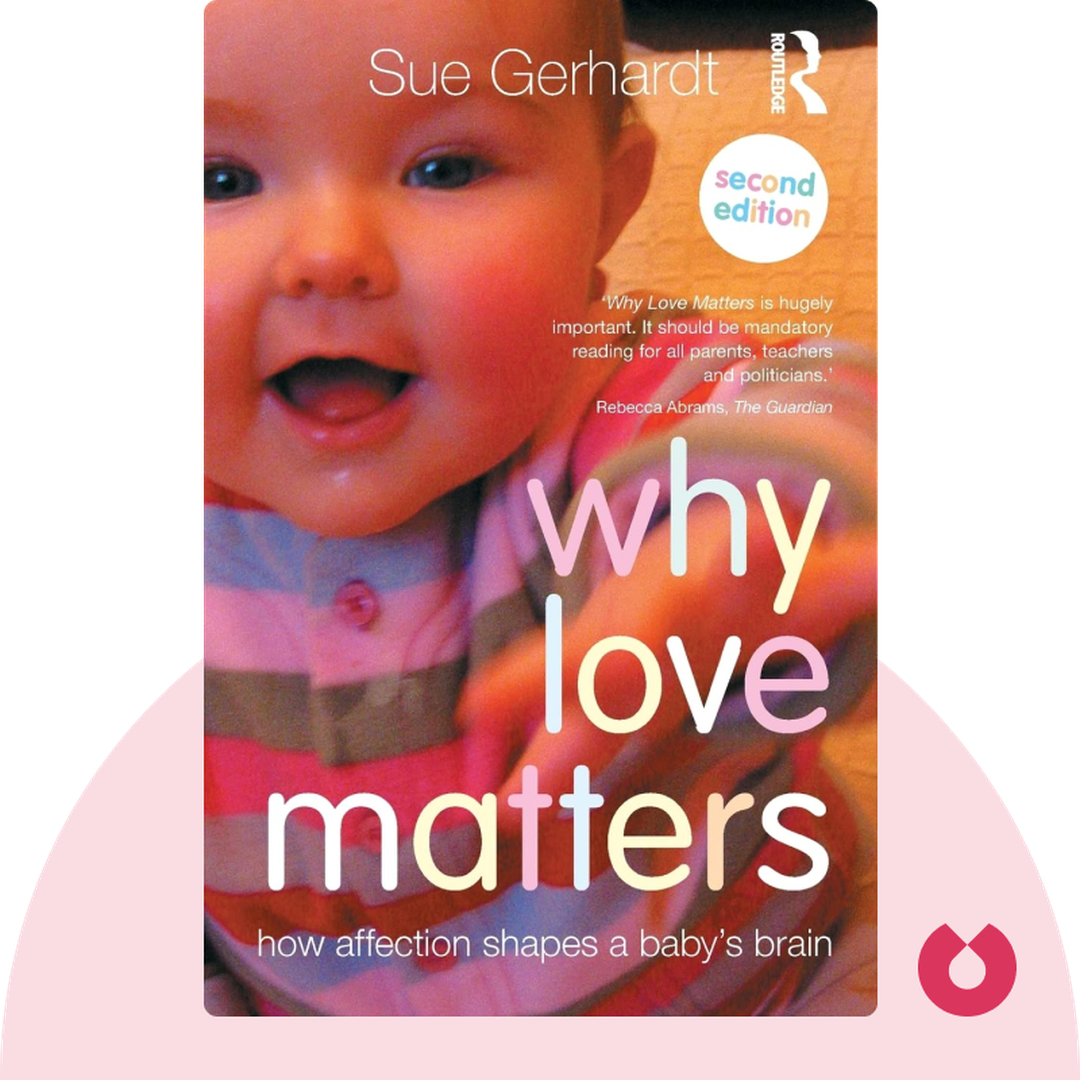
If You're Curious About These Questions...
You should listen to this audiobook
- Did you know that the way a baby is loved can actually physically shape the biological architecture of their developing brain?
- Have you ever wondered why certain adult psychological struggles can be traced back to experiences we had before we were even old enough to remember them?
- What if the secret to a child's future emotional resilience lies in a surprising "co-production" between their genetics and their very first social interactions?
Listen to Why Love Matters — Cinematic Audio Edition
Loading player...
Key Takeaways from Why Love Matters
- Understand how a baby's highly plastic brain is shaped in the first two years, meaning early love and care permanently wire their neurological patterns.
- Discover why humans possess a three-part brain, and how the crucial social brain responsible for empathy and complex emotions only develops after birth.
- Learn how the orbitofrontal cortex, the center for emotional intelligence, relies entirely on early social experiences to grow and can be physically stunted by neglect.
- Find out how physical touch and loving eye contact synchronize a baby's nervous system with their caregiver's, laying the foundation for lifelong emotional control.
- Explore the biochemical chain reaction triggered by mutual gazing, which releases beta-endorphins into the brain and actively stimulates an infant's cognitive development.
Learning Tools
Reinforce what you learned from Why Love Matters
Mind Map
Why Love Matters
Brain Evolution & The Social Brain+
The Orbitofrontal Cortex+
The Biochemistry of Pleasure+
Shaping the Neural Network+
The Impact of Stress+
The Contagion of Stress+
Links to Mental Health+
Quiz — Test Your Understanding
Question 1 of 8
What is Sue Gerhardt’s conclusion regarding the 'nature versus nurture' debate in shaping who we are?
Question 2 of 8
According to the book, what is unique about the 'social brain' compared to the reptilian and mammalian brains?
Question 3 of 8
What did researchers discover when examining the brain scans of three-year-olds from Romanian orphanages?
Question 4 of 8
When a baby gazes into a caregiver's eyes, a biochemical chain reaction occurs. Which of the following is a direct result of this interaction?
Question 5 of 8
What does the concept of 'pruning' refer to in the context of a baby's cognitive development?
Question 6 of 8
How does a baby's early exposure to positive touch and holding affect their physiological stress management later in life?
Question 7 of 8
What did the 1994 monkey study on 'unpredictable foraging' reveal about the transmission of stress from parent to child?
Question 8 of 8
According to the text, how is social deprivation during babyhood linked to adult depression?
Why Love Matters — Full Chapter Overview
- 1Recommendation
- 2The brain evolved in stages, and the social brain was the last to develop.
- 3A baby's brain development is shaped by the quality of social interaction they receive.
- 4Babies love to touch and gaze at their carers, and these senses make social contact joyful.
- 5The brain’s neural wiring is shaped by social patterns.
- 6The human stress response is helpful, but it can also harm the health of adults and babies.
- 7Babies rely on carers for survival, so their absence is intensely upsetting.
- 8Stressed parents tend to have stressed children.
- 9Social deprivation in babyhood is associated with later-life depression.
Why Love Matters Summary & Overview
Why Love Matters (2004) is a study of how our early years shape who we become later in life. But this isn’t about rehashing the old nature-versus-nurture debate. As we’ll see in these blinks, the weight of scientific evidence points to a much more fascinating conclusion: that we’re “co-produced” by genetics and social experience during babyhood. This means that many of the social and psychological problems that affect us as adults can be traced back to these formative years.
Who Should Listen to Why Love Matters?
- Mental health professionals
- Parents with babies or toddlers
- Would-be mothers and fathers
Books Similar to Why Love Matters
Readers who enjoyed this also liked these titles.