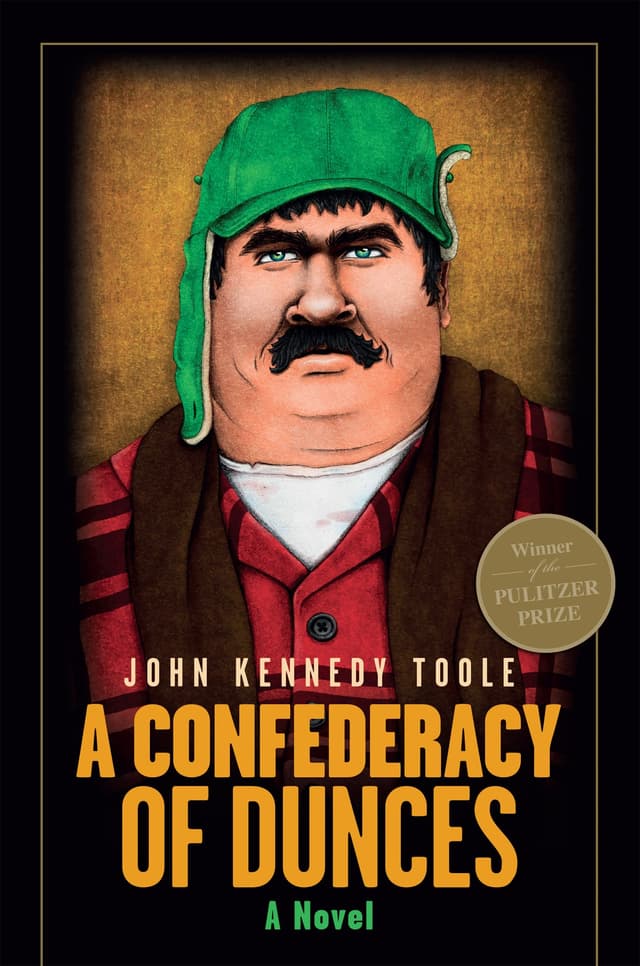
John Kennedy Toole wrote *A Confederacy of Dunces* in the early 1960s, drafting the manuscript during his military service in Puerto Rico and completing it upon his return to his native New Orleans. The novel emerged against the backdrop of a rapidly changing America, a decade defined by the burgeoning civil rights movement, the rise of the counterculture, and sweeping modernization. However, rather than embracing this progressive zeitgeist, Toole created a protagonist, Ignatius J. Reilly, who vehemently rejected modernity in favor of medieval theology and rigid geometry. The narrative brilliantly captures the distinct, insular socio-cultural fabric of mid-century New Orleans, preserving its unique dialects, eccentricities, and fading working-class neighborhoods before they were homogenized by late-twentieth-century commercialism.
The novel's publication history is as significant as its content, marked by profound tragedy. Repeatedly rejected by publishers who found the manuscript brilliant but fundamentally plotless, a despondent Toole took his own life in 1969. The novel would have been lost to history had his mother not relentlessly championed it, eventually persuading acclaimed author Walker Percy to read the smudged carbon copy. Published posthumously in 1980, it stunned the literary world and won the Pulitzer Prize for Fiction in 1981. Its arrival was a revelation; at a time when American fiction was heavily influenced by stark minimalism and serious postmodernism, Toole’s sprawling, picaresque farce defied all contemporary conventions. Today, *A Confederacy of Dunces* endures as a masterpiece of tragicomedy and Southern literature. Ignatius J. Reilly remains one of the most indelible antiheroes in the American literary canon, and the