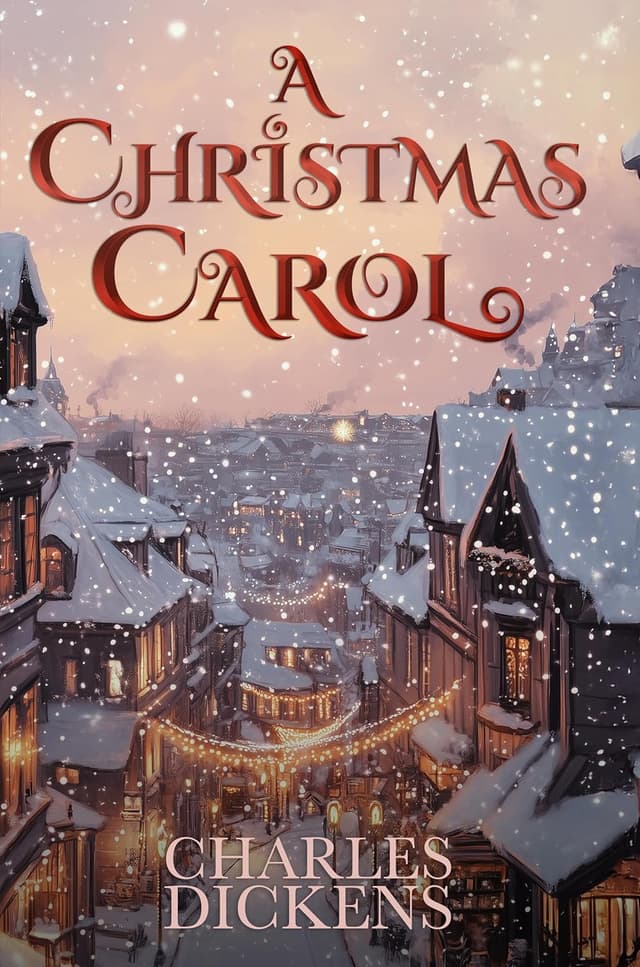
Charles Dickens wrote *A Christmas Carol* in London over a frantic six-week period in late 1843, publishing it on December 19 of that year. The novella emerged during the tumultuous early years of the Victorian era, a period defined by the rapid expansion of the Industrial Revolution. While this era brought immense wealth to the British upper classes, it also subjected the working poor to brutal living conditions, exploitative child labor, and the punitive constraints of the 1834 Poor Law, which forced the destitute into grueling workhouses. Profoundly affected by a parliamentary report on child labor and a visit to a school for impoverished children, Dickens intended his story to serve as a "sledgehammer" blow on behalf of the poor.
Upon its publication, the book was both highly significant and socially provocative. It served as a scathing critique of Malthusian economic theories, which viewed the impoverished as an expendable "surplus population." By humanizing the working class through the Cratchit family and exposing the moral bankruptcy of unchecked greed through Ebenezer Scrooge, Dickens confronted the elite's indifference to systemic poverty. While some conservative critics viewed its anti-capitalist undertones as dangerously radical, the public eagerly embraced its poignant message of redemption and social responsibility.
The novella's lasting impact on literature and society is virtually unparalleled. Beyond cementing Dickens's legacy as a master of social commentary, *A Christmas Carol* fundamentally shaped the modern celebration of Christmas. It revived fading seasonal traditions and popularized the concept of the holiday as a family-centered festival defined by secular generosity, festive food, and compassion for the less fortunate. Furthermore, it permanently embedded character archetypes like "Scrooge" and the phrase "Merry Christmas" into the global cultural lexicon, leaving an enduring legacy of goodwill that transcends literature.