If You're Curious About These Questions...
You should listen to this audiobook
- Have you ever wondered if the people you respect most are secretly harboring a darkness that would shatter your faith in humanity?
- Are you curious about the terrifyingly thin line that separates religious devotion from the most forbidden forms of temptation?
- What if a single night of curiosity could reveal a secret about your community that makes it impossible to ever trust anyone again?
Listen to Young Goodman Brown — Free Audiobook
Loading player...
Key Takeaways from Young Goodman Brown
- Discover how Hawthorne uses a dark, supernatural allegory to critique the hypocrisy of early American Puritan society and its superficial moral codes.
- Understand the dangers of religious extremism and sanctimony, inspired by the author's real-life family connection to the infamous Salem witch trials.
- Uncover the chilling truth that society's most respectable and pious figures often hide dark secrets, revealing the stark disconnect between public virtue and private reality.
- Learn why acknowledging humanity's inherent capacity for temptation and evil is essential to avoiding a shallow, insincere life built on double standards.
- Explore how an obsession with the hidden sins of others destroys trust, as seen in Goodman Brown's tragic descent into a bitter, isolated, and empty existence.
Learning Tools
Reinforce what you learned from Young Goodman Brown
Mind Map
Young Goodman Brown
Context & Purpose+
Core Themes+
The Journey (Plot)+
The Aftermath & Consequences+
Key Analytical Insights+
Quiz — Test Your Understanding
Question 1 of 6
What primarily motivated Nathaniel Hawthorne to write 'Young Goodman Brown'?
Question 2 of 6
What shocking revelation does the mysterious man share with Goodman Brown about Brown's ancestors?
Question 3 of 6
According to the provided analysis, what is the central theme Hawthorne illustrates through the events in the forest?
Question 4 of 6
What causes the dark, pagan scene in the forest to suddenly vanish?
Question 5 of 6
How does Goodman Brown's experience in the forest ultimately affect the rest of his life?
Question 6 of 6
What does the text's analysis imply about Goodman Brown's uncertainty over whether the forest events were real or a dream?
Young Goodman Brown — Full Chapter Overview
- 1Recommendation
- 2The Pink Ribbon in the Dark Woods
- 3Salem’s Inheritance of Guilt
- 4Sons, Fathers, and the Price of Leaving Home
- 5Veils, Maypoles, and the Fear of Joy
- 6Youth, Beauty, and the Fatal Experiment
- 7Railroads to Heaven and Bonfires of the World
- 8Artists, Machines, and the Broken Butterfly
- 9Poisoned Love and the Unpardonable Sin
- 10The Tombstone Without Hope
Young Goodman Brown Summary & Overview
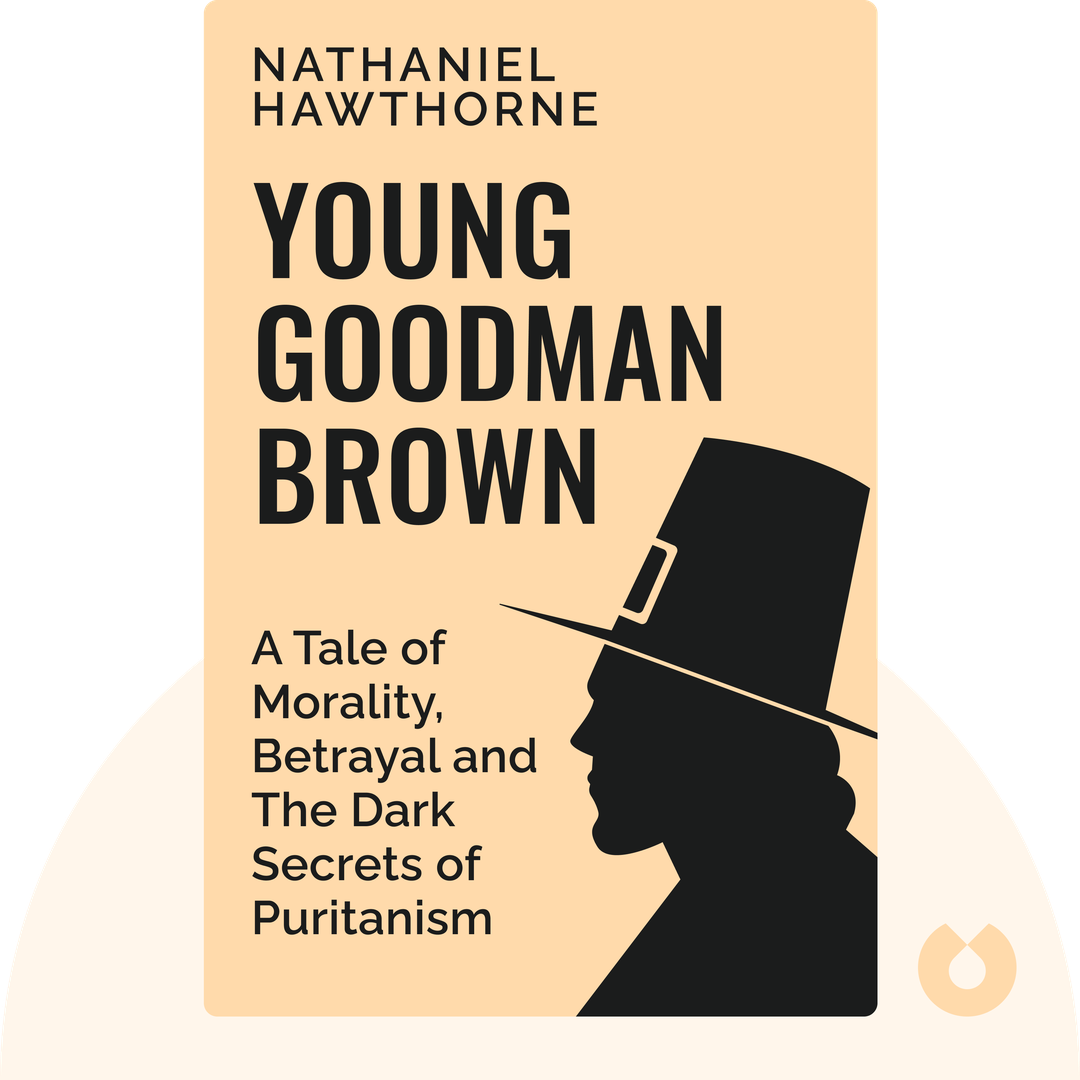
“Young Goodman Brown” (1835) is a short story that thrusts us into a nightmarish world of witchcraft, religion, sin, and temptation. Composed as an allegory – a story that acts as a thin wrapper for an author’s intended message or meaning – this bite-size tale has much to say on human nature, Christianity, hypocrisy, and our ideas of community.
Who Should Listen to Young Goodman Brown?
- Horror lovers
- Soul-searchers interested in human nature
- Witches, wizards, and practitioners of the occult
Books Similar to Young Goodman Brown
Readers who enjoyed this also liked these titles.