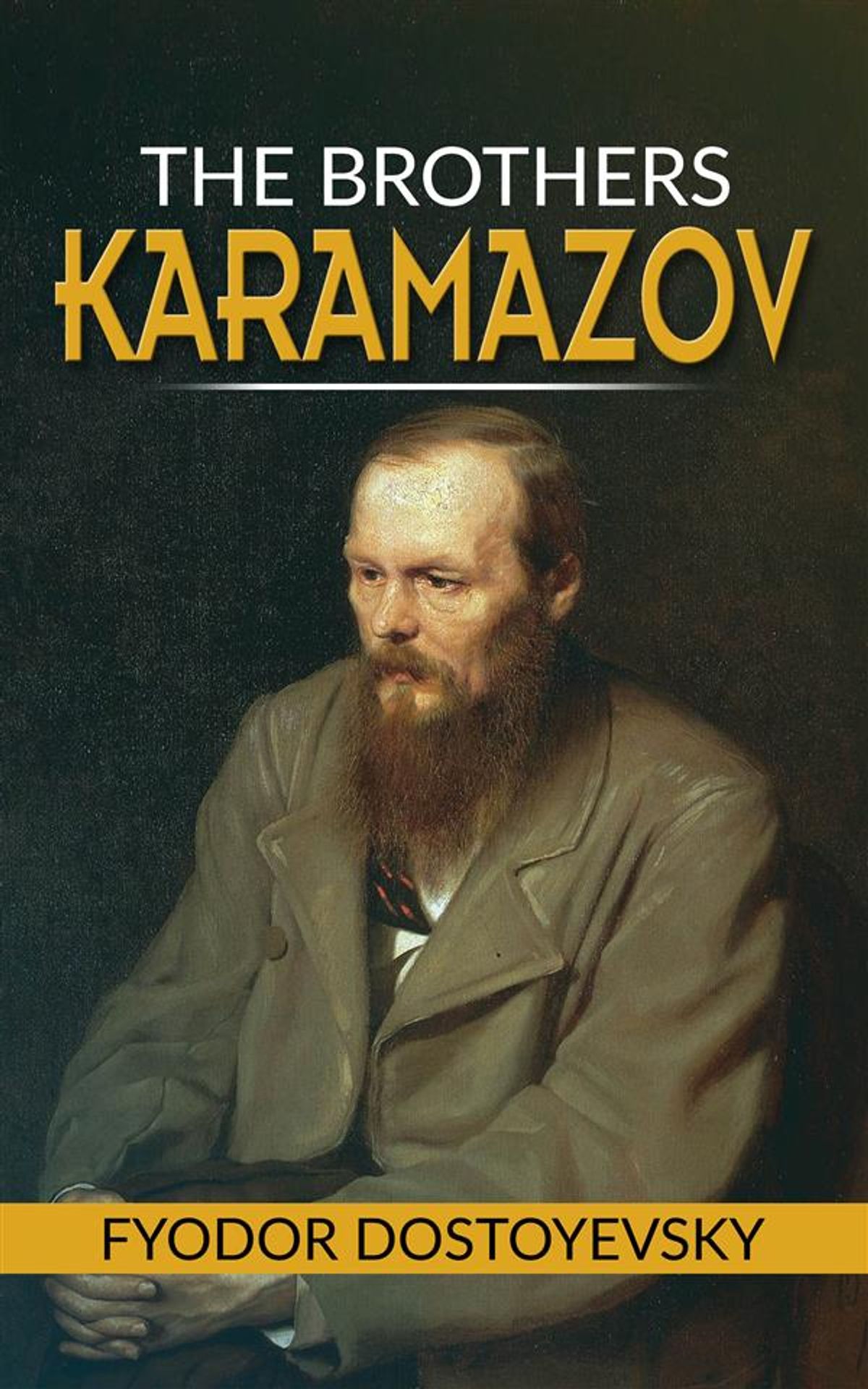
The Brothers Karamazov
Start ListeningDownload Try free on iPhoneScan to start in 5 seconds
Categories:
If You're Curious About These Questions...
You should listen to this audiobook
- Why does the famous 'Grand Inquisitor' story argue that the gift of free will is actually humanity's greatest curse, and how does this challenge traditional religious thought?
- How does the brutal murder of Fyodor Karamazov serve as a chilling test of Ivan’s theory that without God, 'right and wrong do not exist'?
- Father Zosima preaches that moral responsibility is an interconnected web where everyone shares the blame for the sins of others. How does the shocking true identity of Fyodor's killer prove this theory right?
Listen to The Brothers Karamazov — Cinematic Audio Edition
Loading player...
Key Takeaways from The Brothers Karamazov
- Dostoyevsky explores the terrifying implications of a godless world, illustrating how the belief that morality is a mere human construction can directly inspire horrific crimes.
- The novel presents free will as an excruciating burden, suggesting that humanity constantly agonizes over the freedom to choose between moral goodness and sinful temptation.
- Moral responsibility operates as a vast, interconnected web, meaning every individual bears a share of the blame for the actions and sins of those around them.
- Truth and love are inextricably linked; lying to oneself inevitably breeds a deep suspicion that destroys a person's capacity to genuinely love others.
- By contrasting the deeply spiritual Alyosha with the fiercely logical Ivan, the story warns that cold rationalism and skepticism ultimately lead to profound isolation and madness.
Learning Tools
Reinforce what you learned from The Brothers Karamazov
Mind Map
The Brothers Karamazov
Main Characters & Symbols+
Core Philosophical Themes+
Key Plot Mechanics+
Consequences & Resolution+
Quiz — Test Your Understanding
Question 1 of 6
According to the text, what is one of Dostoyevsky's principal techniques for exploring philosophical themes in the novel?
Question 2 of 6
What philosophical stance does the character Ivan represent in the novel?
Question 3 of 6
What key concept regarding moral responsibility does Father Zosima explain to the characters?
Question 4 of 6
In Ivan's poem "The Grand Inquisitor," why does the Inquisitor reprimand Christ?
Question 5 of 6
How does the murder of Fyodor Karamazov ultimately validate Father Zosima's belief in shared moral responsibility?
Question 6 of 6
What is the final fate of Dmitri at the end of the novel?
The Brothers Karamazov — Full Chapter Overview
- 1Recommendation
- 2It’s a matter of family
- 3Tension erupts in a sacred place
- 4Atheism and the heavy weight of free will
- 5Guilt and retribution
The Brothers Karamazov Summary & Overview
The Brothers Karamazov (1879) follows the events, machinations, and tragedies of the Karamazov family over the course of four critical days in an unnamed town in Russia. As tensions within the household simmer and seeth into a stunning climax, we are treated to one of the most penetrating explorations of religion, faith, and doubt in all of world literature.
Who Should Listen to The Brothers Karamazov?
- Anyone interested in deep themes like philosophy and religion
- Agnostics looking for spiritual guidance
- People who don’t have time to read a 900-page novel
Books Similar to The Brothers Karamazov
Readers who enjoyed this also liked these titles.