If You're Curious About These Questions...
You should listen to this audiobook
- Did you know that the 1992 election was actually the secret birthplace of the populist movement that is currently reshaping the Republican Party?
- Have you ever wondered how a billionaire outsider and a few radical thinkers managed to break the traditional political "clock" and change the rules of American power forever?
- Are you curious about the specific cultural and economic forces that made millions of Americans turn away from the establishment and toward a new, more authoritarian brand of conservatism?
Listen to When the Clock Broke — Free Audiobook
Loading player...
Key Takeaways from When the Clock Broke
- Learn how the ideological seeds of modern Trumpism were planted during the 1992 election by a radical alliance of extreme right-wingers and libertarians.
- Discover why the surprising political rise of former Ku Klux Klan leader David Duke in 1990s Louisiana signaled a national shift toward grievance-based politics.
- Understand the concept of 'Middle American Radicals' and how paleoconservative thinkers weaponized this demographic's disillusionment to reject the traditional political establishment.
- Find out how Pat Buchanan's 1992 'America First' campaign against George H. W. Bush mainstreamed right-wing populism by shedding the extreme baggage of neo-Nazism.
- Explore how conservative talk radio pioneers like Rush Limbaugh channeled the loneliness and alienation of middle America into a unified, anti-establishment political movement.
Learning Tools
Reinforce what you learned from When the Clock Broke
Mind Map
When the Clock Broke
The 1992 Political Climate+
Rise of Paleoconservatism+
Architects of Populism+
The Culture Wars+
The Authoritarian Impulse+
The Long Tail of 1992+
Quiz — Test Your Understanding
Question 1 of 7
What was the core message of libertarian leader Murray Rothbard to the conservative movement in 1992?
Question 2 of 7
How did paleoconservative thinker Sam Francis interpret the political rise of former KKK Grand Wizard David Duke?
Question 3 of 7
Why was Pat Buchanan's 1992 primary challenge against George H. W. Bush considered a significant turning point in conservative politics?
Question 4 of 7
What underlying societal trend did figures like talk radio host Rush Limbaugh and third-party candidate Ross Perot successfully tap into?
Question 5 of 7
How did Bill Clinton attempt to capture the political middle and regain momentum during the early battles of the culture wars?
Question 6 of 7
According to the book, why did paleoconservatives like Sam Francis and Murray Rothbard look to fictional and real-life mafia figures for inspiration?
Question 7 of 7
Following the 1992 election, what strategy did Sam Francis propose to challenge established liberal dominance?
When the Clock Broke — Full Chapter Overview
- 1Recommendation
- 2Something hides in the Louisiana swamps
- 3A Duke minus the baggage
- 4Perot over the airwaves
- 5Apocalypse: L.A.
- 6First days of the culture war
- 7A Don we could believe in
- 8The long shadow of the 1992 election
When the Clock Broke Summary & Overview
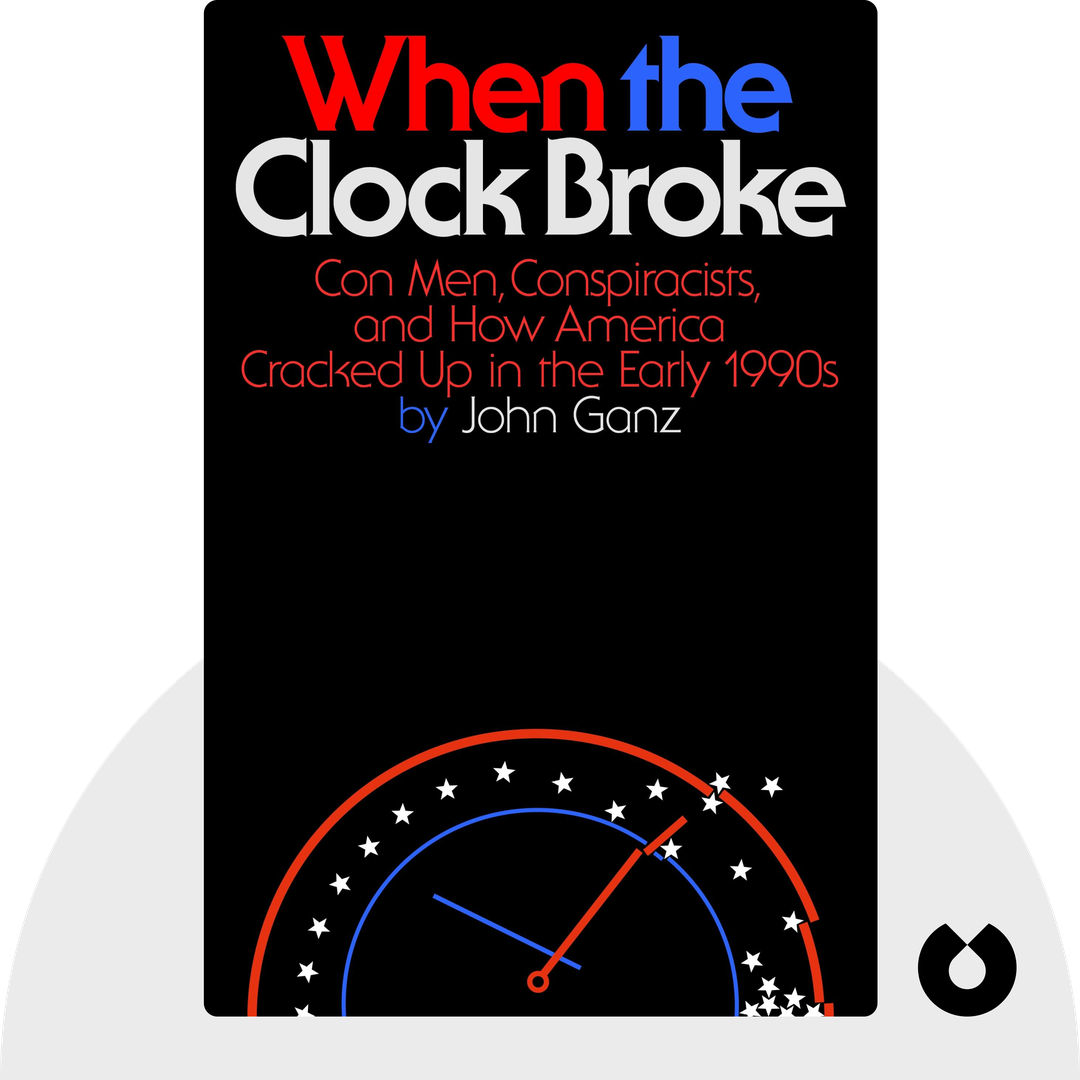
When the Clock Broke (2024) delivers a fascinating look into the years leading up to the 1992 Presidential Election, between Bill Clinton, Ross Perot, and the incumbent George H.W. Bush. It reveals how a relatively small movement took root and began to transform the Republican Party into a more populist and authoritarian version of conservatism. It also shows why this approach appeals to the disaffected groups in America.
Who Should Listen to When the Clock Broke?
- History buffs
- Political junkies
- Cultural critics
Books Similar to When the Clock Broke
Readers who enjoyed this also liked these titles.