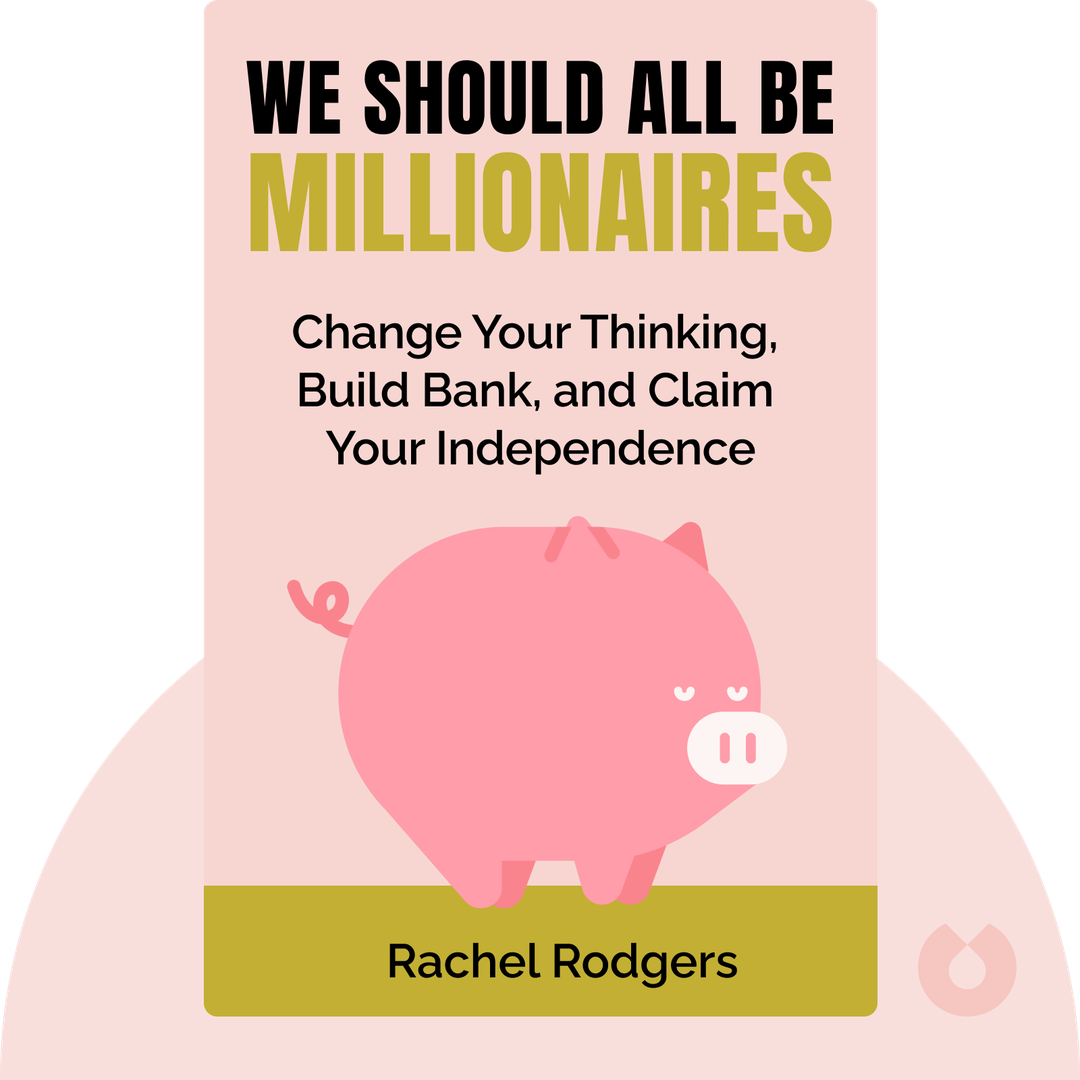
We Should All Be Millionaires
Start ListeningDownload Try free on iPhoneScan to start in 5 seconds
Categories:
If You're Curious About These Questions...
You should listen to this audiobook
- Did you know that the world actually becomes a better place when women hold more wealth—and why has this power been historically kept from you?
- Have you ever wondered why so many hardworking women stay underpaid, and what simple shifts in mindset could unlock your path to becoming a millionaire?
- What if you could silence your inner critic and start making 'million-dollar decisions' that radically transform your financial future today?
Listen to We Should All Be Millionaires — Cinematic Audio Edition
Loading player...
Key Takeaways from We Should All Be Millionaires
- Discover how to identify and rewrite the damaging, self-limiting stories women are taught about money, such as the myth that wealth requires working yourself to death.
- Learn why being 'good with money' is a learned skill rather than an innate trait, and how studies prove women actually outperform men in investing.
- Understand the historical, systemic roots of women's financial disempowerment so you can stop blaming yourself for money anxieties and confidently start building generational wealth.
- Master the art of prioritizing your time by establishing boundaries, sharing domestic duties, and outsourcing tasks to free up energy for your financial goals.
- Find out how to overcome financial impostor syndrome so you can stop undercharging for your time, demand the compensation you deserve, and step into your power.
Learning Tools
Reinforce what you learned from We Should All Be Millionaires
Mind Map
We Should All Be Millionaires
Overcoming Limiting Beliefs+
Understanding Historical Context+
Prioritizing Time and Goals+
Setting Firm Boundaries+
Building a Wealth Network+
Charging Your True Worth+
The Impact of Female Wealth+
Quiz — Test Your Understanding
Question 1 of 8
According to the book, what is the reality behind the common narrative that women are 'no good with money'?
Question 2 of 8
Why does the author suggest women should be kind to themselves regarding their financial insecurities?
Question 3 of 8
In the author's comparison between a woman who is always broke and one who is wealthy, what is a key defining trait of the wealthy woman?
Question 4 of 8
What does research from the University of Notre Dame, Cornell, and Western Ontario reveal about women's behavior in the workplace?
Question 5 of 8
Why does the author recommend building a network specifically of like-minded, successful women rather than relying on powerful white men?
Question 6 of 8
How does the author suggest women should gauge their real worth when pricing their services or asking for a raise?
Question 7 of 8
According to the OECD research cited in the book, what happens when women earn more money?
Question 8 of 8
What is the author’s final actionable advice regarding daily expenses like buying a caramel latte or nice clothes?
We Should All Be Millionaires — Full Chapter Overview
- 1Recommendation
- 2Women frequently internalize narratives that block their own path to wealth.
- 3Women endured centuries of oppression — so treat yourself with kind compassion.
- 4To build wealth, you must prioritize your goals and your own time.
- 5Communicate your boundaries clearly within the workplace.
- 6For financial success, you must build a strong, supportive network of like-minded, successful women.
- 7As a woman, you’re probably undercharging for your time and labor.
- 8When women earn more, they make our world a better place.
We Should All Be Millionaires Summary & Overview
We Should All Be Millionaires (2021) shows how women can attain financial success by casting off impostor syndrome and demanding that they be paid what they’re really worth. Here, you’ll learn how the ability to earn, save, and manage money has been denied to women – and why that’s a bad thing for the world as a whole.
Who Should Listen to We Should All Be Millionaires?
- Women looking to empower themselves with wealth
- Those looking to found companies of their own
- Any woman who has been underpaid and overworked
Books Similar to We Should All Be Millionaires
Readers who enjoyed this also liked these titles.