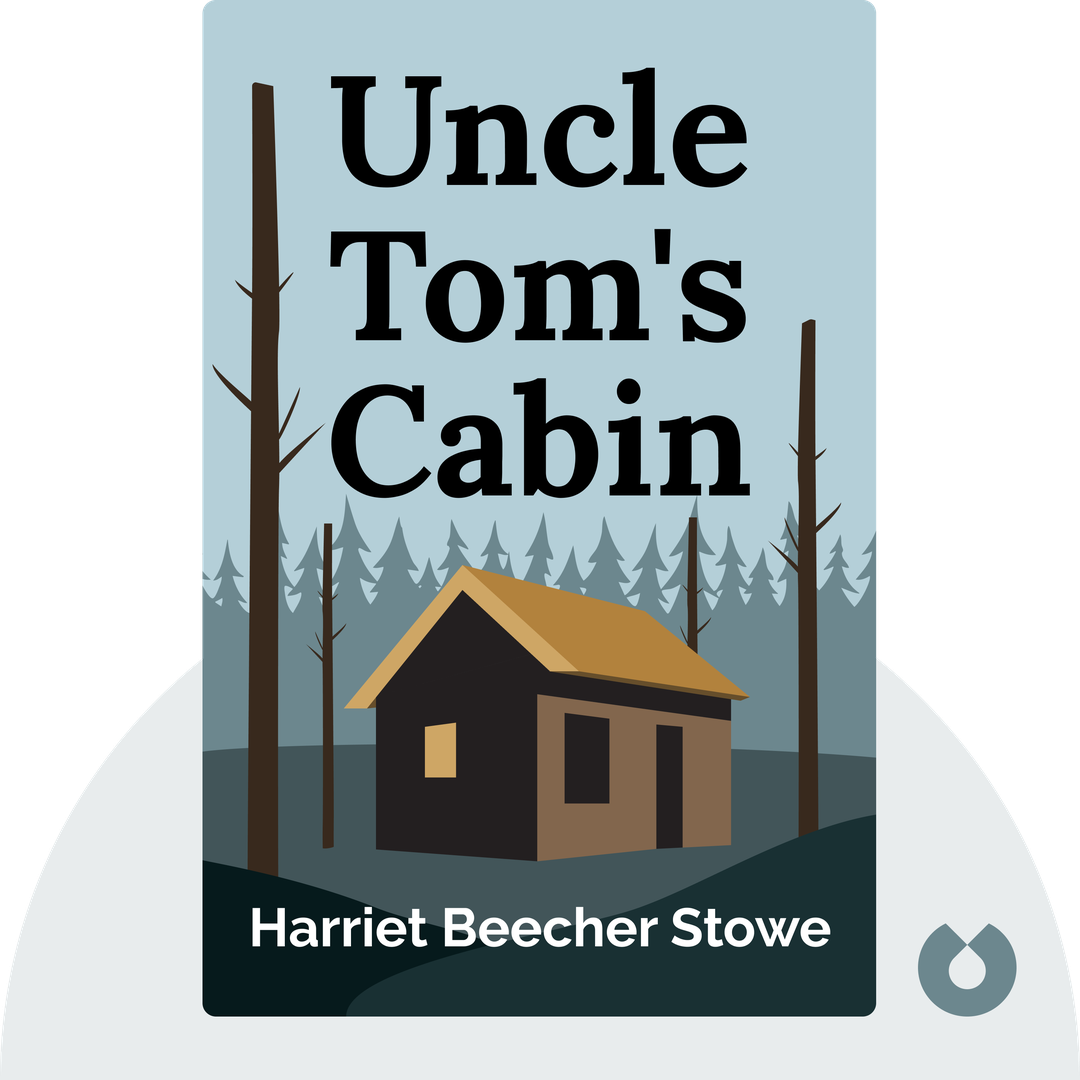
If You're Curious About These Questions...
You should listen to this audiobook
- How does the character of Mr. Shelby—a seemingly 'kindly' and benevolent slave owner—actually serve to dismantle the 19th-century argument that slavery could ever be a humane institution?
- Why does Tom refuse to use violence against the brutal overseer Simon Legree, and how does his theological reasoning complicate the modern perception of him as a passive character?
- What role does the tragic fate of Augustine St. Clare play in illustrating Stowe's belief that even the most generous and well-intentioned individuals are fundamentally corrupted by participating in the slave trade?
Listen to Uncle Tom's Cabin — Free Audiobook
Loading player...
Key Takeaways from Uncle Tom's Cabin
- Understand how Harriet Beecher Stowe used Christian abolitionism to argue that slavery was a blasphemous defiance of God's will, ultimately shifting American public opinion.
- Discover why the Fugitive Slave Act of 1850 criminalized Christian charity and demonstrated that the moral corruption of slavery compromised the entire nation.
- Learn how the novel demolishes the racist myth of the benevolent slaveholder by illustrating that financial misfortune can instantly turn a mild master's protection into horrific misery.
- Uncover the true motivation behind Uncle Tom's choice not to flee, revealing his actions as a Christ-like sacrifice to protect his peers rather than subservience to a white master.
- Examine how the contrasting characters of Mr. Shelby and Mr. Haley prove that participation in the slave trade makes both genteel owners and coarse businessmen equally complicit in systemic evil.
Learning Tools
Reinforce what you learned from Uncle Tom's Cabin
Mind Map
Uncle Tom's Cabin
Historical Impact+
Theological Argument+
Myth of Benevolent Slavery+
Complicity of Society+
The Reality of Brutality+
Quiz — Test Your Understanding
Question 1 of 7
Why did the Fugitive Slave Act of 1850 give Harriet Beecher Stowe's anti-slavery argument new urgency?
Question 2 of 7
What is Stowe's primary literary purpose in introducing Mr. Shelby as a 'kindly' and mild master at the beginning of the novel?
Question 3 of 7
When Eliza urges Tom to run away with her to Canada, why does Tom refuse?
Question 4 of 7
How do the 'civilized' white men, such as the clergyman and Mr. Haley, justify the cruelties of the slave trade on the riverboat?
Question 5 of 7
What broader point does Stowe make through the character of Augustine St. Clare and his untimely death?
Question 6 of 7
Why does Tom refuse to help Cassy murder Simon Legree, even after enduring severe torture?
Question 7 of 7
What is the direct result of Master George arriving too late to save Tom from dying at Legree's plantation?
Uncle Tom's Cabin — Full Chapter Overview
- 1Recommendation
- 2Evil breeds more evil
- 3Tom’s destiny
- 4Trade along the river
- 5The city of New Orleans
- 6Tom’s ultimate sacrifice
Uncle Tom's Cabin Summary & Overview
Uncle Tom’s Cabin (1852) is a compelling indictment of slavery. Describing the many trials of Uncle Tom, its long-suffering enslaved protagonist, the story reveals the horrors of America’s “peculiar institution” while showing how Christian love can triumph over evil. It played a pivotal role in the abolition of slavery and remains one of the most important American novels ever written.
Who Should Listen to Uncle Tom's Cabin?
- Those curious about a controversial classic
- Christians and believers
- History buffs
Books Similar to Uncle Tom's Cabin
Readers who enjoyed this also liked these titles.