If You're Curious About These Questions...
You should listen to this audiobook
- Have you ever wondered why a single trial in a small 1930s town still serves as one of the most powerful reflections of modern society’s struggle with justice?
- Are you curious about the secret to maintaining your moral compass when the entire community around you is blinded by prejudice and hate?
- Did you know that the most profound insights into the complexity of human behavior often come from the perspective of those who haven't yet lost their innocence?
Listen to To Kill a Mockingbird — Cinematic Audio Edition
Loading player...
Key Takeaways from To Kill a Mockingbird
- Discover why true courage is defined as a commitment to doing the right thing, even when you know you don't stand a chance.
- Explore the complex nature of justice and morality through Atticus Finch’s dutiful, albeit distasteful, commitment to criminal law in a divided town.
- Learn how to model integrity and open communication in parenting by observing Atticus’s frank conversations with his children and his unconventional respect for his cook, Calpurnia.
- Understand how societal gossip and isolation can unfairly transform a misunderstood individual into a monstrous myth, as demonstrated by the children's evolving perception of Boo Radley.
- Recognize the importance of cultural context and empathy over rigid rules by seeing how a teacher's inflexible methods fail to serve proud, impoverished families like the Cunninghams.
Learning Tools
Reinforce what you learned from To Kill a Mockingbird
Mind Map
To Kill a Mockingbird
Core Themes+
Maycomb Society+
The Mockingbird Motif+
The Tom Robinson Case+
The Radley Subplot+
Key Interventions+
Quiz — Test Your Understanding
Question 1 of 9
According to Atticus Finch, how is courage defined in the context of the story?
Question 2 of 9
What discovery does Jem make that contradicts the town's gruesome mythology about Boo Radley?
Question 3 of 9
What crucial piece of advice does Atticus give Scout to help her understand people like her teacher, Miss Caroline?
Question 4 of 9
Why does Atticus tell his children it is a 'sin to kill a mockingbird'?
Question 5 of 9
How is the tense situation with the lynch mob outside the town jail ultimately defused?
Question 6 of 9
During the trial, what key physical evidence does Atticus use to cast doubt on Bob Ewell's accusation against Tom Robinson?
Question 7 of 9
Why does Atticus view the jury's guilty verdict as a sign of subtle progress in Maycomb?
Question 8 of 9
Why does Sheriff Heck Tate insist on reporting that Bob Ewell fell on his own knife?
Question 9 of 9
What underlying philosophy drives Atticus to defend Tom Robinson despite the town's overwhelming opposition?
To Kill a Mockingbird — Full Chapter Overview
- 1Recommendation
- 2Part One: Maycomb, Alabama
- 3Part Two: Scout and Jem Finch
- 4Part Three: The Tom Robinson case
- 5Part Four: The mob
- 6Part Five: The trial
- 7Part Six: The verdict
- 8Part Seven: Boo comes out
To Kill a Mockingbird Summary & Overview
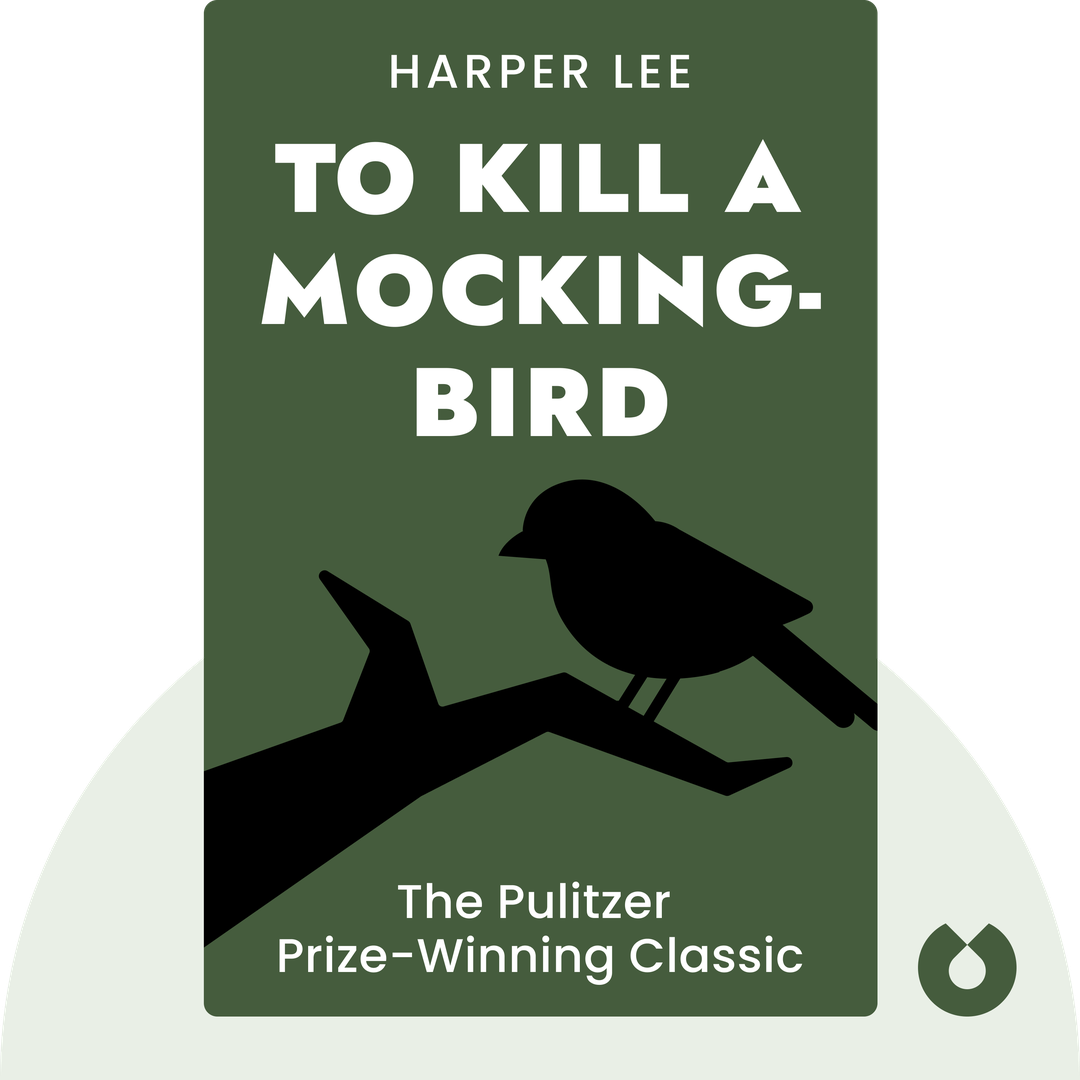
To Kill a Mockingbird (1960) is one of the most influential American novels ever written. Set in a small town in Alabama in the 1930s, it follows the Finch family over three tumultuous years as a trial divides a community. Covering themes of love and hate, innocence and experience, and kindness and cruelty, Harper Lee’s book goes to the heart of human behavior.
Who Should Listen to To Kill a Mockingbird?
- Anyone interested in classic fiction
- History buffs
- Those invested in the struggle for justice
Books Similar to To Kill a Mockingbird
Readers who enjoyed this also liked these titles.