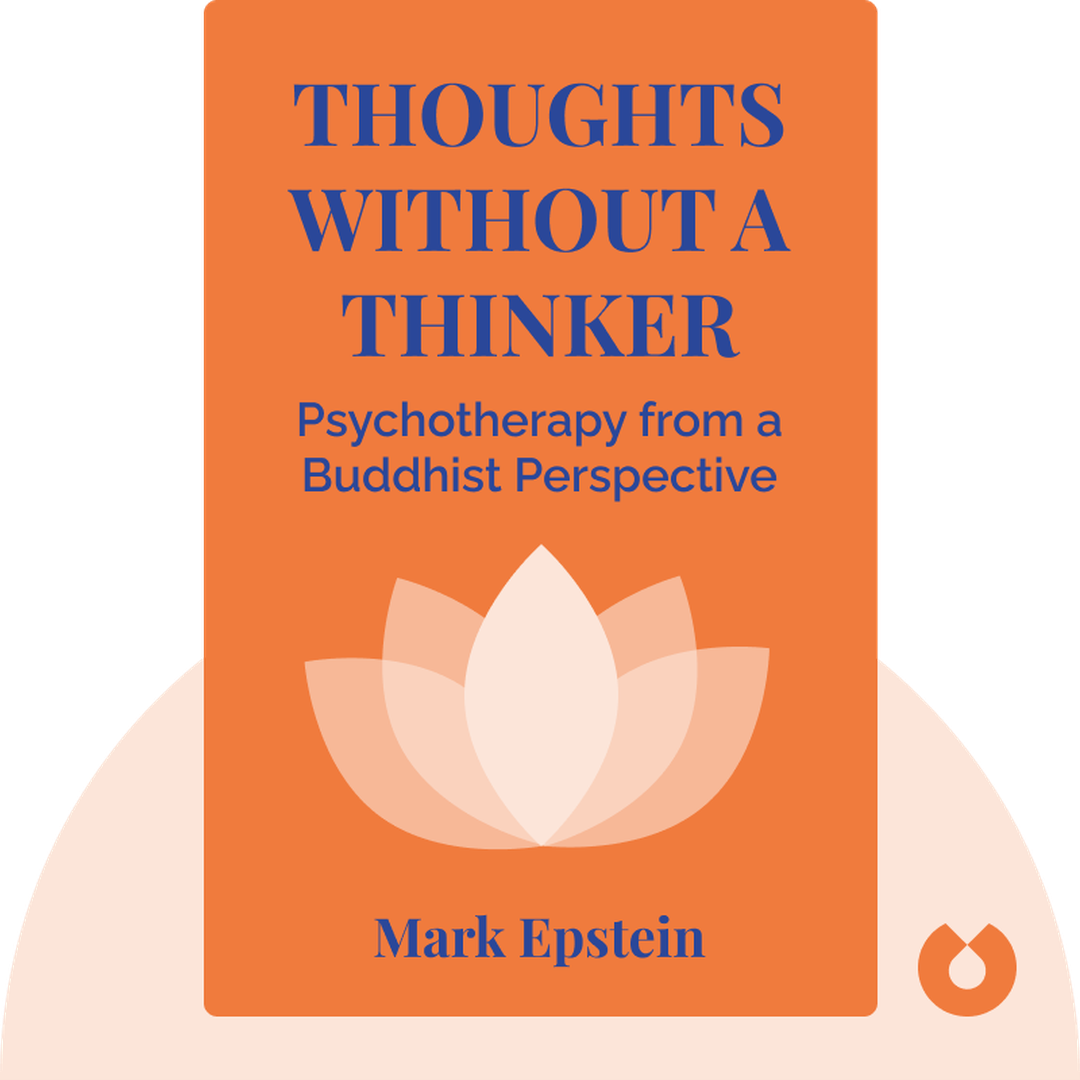
Thoughts Without a Thinker
Start ListeningDownload Try free on iPhoneScan to start in 5 seconds
Categories:
If You're Curious About These Questions...
You should listen to this audiobook
- Have you ever wondered how combining ancient Buddhist wisdom with modern psychotherapy could unlock a new path to emotional healing?
- What if you could learn to experience your most intrusive thoughts without being held hostage by the "thinker" behind them?
- Are you curious about how the practice of mindfulness can do more than just relax you, and actually serve as a tool for deep psychological transformation?
Listen to Thoughts Without a Thinker — Cinematic Audio Edition
Loading player...
Key Takeaways from Thoughts Without a Thinker
- Understand how Buddhism's 'three poisons' of desire, anger, and delusion mirror Freud's psychoanalytic drives to explain the root of our psychological suffering.
- Discover how the concept of a false self develops during childhood to cope with human limitations, trapping us in a delusion that prevents true self-awareness.
- Learn why painful psychological disorders like narcissism and depression are actually the direct result of an unnaturally inflated or deflated sense of self.
- Find out how distinguishing your decision-making ego from the illusion of the self can help you meditate your way toward true enlightenment.
- Master the Buddhist approach to healing mental illness by loosening your rigid attachment to identity and embracing the liberating concept of 'no self.'
Learning Tools
Reinforce what you learned from Thoughts Without a Thinker
Mind Map
Thoughts Without a Thinker
Buddhism & Psychoanalysis+
The Illusion of Self+
Disorders of the Self+
Cultural Suffering+
Buddhist Healing Practices+
Key Takeaways+
Quiz — Test Your Understanding
Question 1 of 7
What do the snake and the rooster in the Buddhist Wheel of Life represent, and how do they connect to Freudian psychoanalysis?
Question 2 of 7
According to the text, what is a fundamental similarity in how Buddhism and psychoanalysis view the concept of the 'self'?
Question 3 of 7
How does the text explain the psychological disorders of narcissism and depression in relation to a person's sense of self?
Question 4 of 7
What was the Buddha's response when asked by the wanderer Vacchagotta if the self existed?
Question 5 of 7
What does the metaphor of the 'hungry ghost' represent in the context of Western society?
Question 6 of 7
What is the Buddhist technique of 'bare attention' as practiced by the musician John Cage and the patient Sid?
Question 7 of 7
According to the text, what is the primary benefit of practicing mindfulness during mundane activities, such as brushing your teeth?
Thoughts Without a Thinker — Full Chapter Overview
- 1Recommendation
- 2Buddhism and psychoanalysis both emphasize the same fundamental human emotions.
- 3We fool ourselves into believing that a thing called the self exists.
- 4Many common yet painful psychological disorders stem from a deeply inflated or deflated sense of selfhood.
- 5Buddhism can offer relief from mental illness by freeing you of the self.
- 6Westerners feel insatiable hunger, while Easterners wrestle with cultivating humility.
- 7Buddhism can help you live alongside your emotions.
- 8Practice mindfulness to stay grounded in the present and transcend suffering.
Thoughts Without a Thinker Summary & Overview
Thoughts Without a Thinker (1995) describes the fundamental principles of the Buddhist tradition through a psychoanalytic lens. These blinks explain how meditation and mindfulness can soothe the mind, alleviate suffering and heal mental illness.
Who Should Listen to Thoughts Without a Thinker?
- People who suffer from depression and anxiety
- Anyone interested in Buddhism or psychotherapy
- Anyone skeptical about mindfulness
Books Similar to Thoughts Without a Thinker
Readers who enjoyed this also liked these titles.