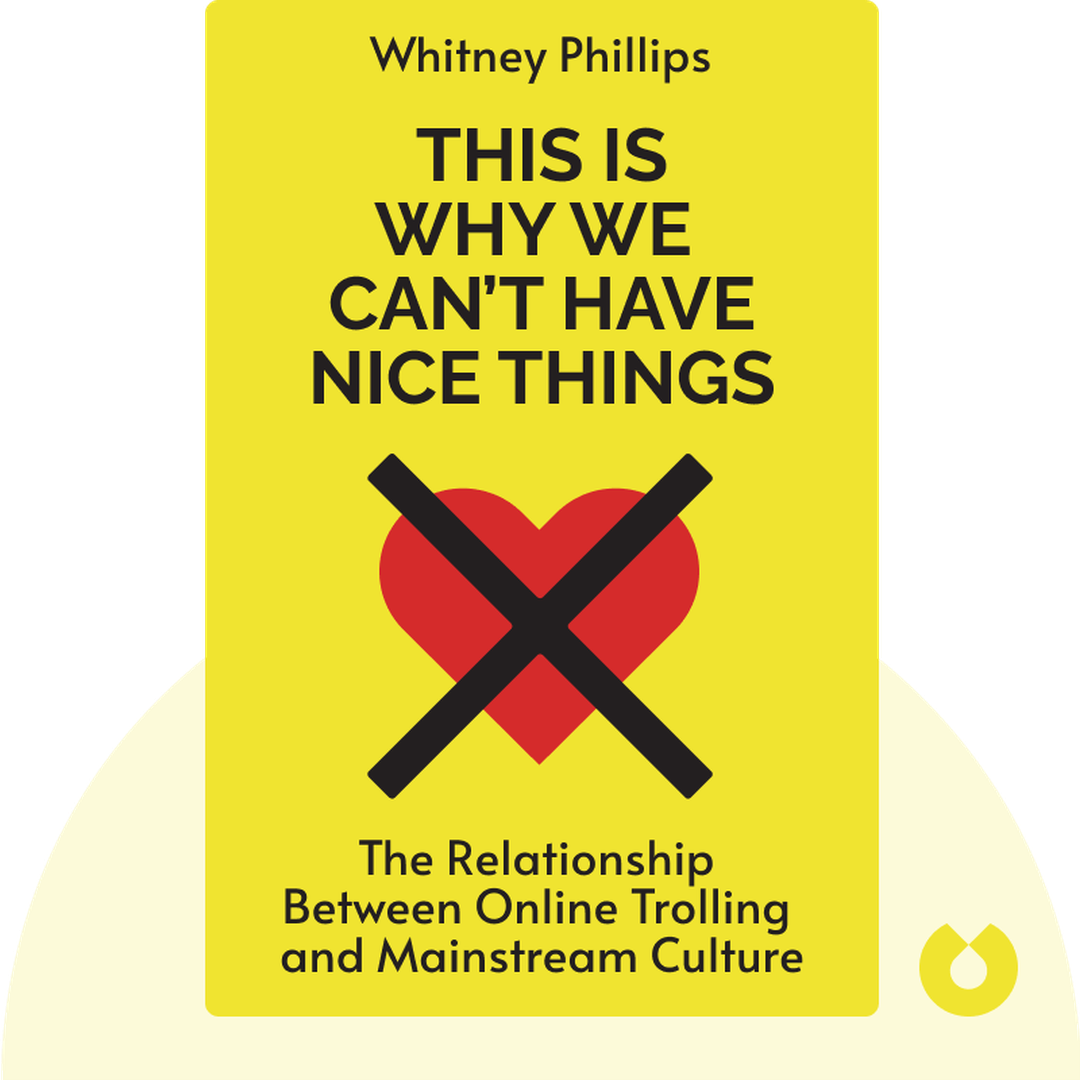
This is Why We Can’t Have Nice Things
Start ListeningDownload Try free on iPhoneScan to start in 5 seconds
Categories:
If You're Curious About These Questions...
You should listen to this audiobook
- How did everyday internet memes, like LOLcats, originate as exclusive inside jokes within early online troll communities?
- In what ways do the seemingly cruel actions of 'RIPtrolls' actually serve as a dark social commentary on mainstream media and 'grief tourism'?
- How have activists and even government agencies successfully weaponized traditional trolling tactics to drive political change and combat violent extremists?
Listen to This is Why We Can’t Have Nice Things — Free Audiobook
Loading player...
Key Takeaways from This is Why We Can’t Have Nice Things
- Trolling is often driven by the pursuit of 'Lulz,' an aggressive form of humor that extracts pleasure from the negative emotional reactions of its targets.
- Mainstream internet culture, including the widespread use of memes, originated directly from the unique languages and inside jokes developed by early troll subcultures on sites like 4chan.
- Some provocative trolling behaviors, like mocking public memorial pages, simultaneously act as harsh critiques of media sensationalism and performative public grief.
- Trolls and mainstream media operate on surprisingly similar principles, as both aggressively capitalize on high-profile spectacles to achieve their respective goals.
- The disruptive tactics of trolling are not exclusively malicious and have been successfully co-opted for progressive activism, such as saving public libraries and undermining violent extremists.
Learning Tools
Reinforce what you learned from This is Why We Can’t Have Nice Things
Mind Map
This is Why We Can’t Have Nice Things
Definition & Motivation+
History & Evolution+
RIPtrolls & Social Commentary+
Trolls vs. Mainstream Media+
Activism & Real-World Impact+
Quiz — Test Your Understanding
Question 1 of 7
What is the primary motivation for the specific subculture of internet trolls discussed in the book?
Question 2 of 7
How did the general perception of internet trolls change from the early 1990s to the 2000s?
Question 3 of 7
According to the text, what is the origin of internet memes?
Question 4 of 7
What argument do some people use to defend the seemingly cruel actions of 'RIPtrolls' on memorial pages?
Question 5 of 7
According to the book, what common trait is shared between trolling behavior and mainstream media practices?
Question 6 of 7
How did an advertising agency successfully use trolling tactics to help save a public library in Troy, Michigan?
Question 7 of 7
How has the US government utilized tactics similar to internet trolling?
This is Why We Can’t Have Nice Things — Full Chapter Overview
- 1Recommendation
- 2Trolling takes many forms, but usually it means posting intentionally hurtful or provocative opinions on the internet.
- 3Once seen as a problem, trolling in the 2000s evolved into a thriving online subculture.
- 4RIPtrolls illustrate the thin boundary between trolling’s cruelty and social critique.
- 5Trolls behave in ways that are surprisingly similar to mainstream media outlets.
- 6Trolling has spread beyond the web and even seeped into political life.
This is Why We Can’t Have Nice Things Summary & Overview
This is Why We Can’t Have Nice Things (2015) explores the subculture of trolling: where it came from, who does it, why they do it and what exactly it is they do. The book examines the blurred line between a malicious online attack and revealing social commentary, and shows how trolling and mainstream culture have come to form a close bond.
Who Should Listen to This is Why We Can’t Have Nice Things?
- Victims of internet trolling
- Critics of traditional media
- Anyone interested in internet subcultures
Books Similar to This is Why We Can’t Have Nice Things
Readers who enjoyed this also liked these titles.