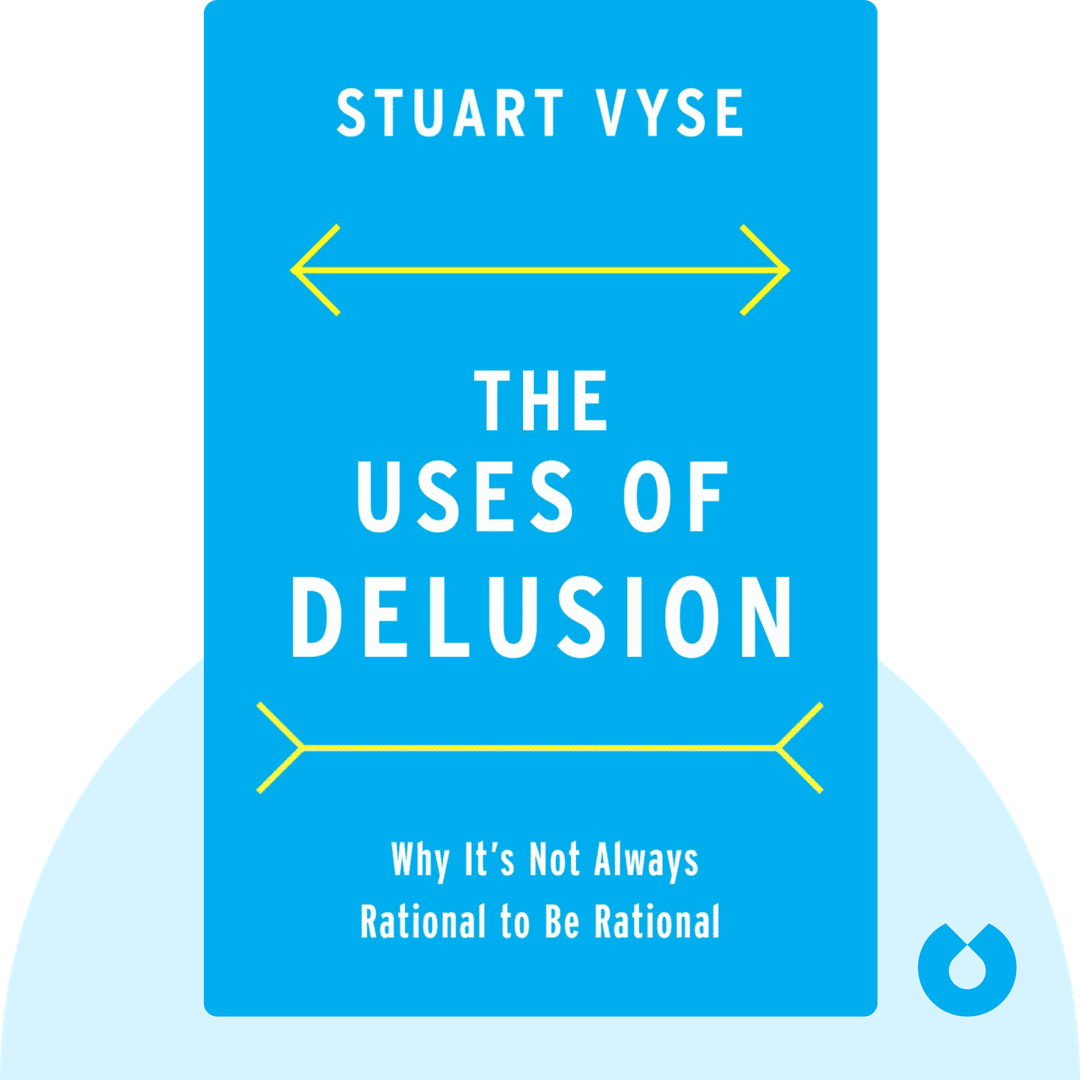
If You're Curious About These Questions...
You should listen to this audiobook
- Did you know that some of your most 'irrational' beliefs might actually be the secret to your long-term happiness and survival?
- Have you ever wondered why being perfectly rational could actually be a disadvantage when it comes to your mental well-being?
- Are you curious about how a healthy dose of self-deception can actually strengthen your relationships and boost your motivation?
Listen to The Uses of Delusion — Free Audiobook
Loading player...
Key Takeaways from The Uses of Delusion
- Discover how embracing everyday delusions and irrational thinking can be a highly functional strategy to help you navigate complex social situations and accomplish your goals.
- Understand why unrealistically positive self-views—such as an illusion of control and extreme optimism—act as a vital psychological lifeline that boosts motivation and wards off depression.
- Learn how a healthy dose of delusional overconfidence provides a competitive edge and, according to evolutionary theory, helps you deceive and persuade others more convincingly.
- Explore the psychological power of routines and superstitions to reduce anxiety and restore a comforting sense of mastery and control in a chaotic, unpredictable world.
- Find out why the moral and well-being benefits of religious or superstitious practices often stem more from social engagement and community accountability than from the literal beliefs themselves.
Learning Tools
Reinforce what you learned from The Uses of Delusion
Mind Map
The Uses of Delusion
Irrational Thinking+
Positive Self-Deception+
Rituals & Superstition+
Romantic Delusions+
Dreams as Delusions+
Illusion of Free Will+
Quiz — Test Your Understanding
Question 1 of 7
According to the concept of 'ratio bias' discussed in the book, why do most people choose a bowl of 100 jelly beans with 10 winners over a bowl of 10 jelly beans with 1 winner?
Question 2 of 7
How does psychologist Jonathan Baron view 'irrational' delusions in the context of human behavior?
Question 3 of 7
What intriguing paradox regarding self-perception and mental health do psychologists Taylor and Brown highlight?
Question 4 of 7
Based on the text, what is the primary reason that participation in religious rituals is associated with greater well-being?
Question 5 of 7
In the context of long-term romantic relationships, what is a potential benefit of idealizing a partner beyond reality?
Question 6 of 7
While Freud viewed dreams as the release of suppressed desires, what does modern science suggest is a productive purpose of unpleasant dreams or nightmares?
Question 7 of 7
What do Benjamin Libet's studies on brain activity suggest about the human sense of conscious will?
The Uses of Delusion — Full Chapter Overview
- 1Recommendation
- 2Embracing delusions: The surprising benefits of irrational thinking
- 3Confidently deluded: The surprising power of positive self-deception
- 4The power of rituals: Comfort, control, and community past superstition
- 5Romantic delusions: The power of overconfidence and idealization within love
- 6Delusions in slumber: The deep mystery of dreams
- 7Delusions of agency and the illusion of conscious volition
The Uses of Delusion Summary & Overview
The Uses of Delusions (2022) ventures into the intriguing realm of irrational beliefs and delusions, highlighting their essential role in shaping our lives and detailing how these misconceptions surprisingly confer benefits. These beneficial delusions serve as crucial contributors to our happiness, relationships and even survival, constructing a compelling narrative about the paradoxical power of irrationality.
Who Should Listen to The Uses of Delusion?
- Psychology enthusiasts fascinated by the human mind’s quirks and misconceptions
- Self-help seekers desiring to understand and improve their own mental processes
- Skeptics and rational thinkers keen on understanding the roots of superstition and irrational behavior
Books Similar to The Uses of Delusion
Readers who enjoyed this also liked these titles.