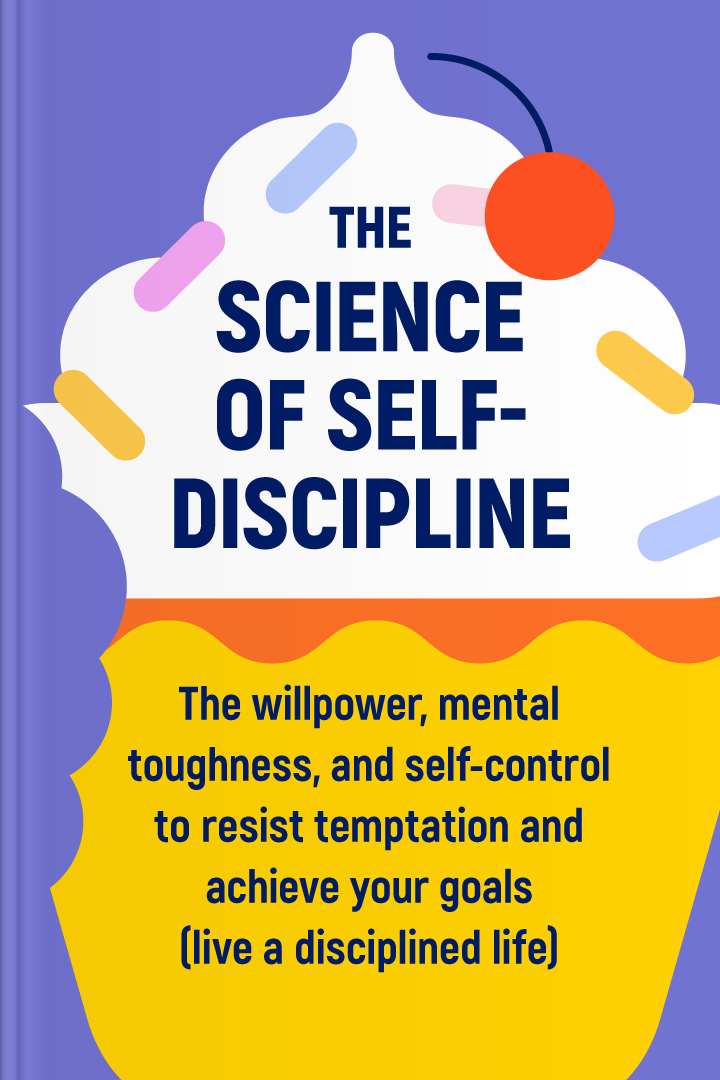
If You're Curious About These Questions...
You should listen to this audiobook
- Did you know that your environment might be quietly draining your willpower before you even start your most important tasks?
- Have you ever wondered why some people stay consistent with ease, while others find themselves trapped in a cycle of harsh self-judgment and failed resolutions?
- What if the secret to lasting self-discipline isn't "trying harder," but rather a simple shift in how you structure your daily choices?
Listen to The Science of Self-Discipline — Free Audiobook
Key Takeaways from The Science of Self-Discipline
- Understand why self-discipline is a trainable skill, much like a muscle, rather than a fixed genetic trait or a measure of personal worth.
- Discover how modern environments are designed to exploit depleted willpower, and learn to build awareness to resist these everyday manipulations.
- Learn how to protect your limited supply of willpower by strategically reducing triggers and making your desired habits the default path of least resistance.
- Recognize how multitasking and fragmented attention sabotage your self-control, and find out how clearing physical and digital clutter can actively improve your restraint.
- Find out how to harness dopamine to your advantage by pairing difficult tasks with pleasant activities, making discipline feel less like deprivation.
The Science of Self-Discipline — Full Chapter Overview
Chapter 1: Recommendation
Chapter 2: Discipline as a Trainable Mindset
Chapter 3: Protecting Willpower From Quiet Drains
Chapter 4: Motivation That Comes From the Inside
Chapter 5: The Quiet Power of Believing There’s More
Chapter 6: Staying Motivated With Smart Milestones
Chapter 7: Letting Supportive People Strengthen Consistency
Chapter 8: Planning for the Future Self With Clarity and Courage
Chapter 9: A Gentle, Practical Path Forward
The Science of Self-Discipline Summary & Overview
This audio summary explores self-discipline as something practical and learnable, not a rare gift that only a few people are born with. It looks at why willpower gets depleted, how distractions and environment quietly drain self-control, and how small adjustments can make good choices feel easier and more natural over time.
Along the way, it brings in well-known research and real-world examples to show how motivation works, why intrinsic goals tend to last longer, and how supportive relationships and strategic planning can help someone stay consistent—without relying on harsh self-judgment.
Who Should Listen to The Science of Self-Discipline?
- Anyone who feels capable in theory but struggles to follow through in daily life, especially when distractions and stress build up.
- People who want a kinder, more sustainable approach to habits, motivation, and long-term goals—without framing self-discipline as punishment.
- Listeners who enjoy psychology-backed insights and simple strategies they can try immediately, one small step at a time.
Books Similar to The Science of Self-Discipline
Readers who enjoyed this also liked these titles.
How to Use Self Control and Mental Toughness to Achieve Your Goals
Through the famous Marshmallow Test and decades of research, this journey shows how self-control isn’t a fixed trait—you can strengthen it with practical strategies, supportive environments, and kinder self-understanding, so long-term goals feel more reachable.
Living with Purpose and Achieving Your Goals in a World of Distractions
Why Self-Control is the Secret of Success