If You're Curious About These Questions...
You should listen to this audiobook
- Have you ever wondered how an American intelligence agent, surrounded by global conflict, managed to find a path to profound inner peace?
- What if you could journey through the world's most ancient spiritual traditions to discover the one specific practice that truly silences mental noise?
- Are you curious about the secret meditation technique that transformed a man of secrets into a master of mindfulness?
Listen to The Quiet Mind — Free Audiobook
Loading player...
Key Takeaways from The Quiet Mind
- Discover why common distractions only offer temporary relief from stress, and realize how the true power to achieve lasting peace lies within your own mind.
- Learn how ancient Buddhist meditation practices and modern hypnotism share a unique connection in their ability to induce highly receptive and unusual brain states.
- Understand the hidden power of a quiet mind, and see how releasing intention and desire can unlock surprising cognitive capabilities like extra-sensory perception.
- Explore the origins of mindfulness through the story of Gotama Buddha, discovering how true enlightenment comes from a clear mind rather than extreme physical self-denial.
- Find out how to navigate the practical challenges of starting a meditation practice, from focusing on your breath to objectively observing passing thoughts despite physical discomfort.
Learning Tools
Reinforce what you learned from The Quiet Mind
Mind Map
The Quiet Mind
The Catalyst+
Philosophical Encounters+
Rejected Methods+
The Path of Vipassana+
Ultimate Realization+
Quiz — Test Your Understanding
Question 1 of 9
What initial experience in Thailand sparked Coleman’s belief that there was a link between hypnotism and meditation?
Question 2 of 9
What conclusion did Coleman draw after his distracted neighbor successfully guessed 23 out of 25 of Professor J. B. Rhine’s ESP cards?
Question 3 of 9
Why did Coleman fail to quiet his mind during his first vipassana meditation course with U Ba Khin?
Question 4 of 9
What was the core philosophy shared by Krishnamurti during his conversations with Coleman?
Question 5 of 9
Why did Coleman ultimately feel that Tibetan Buddhism and Tantrism did not resonate with his search for a quiet mind?
Question 6 of 9
According to the teachings of orthodox monk Buddhadasa Bikku, how should a practitioner view dualities such as 'right versus wrong'?
Question 7 of 9
What surprised Coleman about the practice of modern Zen Buddhism when he visited the Shokoku Temple in Kyoto?
Question 8 of 9
How did the meditation practice of the Quakers differ significantly from the Eastern traditions Coleman had previously studied?
Question 9 of 9
What crucial realization finally triggered Coleman’s spiritual awakening at U Ba Khin’s meditation center?
The Quiet Mind — Full Chapter Overview
- 1Recommendation
- 2In Thailand, Coleman learned that hypnosis and meditation can trigger unusual brain states.
- 3A quiet mind holds power.
- 4Coleman's first attempts at meditation were not successful.
- 5Krishnamurti helped Coleman view spirituality in a new light.
- 6Tibetan Buddhism and Tantra failed to move Coleman.
- 7Buddhadasa Bikku guided Coleman to orthodox Buddhism and Zen.
- 8Modern Zen demands strict discipline.
- 9Coleman did not find Western meditation practices fruitful.
- 10Coleman at last found awakening at U Ba Khin’s meditation center.
The Quiet Mind Summary & Overview
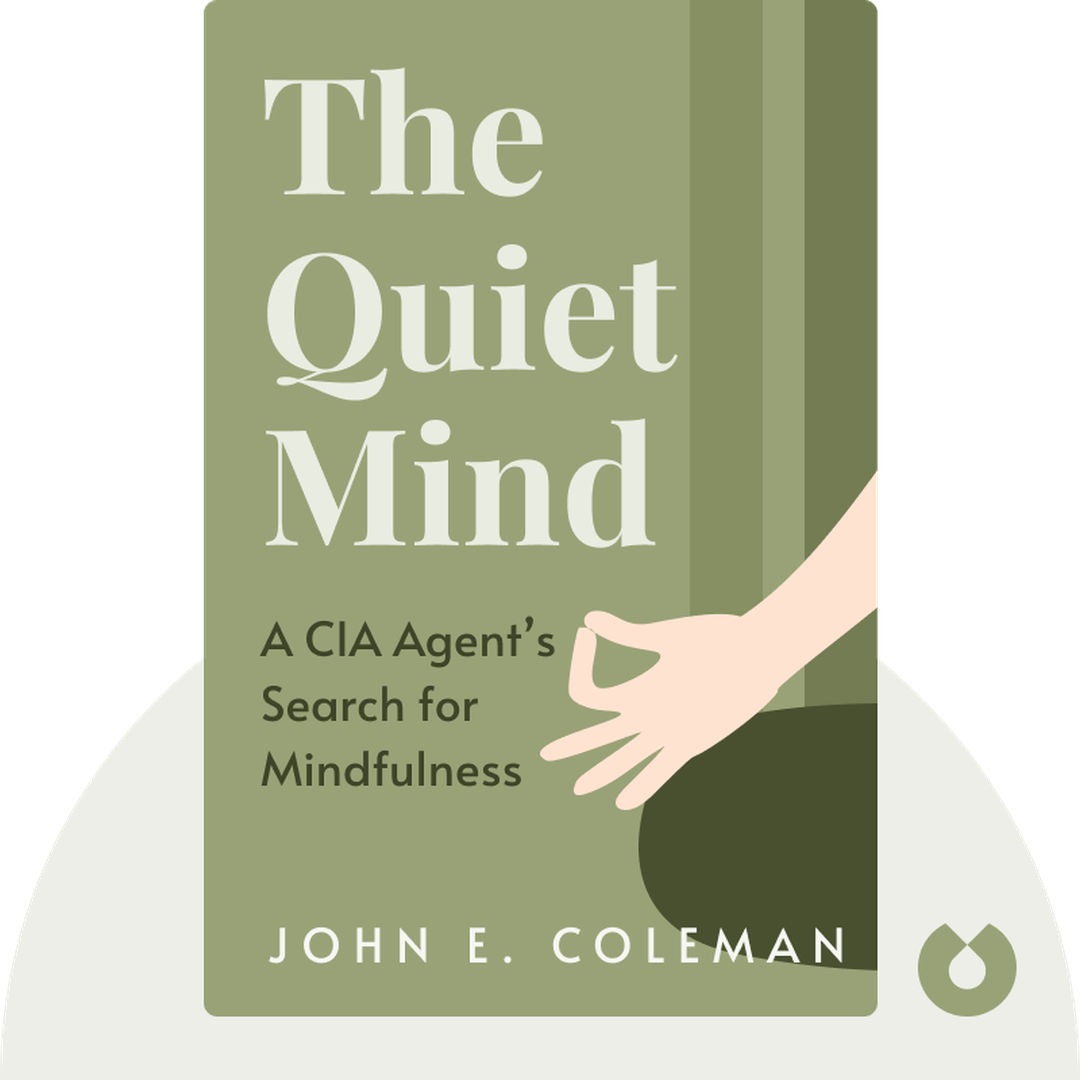
The Quiet Mind (1971) is the firsthand account of an American intelligence agent who traveled the Eastern world in search of inner peace. Throughout his remarkable life, author John. E. Coleman explored a wide breadth of spiritual paths, from Thai Buddhism to Zen to Quakerism. Ultimately, he found the greatest success with vipassana, a type of meditation he later imparted to his own students.
Who Should Listen to The Quiet Mind?
- The spiritually open-minded
- Those looking to understand the differences among several Eastern philosophies
- Admirers of D. T. Suzuki, Jiddu Krishnamurti, and U Ba Khin
Books Similar to The Quiet Mind
Readers who enjoyed this also liked these titles.