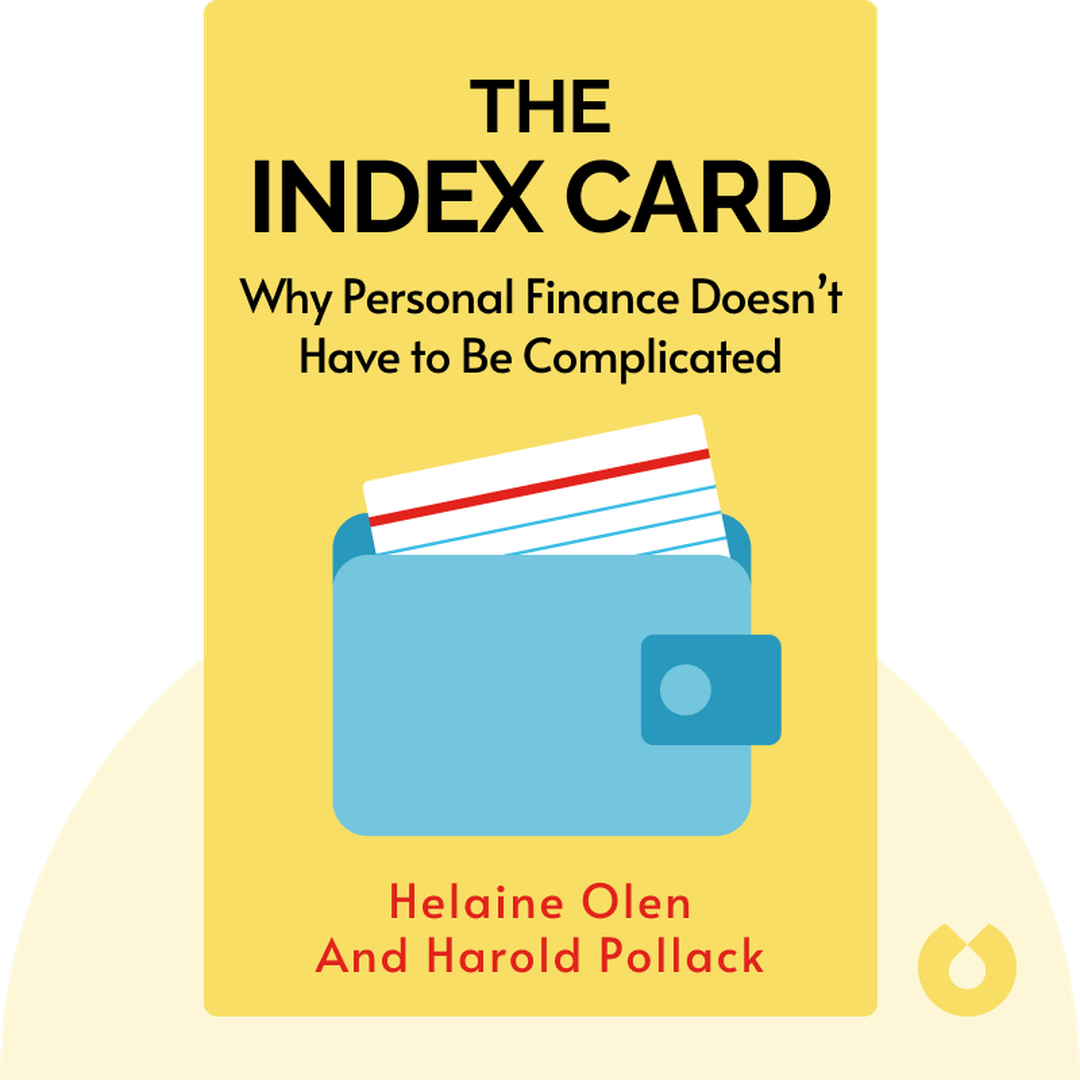
If You're Curious About These Questions...
You should listen to this audiobook
- Did you know that the most effective financial plan for your entire life can actually fit on a single 4x6 index card?
- Have you ever wondered why high-priced financial advisors often struggle to outperform a simple, low-cost investment strategy?
- What’s the secret to navigating major milestones like buying a home or choosing insurance without falling into common debt traps?
Listen to The Index Card — Free Audiobook
Loading player...
Key Takeaways from The Index Card
- Discover how to effortlessly build a safety net by automating your savings and putting away just 10 percent of your income every month.
- Learn to systematically eliminate credit card debt by avoiding the minimum payment trap and prioritizing the balances with the highest annual percentage rates.
- Understand why using physical cash instead of credit cards can make parting with your money feel less abstract and curb your spending by over 20 percent.
- Find out why securing a 20 percent down payment and actively shopping around for mortgage rates can save you tens of thousands of dollars over the lifespan of your loan.
- Realize the critical importance of starting your retirement savings immediately, as unexpected life events force most people to stop working before age 65.
Learning Tools
Reinforce what you learned from The Index Card
Mind Map
The Index Card
Saving Money+
Debt Management+
Housing & Mortgages+
Retirement Planning+
Insurance & Protection+
Financial Advisors+
Social Safety Net+
Quiz — Test Your Understanding
Question 1 of 7
According to the authors, what is a primary reason you should try to use cash instead of a credit card for daily purchases?
Question 2 of 7
Why do many consumers fail to pay off their full credit card balance each month, according to psychologists?
Question 3 of 7
When trying to get out of credit card debt, what strategy do the authors recommend?
Question 4 of 7
What simple rule of thumb do the authors suggest for deciding if you can afford to buy a house?
Question 5 of 7
Why is it highly recommended to maximize your employer's retirement matching plan?
Question 6 of 7
What type of life insurance policy provides the best protection at the lowest cost, according to the book?
Question 7 of 7
When seeking financial advice, why is it crucial to look for the job title of 'fiduciary'?
The Index Card — Full Chapter Overview
- 1Recommendation
- 2Saving money nowadays is hard, but a few tips can help.
- 3Gain financial control by paying your credit card balance in full.
- 4Compare mortgage offers to save yourself many thousands.
- 5Start saving for retirement today and make the most of every single option.
- 6Safeguard your family and finances by preparing for the worst.
- 7Select your financial advisor wisely and be ready to pay her.
The Index Card Summary & Overview
The Index Card (2016) simplifies personal finance. These blinks cover everything from getting a good deal on your mortgage to securing quality life insurance, starting your own savings account and even choosing a financial advisor.
Who Should Listen to The Index Card?
- Students and millennials who are staring down a rocky financial future
- People who are in debt
- First-time homebuyers
Books Similar to The Index Card
Readers who enjoyed this also liked these titles.