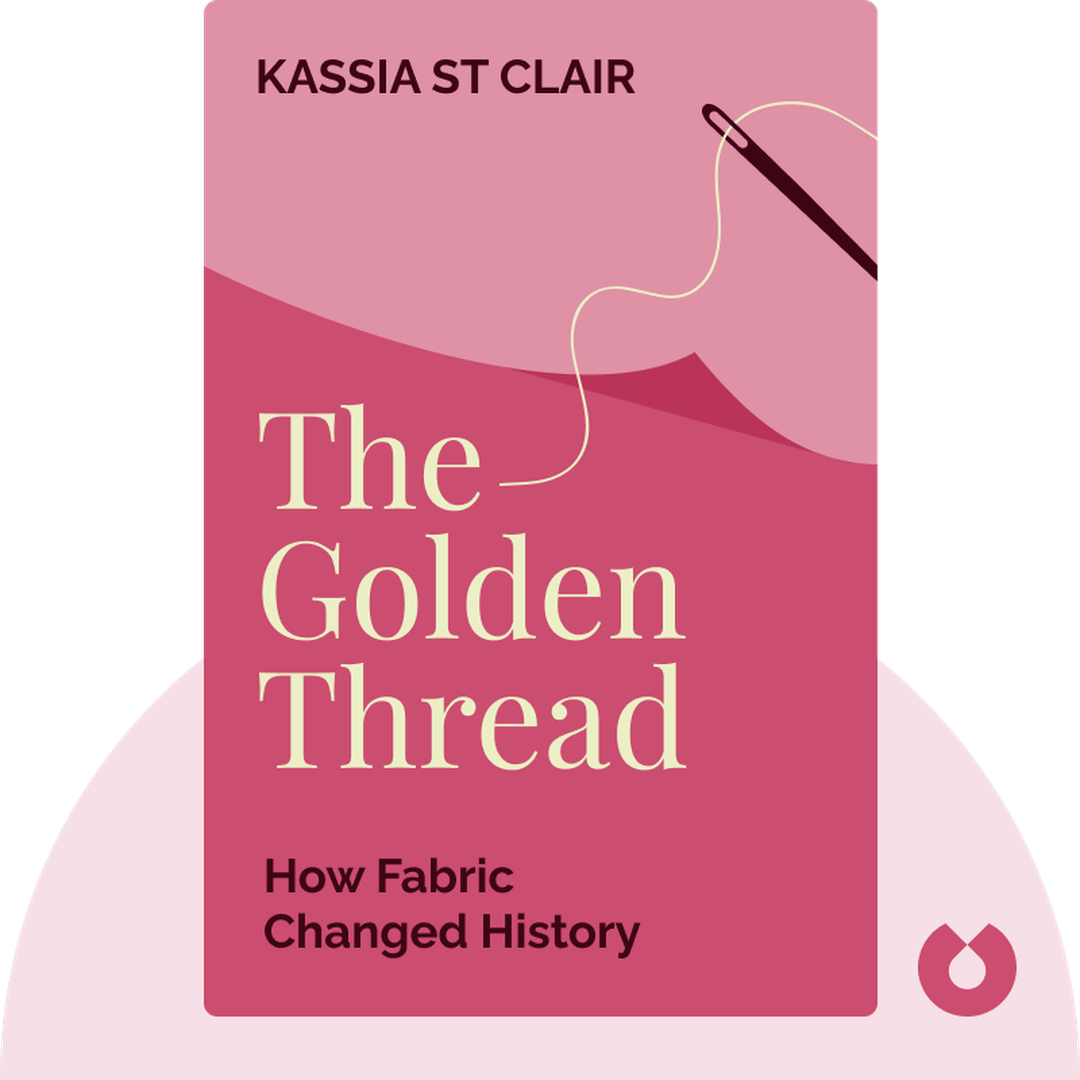
Theme Song
If You're Curious About These Questions...
You should listen to this audiobook
- Did you know that humanity’s greatest achievements—from conquering the highest peaks to walking on the moon—depended as much on the art of weaving as on any modern technology?
- Have you ever wondered how a simple piece of fabric could topple empires, spark global trade wars, and change the very course of human history?
- Are you curious about the secret role textiles played in the survival of Viking explorers and the high-stakes engineering behind the world's most famous garments?
Listen to The Golden Thread — Free Audiobook
Loading player...
Key Takeaways from The Golden Thread
- Discover how the ephemeral nature of fabric has led to a historical bias, and learn why textiles have actually been hidden drivers of human technological advancement.
- Understand why ancient Egyptians relied on linen not just as a fundamental economic currency, but as a highly ritualized material that gave mummification its sacred meaning.
- Learn how ancient Chinese dynasties weaponized silk in diplomacy, using the luxury textile to foster economic and cultural dependence among rival tribes.
- Explore the profound historical link between silk production and women's labor, from the worship of ancient silkworm goddesses to the creation of complex embroidered poetry.
- Find out how the Vikings achieved their staggering global reach and settled new worlds by adapting an unexpected material—wool—to power their legendary ship sails.
Learning Tools
Reinforce what you learned from The Golden Thread
Mind Map
The Golden Thread
Historical Context+
Linen in Ancient Egypt+
Silk in Ancient China+
Wool & Viking Expansion+
Polar Exploration Clothing+
Synthetic Fabrics+
Apollo 11 Spacesuits+
Athletic Tech Suits+
Quiz — Test Your Understanding
Question 1 of 8
Why do historians commonly refer to ancient eras as the 'Iron Age' or 'Bronze Age' rather than naming them after textiles like flax or wool?
Question 2 of 8
According to the text, what was the true significance of linen wrappings in ancient Egyptian mummification?
Question 3 of 8
How did ancient China use silk as a diplomatic weapon against the Xiongnu tribesmen?
Question 4 of 8
What surprising material did the Vikings use to make the sails for their longships?
Question 5 of 8
Why did British explorer Robert Falcon Scott reject the use of highly effective eiderdown suits during his Antarctic expedition?
Question 6 of 8
What was a major drawback of the early production of synthetic fabrics like rayon?
Question 7 of 8
Which unexpected company was responsible for creating the spacesuits for NASA's Apollo 11 mission?
Question 8 of 8
Why did swimming's governing body, FINA, ban the high-tech polyurethane swimsuits like the Speedo LZR Racer?
The Golden Thread — Full Chapter Overview
- 1Recommendation
- 2Linen was a vital part of ancient Egyptian life — and death.
- 3Silk was a mainstay of ancient Chinese culture, and chiefly associated with women.
- 4The remarkable success of Viking ships was mainly thanks to wool.
- 5The human body needs the right garments for protection in extreme cold.
- 6Synthetic fabrics were both popular and perilous innovations.
- 7Walking on the moon required special clothing and inventive help from a women’s underwear company.
- 8Cutting-edge sportswear conferred huge boosts to athletes — but not always fairly so.
The Golden Thread Summary & Overview
Textiles are woven into every part of human history. Our continual reinvention of cloth is a testament to the irrepressibility of human ingenuity. The Golden Thread (2018) surveys the role of fabrics in numerous epochs and cultures, making it clear that fabric has always been more than simply clothing – it is an ever-evolving vehicle for human ingenuity and achievement.
Who Should Listen to The Golden Thread?
- Lovers of fabric and textiles
- History buffs
- Fashionistas looking for inspiration
Books Similar to The Golden Thread
Readers who enjoyed this also liked these titles.