If You're Curious About These Questions...
You should listen to this audiobook
- Did you know that the soft, fluffy plant used to make your favorite T-shirt was actually the primary engine that built the modern global economy?
- Have you ever wondered how a single industry managed to connect the factories of Manchester to rural India, long before the age of digital globalization?
- Are you curious about the hidden history behind your clothes and how the 'empire of cotton' reshaped the world’s political and economic power forever?
Listen to Empire of Cotton — Free Audiobook
Loading player...
Key Takeaways from Empire of Cotton
- Discover how Europeans transformed independent, local cotton cultivation across Africa, Asia, and the Americas into a massive, globally interconnected market.
- Learn how the violent and highly profitable 'cotton triangle' fueled global trade by exchanging Indian cloth for African slaves to work fields in the Americas.
- Understand how state-protected mechanization decimated traditional Indian weavers and forged the modern economic divide between developed and developing nations.
- Find out how the Southern United States dominated the 19th-century global cotton export market through stolen indigenous lands and brutal slave labor.
- Uncover the grim reality behind the UK's Industrial Revolution, where rapid progress was fueled not just by inventors, but by the atrocious exploitation of child and wage laborers.
Learning Tools
Reinforce what you learned from Empire of Cotton
Mind Map
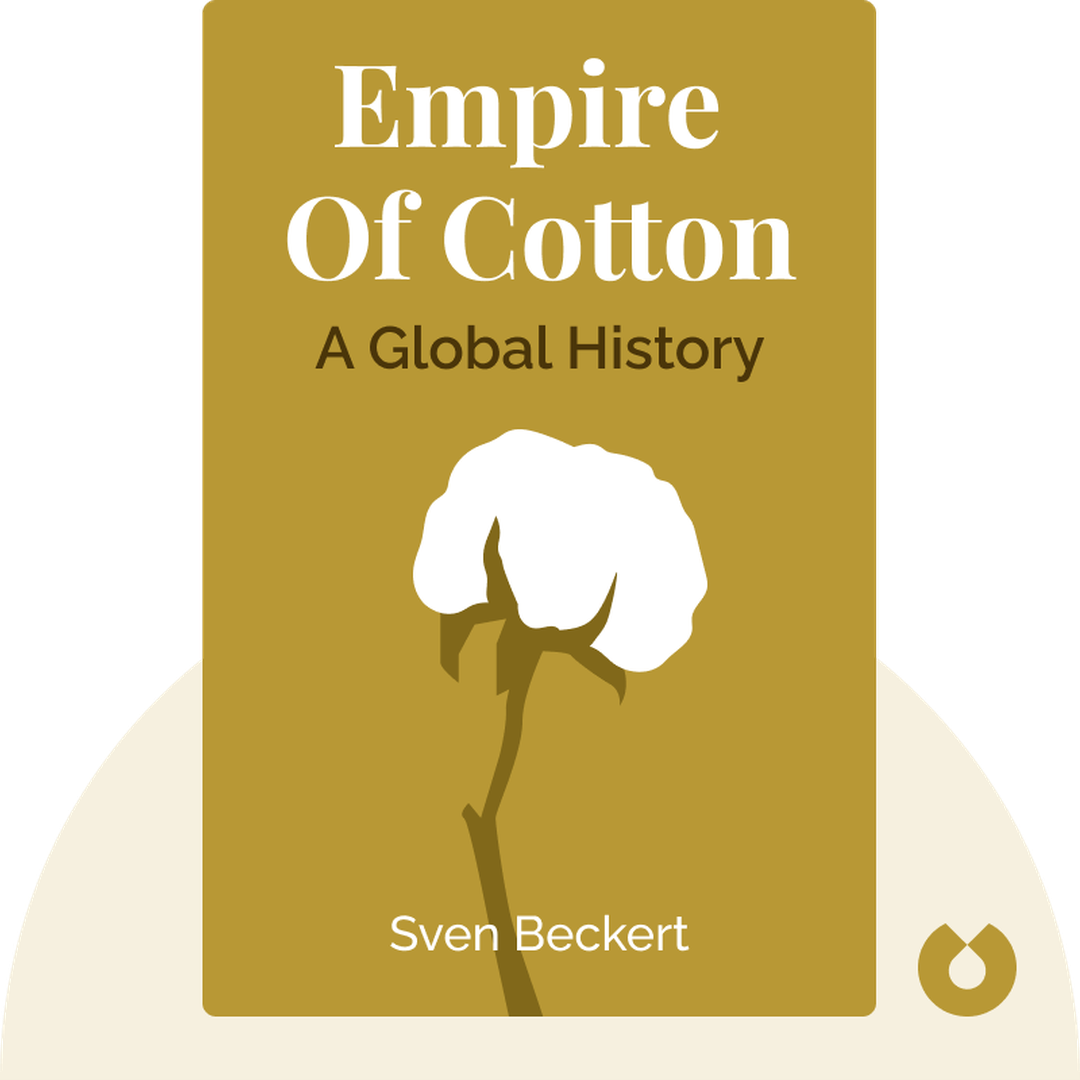
Empire of Cotton
Early Global Network+
Mechanization & State Power+
Rise of the US South+
Industrial Wage Labor+
Middlemen & Capitalism+
Civil War & Supply Shifts+
Post-Slavery Economics+
Colonial Deindustrialization+
20th Century Shift to Asia+
Quiz — Test Your Understanding
Question 1 of 9
What was the 'cotton triangle' established by European settlers between 1600 and 1800?
Question 2 of 9
According to the text, what was a primary reason countries like France and Germany were able to successfully industrialize their cotton markets compared to places like India?
Question 3 of 9
What late eighteenth-century event helped catapult the Southern United States into becoming the world's leading cotton exporter?
Question 4 of 9
Why were women and children the predominant workforce in early British cotton factories?
Question 5 of 9
As the cotton industry globalized in the nineteenth century, how did successful brokers and merchants mitigate the high risks of the trade?
Question 6 of 9
How did the American Civil War immediately affect the global cotton industry?
Question 7 of 9
Following the end of slavery in the United States, what agricultural system emerged to meet the continuing high demand for cotton?
Question 8 of 9
How did colonial powers like Britain and Japan achieve 'raw material independence' and expand cotton production in their territories?
Question 9 of 9
What major factor allowed countries like China and India to dominate the cotton manufacturing industry in the early twentieth century?
Empire of Cotton — Full Chapter Overview
- 1Recommendation
- 2Europeans encountered cotton later than others, but turned it into a global phenomenon.
- 3Mechanization divided the world in two.
- 4At the start of the nineteenth century, the Southern United States became the world's leading cotton exporter.
- 5Wage labor powered the industrial age in the United Kingdom.
- 6Networked middlemen became essential to a modernizing cotton industry.
- 7The American Civil War reshaped the global cotton industry.
- 8After slavery ended, new economic systems formed around cotton.
- 9Colonial powers greatly expanded cotton cultivation in the early twentieth century.
- 10In the early twentieth century, China and India became the leading cotton producers, and they remain so today.
- 11Final summary
Empire of Cotton Summary & Overview
Empire of Cotton (2014) chronicles the long and complex history of that fluffy plant – cotton. These blinks detail how the cotton industry connected the world from Manchester, England, to rural India, while describing the incredible impact that cotton production has had on the development of economic systems.
Who Should Listen to Empire of Cotton?
- Historians, economists and political scientists
- People interested in the history of capitalism and globalization
- Anyone curious about the history of their jeans and T-shirts
Books Similar to Empire of Cotton
Readers who enjoyed this also liked these titles.