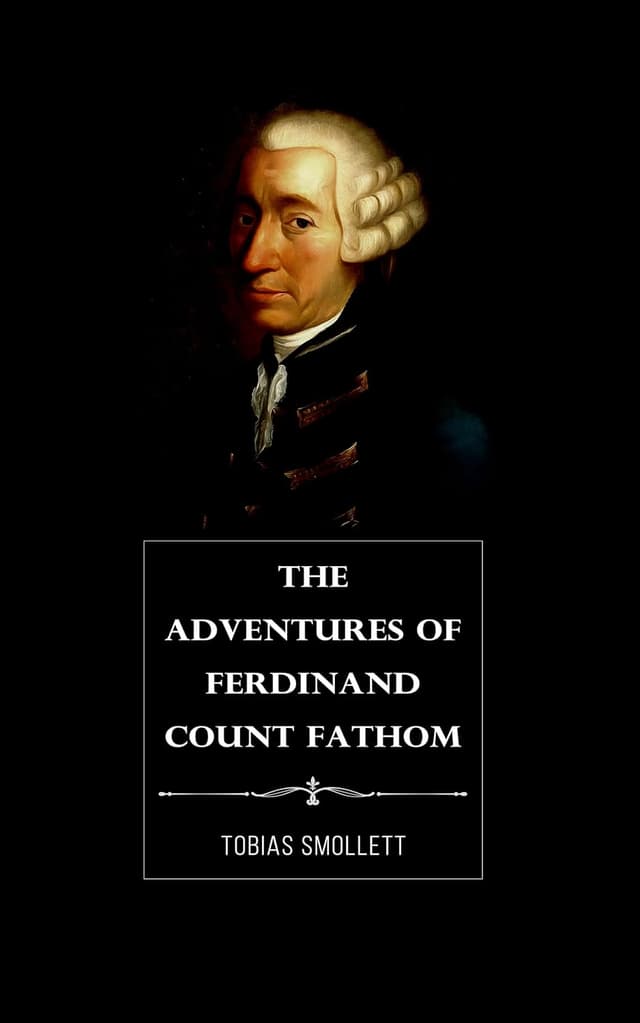
The Adventures of Ferdinand Count Fathom (Full Version) audiobook cover - Born amid war and secrecy and armed with charm as sharp as a dagger, Ferdinand Count Fathom climbs through Europe by fraud and calculated cruelty—until the very snares he lays for others begin to tighten around his own neck.

The Adventures of Ferdinand Count Fathom (Full Version)

Born amid war and secrecy and armed with charm as sharp as a dagger, Ferdinand Count Fathom climbs through Europe by fraud and calculated cruelty—until the very snares he lays for others begin to tighten around his own neck.

Tobias Smollett

4.7 / 5(2052 ratings)
Categories:

Listen to The Adventures of Ferdinand Count Fathom (Full Version)

Loading player...

Historical Background

Published in London in 1753, Tobias Smollett’s *The Adventures of Ferdinand Count Fathom* emerged during a highly transformative period in British literature and society. Mid-eighteenth-century Georgian England was characterized by Enlightenment rationalism, a burgeoning middle class, and a rapidly expanding literary marketplace. However, beneath the era's veneer of polite society lay deep-seated anxieties regarding aristocratic corruption, moral decay, and continental instability. Smollett penned the novel against this complex backdrop, utilizing the popular picaresque form to expose the hypocrisy, opportunism, and predatory nature of the upper classes across both Britain and Europe.

Upon its publication, the novel proved highly controversial due to Smollett’s audacious choice of protagonist. Unlike the virtuous, morally upright heroes championed by contemporaries such as Samuel Richardson or Henry Fielding, Ferdinand is a thoroughly deceitful, unrepentant villain. Smollett deliberately constructed an anti-hero whose exploits in fraud, seduction, and betrayal shocked readers accustomed to clear, uplifting moral instruction. Critics and the public were unnerved by this stark depiction of depravity. Nevertheless, Smollett defended his work in the novel's dedication, arguing that portraying vice in its true, terrifying colors was the most effective method to shock the reader into virtuous behavior.

Despite its initial polarizing reception, the novel left a profound and lasting impact on the trajectory of English literature. Today, it is widely recognized as a vital precursor to the Gothic tradition. Smollett's masterful use of suspense and atmosphere—most notably in a famous sequence where Fathom is trapped in a remote woodland robbers' cabin with a bleeding corpse—introduced elements of psychological terror that deeply influenced later Gothic pioneers like Horace Walpole and Ann Radcliffe. Ultimately, Smollett expanded the boundaries of eighteenth-century fiction, demonstrating that exploring the darkest recesses of human nature could yield enduring, transformative literary art.

Study Questions

  1. In his dedication, Smollett argues that focusing a novel on an utterly depraved anti-hero serves a moral purpose by acting as a 'beacon' to warn readers. How does Smollett subvert the traditional, lighthearted picaresque genre through Fathom's profound villainy, and do you believe the novel ultimately succeeds as a moral cautionary tale?

  2. The famous robber cabin sequence in the Black Forest is widely considered one of the earliest examples of Gothic terror in English literature. How does Smollett use atmosphere, isolation, and suspense in this scene, and how does this stylistic departure from the rest of the novel reflect Fathom's psychological state and the era's shifting literary tastes?

  3. Throughout the narrative, Renaldo de Melvil serves as a stark, virtuous foil to Fathom's relentless deceit and social climbing. How does this extreme dichotomy between good and evil allow Smollett to critique 18th-century European high society, and does Fathom's sudden repentance at the end of the novel undermine or reinforce this societal critique?

What Critics and Readers Say

First published in 1753, The Adventures of Ferdinand, Count Fathom is the third novel by Scottish writer Tobias Smollett and is often discussed within the tradition of picaresque fiction, a genre centered on the adventures of a morally ambiguous or rogue-like protagonist. Unlike many earlier picaresque heroes, Smollett’s Ferdinand Fathom is portrayed as an outright villain—a manipulative con artist who cheats, deceives, and exploits others throughout Europe. 

Critics have frequently commented on the novel’s dark portrayal of human nature. The central character’s relentless selfishness and moral corruption led some early commentators, including Walter Scott, to describe the novel as presenting a “complete picture of human depravity.” This focus on vice rather than virtue distinguishes the work from many eighteenth-century novels, where flawed protagonists often undergo redemption or moral growth. 

Historically, the novel was less commercially successful than Smollett’s earlier works, such as Roderick Random and Peregrine Pickle. Nevertheless, literary scholars have continued to analyze it for its complex narrative structure, satirical tone, and vivid episodic storytelling. Some modern critics argue that the book’s unusual structure and morally unsettling protagonist reveal Smollett’s intention to satirize the social and moral hypocrisy of eighteenth-century society. 

Readers today often view Ferdinand Count Fathom as a fascinating example of early English fiction that blends picaresque adventure, satire, and elements that anticipate Gothic literature, particularly in its darker themes and atmosphere. Although it remains one of Smollett’s lesser-known works, it continues to attract scholarly attention for its bold narrative experiment and its exploration of vice, deception, and moral corruption. 

Sources:

• Wikipedia – overview and critical commentary on the novel: https://en.wikipedia.org/wiki/The_Adventures_of_Ferdinand,_Count_Fathom

• Encyclopaedia Britannica – historical reception and publication context: https://www.britannica.com/topic/The-Adventures-of-Ferdinand-Count-Fathom

• Eighteenth-Century Fiction (McMaster University) – scholarly discussion of the novel’s narrative structure and interpretation. 

The Adventures of Ferdinand Count Fathom (Full Version) Chapter Overview

About The Adventures of Ferdinand Count Fathom (Full Version)

First published in 1753, The Adventures of Ferdinand Count Fathom is Tobias Smollett’s dark, energetic experiment in the picaresque tradition: the life-story of a brilliant adventurer who treats society as a set of marks to be managed, exploited, and discarded. From battlefields to drawing rooms, from prisons to polite fashion, Smollett follows Fathom’s rise through deception and his inevitable slide toward exposure, shaping the novel as a moral “beacon” that makes vice compelling only to condemn it.

Less a comedy of manners than a sharpened study of confidence, cruelty, and the instability of reputation, the book balances melodramatic suspense with satiric observation of class, credulity, and social performance. It also signals an important development in Smollett’s craft: a stronger sense of plot and contrast, setting cold-blooded roguery against idealized virtue. Read today, it stands as a fascinating eighteenth-century bridge between the rambunctious picaresque and the later taste for Gothic shadow, psychological scheming, and justice-driven narrative design.

Who Should Listen to The Adventures of Ferdinand Count Fathom (Full Version)

  • Listeners who enjoy classic antiheroes, con men, and moral comeuppance in the tradition of the picaresque novel
  • Fans of eighteenth-century satire and social observation—rank, reputation, and the theatre of “polite” life
  • Readers interested in the early roots of melodrama and Gothic atmosphere before the high Romantic era

About Tobias Smollett

Tobias Smollett (1721–1771) was a Scottish novelist, satirist, and physician whose fiction helped shape the English novel’s appetite for travel, misadventure, and social critique. Celebrated for the exuberant narratives of The Adventures of Roderick Random, Peregrine Pickle, and The Expedition of Humphry Clinker, he brought a sharp eye for hypocrisy and a vigorous comic bite to depictions of Georgian life. Smollett also translated major works (including Don Quixote) and wrote history, journalism, and political satire. His blend of realism, caricature, and narrative momentum influenced later Victorian storytellers, and his novels remain key documents of eighteenth-century society and its literary evolution.

Can You Survive the AI Era?