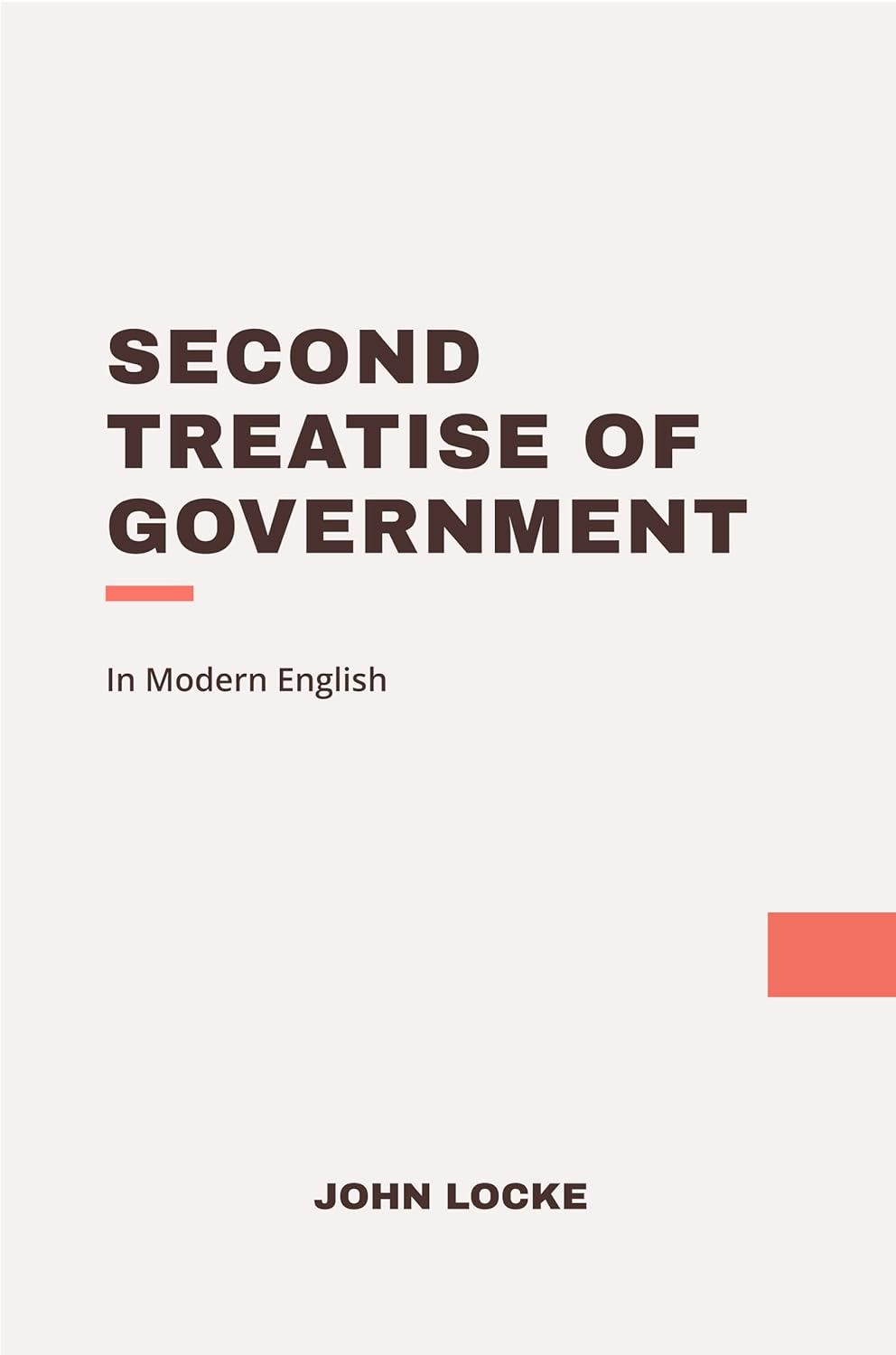
Second Treatise of the Government
Start ListeningDownload Try free on iPhoneScan to start in 5 seconds
Categories:
If You're Curious About These Questions...
You should listen to this audiobook
- Have you ever wondered where your right to own property actually comes from and why no government should be able to take it away?
- Did you know that the foundations of modern democracy rely on a specific 'state of nature' that defines how we should treat one another even without laws?
- Are you curious about the exact moment a government loses its legitimacy and when the people have a moral right to reclaim their power?
Listen to Second Treatise of the Government — Free Audiobook
Loading player...
Key Takeaways from Second Treatise of the Government
- Understand the 'state of nature' and discover how your natural right to self-defense is governed by laws of reasonable reparation and deterrence rather than revenge.
- Learn how legitimate property ownership is earned through personal labor, provided you leave enough for others and only take what you can actually consume.
- Discover why natural self-preservation prevents anyone from willingly entering slavery, and find out the one extreme circumstance where Locke believed it was justified.
- Grasp the ethical boundaries of parental power, and learn why restricting a child's liberty is strictly justified only until they fully develop their own faculties of reason.
- Explore the true foundation of legitimate government by understanding why political power can only be established through the explicit consent of free and equal adults.
Learning Tools
Reinforce what you learned from Second Treatise of the Government
Mind Map
Second Treatise of the Government
The State of Nature+
Property Rights+
Slavery & Liberty+
Types of Power+
War & Conquest+
Government Structure+
Limits on Authority+
Right to Resistance+
Quiz — Test Your Understanding
Question 1 of 10
What guides human behavior and dictates that we should not harm others in Locke's 'state of nature'?
Question 2 of 10
According to Locke, what is the primary purpose of punishing someone who harms you or your property in the state of nature?
Question 3 of 10
How does an individual legitimately claim ownership of natural resources, according to Locke?
Question 4 of 10
Which of the following is NOT one of Locke's limitations on property ownership?
Question 5 of 10
Under what specific condition does Locke believe slavery is justified?
Question 6 of 10
Why is parental power considered legitimate while political power requires explicit consent?
Question 7 of 10
After a just war, what right does the conqueror have over the defeated nation's general populace?
Question 8 of 10
Why does Locke argue that legislative and executive powers must be separated?
Question 9 of 10
What justifies the executive power acting beyond or breaking the law (the prerogative of the government)?
Question 10 of 10
According to Locke, who is the ultimate judge of whether a political authority has overstepped its limits and justified resistance?
Second Treatise of the Government — Full Chapter Overview
- 1Recommendation
- 2In nature’s state, we hold full freedom and the right to defend ourselves and our own property fully.
- 3You may rightfully own land and property so long as you don’t infringe on others’ rights.
- 4Locke holds that slavery is justified solely when people have forfeited their right to live.
- 5Political power is a distinct relationship, and can be granted only with the consent of absolutely everyone.
- 6In war, soldiers and generals are forfeit, yet the populace still retains its right to remain free.
- 7In a just government, there must be a clear divide between legislative and executive powers.
- 8Political authorities may act against the people’s will in a wide variety of different ways.
- 9The people have the right to resist a government that encroaches upon their liberties.
Second Treatise of the Government Summary & Overview
Locke’s Second Treatise offers an in-depth analysis on the origin of our right to liberty and the rights of governments. It shows how, by respecting the laws of nature, we can limit the power of government to best protect ourselves and our property from destruction or worse, tyranny.
Who Should Listen to Second Treatise of the Government?
- Anybody interested in politics
- Anybody interested in the history of ideas and philosophy
- Anybody interested in the foundations of liberalism and democracy
Books Similar to Second Treatise of the Government
Readers who enjoyed this also liked these titles.