If You're Curious About These Questions...
You should listen to this audiobook
- John Stuart Mill warned against the 'tyranny of the majority'—but how does this invisible social pressure threaten our individuality even more than strict government laws?
- Why did Mill believe that living in an echo chamber and silencing highly unpopular—or even offensive—opinions is actually a form of 'intellectual tyranny' that halts human progress?
- According to Mill's famous 'harm principle,' where exactly is the line drawn between a personal choice society must respect and an action the government has the right to control?
Listen to On Liberty — Free Audiobook
Loading player...
Key Takeaways from On Liberty
- A functioning society requires balancing an individual's right to live freely with the strict responsibility to ensure their actions do not directly harm others.
- In modern democracies, the 'tyranny of the majority' poses a significant threat by allowing large groups to unfairly dictate which perspectives are acceptable.
- True liberty demands protection not only from overreaching state power, but also from the insidious social tyranny of popular opinion and societal pressure.
- Suppressing any idea, even a fiercely unpopular one, harms society by blocking intellectual progress and denying the opportunity to discover the truth.
- Embracing individuality and resisting societal conformity are crucial elements for personal development and the overall advancement of human knowledge.
Learning Tools
Reinforce what you learned from On Liberty
Mind Map
On Liberty
Core Philosophy+
Threats to Freedom+
Freedom of Speech+
Individuality+
The Harm Principle+
Practical Applications+
Quiz — Test Your Understanding
Question 1 of 6
According to the text, what does John Stuart Mill mean by the 'tyranny of the majority'?
Question 2 of 6
Why does Mill argue against suppressing unpopular or controversial opinions?
Question 3 of 6
How does Mill view societies that are strictly ruled by conformity?
Question 4 of 6
Under Mill's 'harm principle,' when is society justified in intervening in an individual's choices?
Question 5 of 6
What was Mill's stance on the government's role in education?
Question 6 of 6
Which of the following represents a limitation Mill placed on his advocacy for absolute personal freedom?
On Liberty — Full Chapter Overview
- 1Recommendation
- 2Individual freedom outweighs social pressure
- 3Unpopular ideas drive social progress
- 4Individuality is essential to personal growth
- 5The Harm Principle
- 6Mill’s theory in action
- 7Final summary
On Liberty Summary & Overview
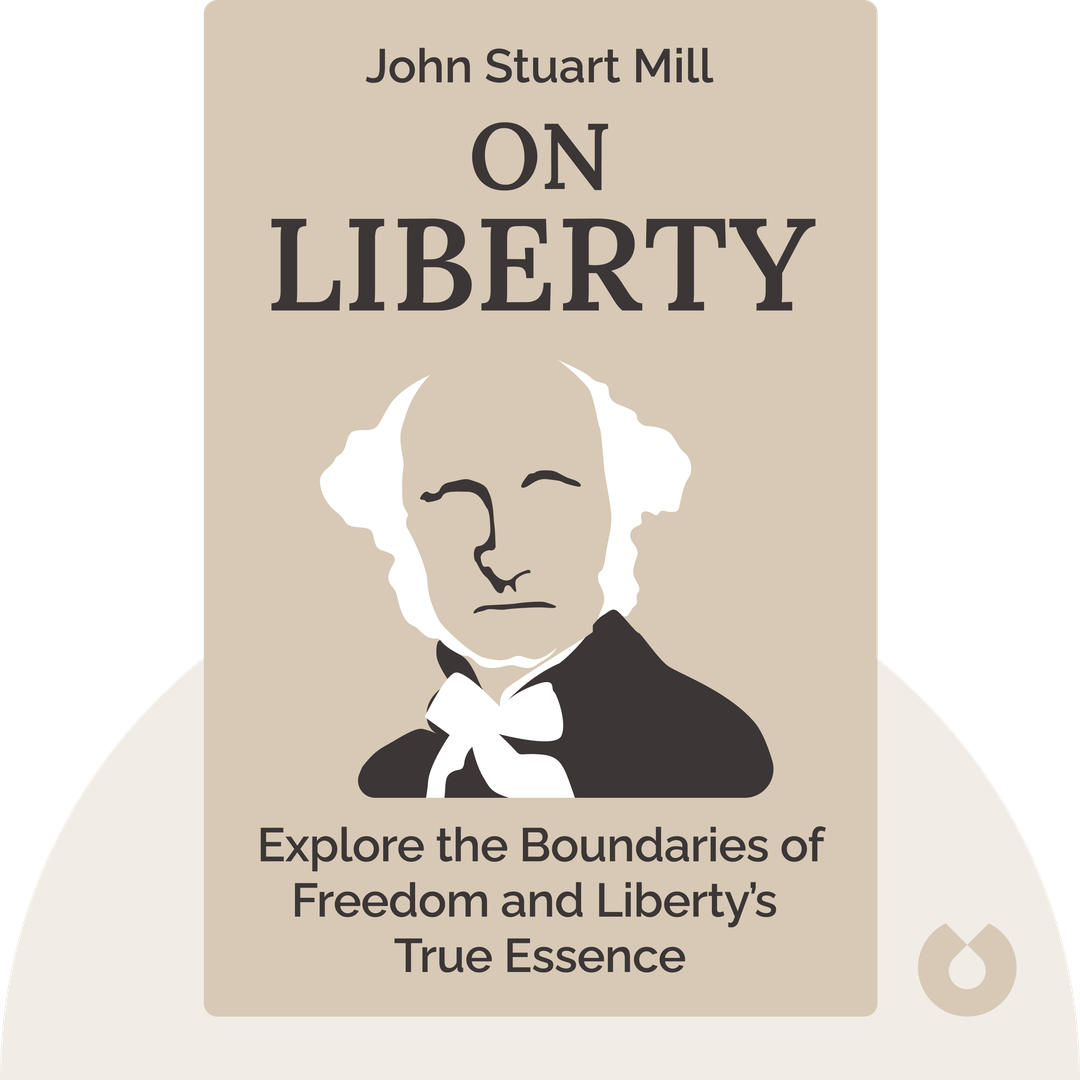
On Liberty (1859) is a classic text on the relationship between society, government, and individual liberty. It defends the importance of personal liberty and self-expression, claiming that social progress is dependent on the protection of individual liberties from majority rule.
Who Should Listen to On Liberty?
- Social philosophy scholars
- Free speech advocates
- Diverse thought leaders
Books Similar to On Liberty
Readers who enjoyed this also liked these titles.