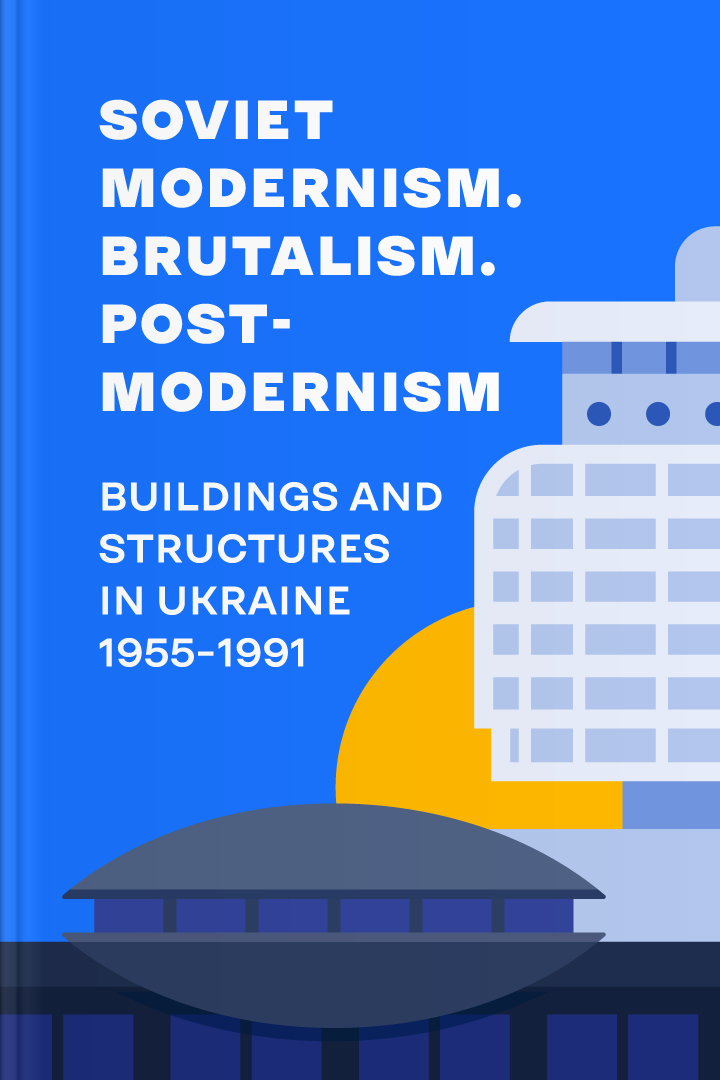
Радянський модернізм. Бруталізм. Постмодернізм . Будівлі та споруди 1955-1991 років в Україні
If You're Curious About These Questions...
You should listen to this audiobook
- Have you ever wondered how the political shifts of the Soviet era are literally etched into the concrete of the buildings you pass every day?
- Did you know that behind the seemingly uniform facade of Soviet brutalism, there were hidden "unofficial" schools of Ukrainian architecture fighting for their own identity?
- Are you curious why the streets of Ukrainian cities suddenly transformed into a playground for "strange" postmodern designs during the final years of the USSR?
Listen to Радянський модернізм. Бруталізм. Постмодернізм . Будівлі та споруди 1955-1991 років в Україні — Free Audiobook
Key Takeaways from Радянський модернізм. Бруталізм. Постмодернізм . Будівлі та споруди 1955-1991 років в Україні
- Understand how Soviet-era buildings serve as a physical historical archive that silently records the state's power, control, and mood in concrete and glass.
- Discover why the term 'modernism' holds a different meaning in the USSR compared to Western Europe, requiring listeners to carefully distinguish between modernism, brutalism, and postmodernism.
- Recognize that Soviet architecture was rarely a product of free artistic expression, but rather a powerful state manifesto designed to signal authority and ideological progress.
- Explore the central tension built into Soviet structures, where genuine utopian ambitions for a better world constantly collided with pragmatic state limits and political fear.
- Learn how Nikita Khrushchev's 'Thaw' triggered a sharp rejection of lavish Stalinist designs, pivoting instead toward practical mass social housing like 'khrushchevkas' to solve urgent postwar needs.
Learning Tools
Reinforce what you learned from Радянський модернізм. Бруталізм. Постмодернізм . Будівлі та споруди 1955-1991 років в Україні
Mind Map
Радянський модернізм. Бруталізм. Постмодернізм . Будівлі та споруди 1955-1991 років в Україні — Full Chapter Overview
- 1Recommendation
- 2Buildings That Remember
- 3The Thaw and the Turn Toward the Everyday
- 4Growth on Paper, Pressure in Real Life
- 5When a Style Becomes an Order
- 6The Quiet Regional Voices of Ukraine
- 7The Postmodern Paradox of Perestroika
- 8Looking Again, With Patience
Радянський модернізм. Бруталізм. Постмодернізм . Будівлі та споруди 1955-1991 років в Україні Summary & Overview
This narration explores Soviet architecture in Ukraine as more than a background for daily life. It treats buildings as historical evidence—sometimes painful, sometimes impressive, often contradictory—showing how political shifts, economic reforms, and cultural pressures shaped the streets and skylines of entire cities.
Across seven chapters, we move from postwar modernism and the housing push of the “Thaw,” into the Brezhnev era’s changing priorities, the rise of an official, state-driven “brutalism,” the quieter emergence of regional and unofficial Ukrainian schools, and finally the strange, contested arrival of Soviet postmodernism during perestroika. The closing invites listeners to observe their own cities with more care and curiosity.
Who Should Listen to Радянський модернізм. Бруталізм. Постмодернізм . Будівлі та споруди 1955-1991 років в Україні?
- Listeners who want a calm, human-paced introduction to Soviet-era architecture in Ukraine—without needing a technical background.
- Anyone interested in how politics and economics quietly shape everyday spaces, from housing blocks to government buildings.
- Students and curious travelers looking for a simple framework to recognize modernism, brutalism, and postmodernism in real streets and neighborhoods.
Books Similar to Радянський модернізм. Бруталізм. Постмодернізм . Будівлі та споруди 1955-1991 років в Україні
Readers who enjoyed this also liked these titles.