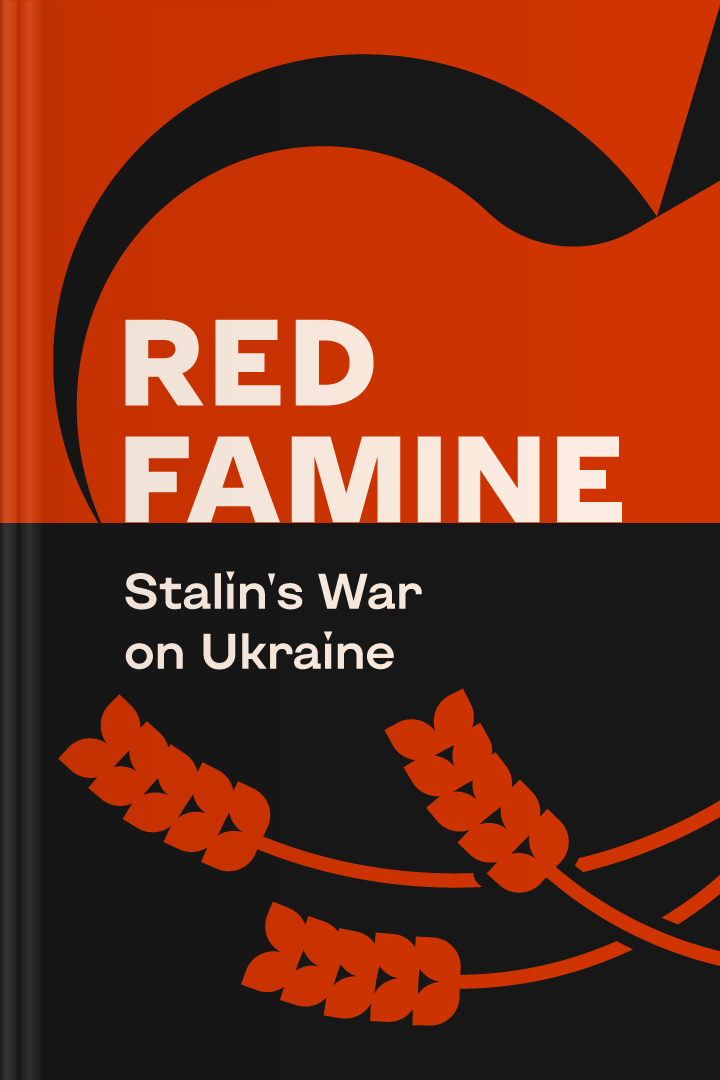
If You're Curious About These Questions...
You should listen to this audiobook
- Have you ever wondered how a government could use food as a silent, engineered weapon to reshape an entire nation’s identity?
- Are you curious about the hidden history of how the Ukrainian spirit survived centuries of systematic attempts by powerful empires to erase it?
- Did you know that the key to truly understanding today’s headlines in Ukraine lies in the painful, long-suppressed chapters of its Soviet past?
Listen to Red Famine — Free Audiobook
Key Takeaways from Red Famine
- Discover how Ukraine’s modern fight for sovereignty is rooted in a thousand-year-old cultural identity that has repeatedly survived imperial attempts to erase it.
- Understand the chilling history of the Holodomor, Joseph Stalin's deliberate campaign of starvation and extermination designed to crush the Ukrainian people.
- Learn how Russian empires systematically weaponized language and culture through 'Russification,' banning Ukrainian text and reducing the nation to 'Little Russia' to force assimilation.
- Explore the pivotal historical role of the Cossacks, courageous rebels who established an early prototype of a self-governing Ukraine before being liquidated by the Russian Empire.
- Recognize why Ukraine’s strategic geography and rich land have historically placed it at the tragic epicenter of European power struggles, world wars, and totalitarian terror.
Learning Tools
Reinforce what you learned from Red Famine
Mind Map
Red Famine — Full Chapter Overview
- 1Recommendation
- 2Ukraine: At the epicenter of history and trauma
- 3Ukraine up to 20th century: Formation of identity and resistance
- 4Roaring 20s and Ukrainian revolutions
- 5Lenin’s occupation of Ukraine: the first famine
- 6Leading up to disaster: Reasons behind famine
- 7The 1930s: Famine, silencing, and suspicion
- 8Stalin’s success: Propaganda and Russification
- 9Memories of famine and recognition in Ukraine today
- 10Conclusion
Red Famine Summary & Overview
This narration offers a steady, compassionate walkthrough of Ukraine’s history, with special care given to the country’s most painful and often-hidden chapters. It traces how Ukraine’s identity formed over centuries, how empires attempted to erase it, and how ordinary people endured repeated waves of violence, occupation, and coercion.
At the heart of the story is the Holodomor—an engineered famine under Stalin—and the broader system of terror, propaganda, and Russification that followed. By understanding this background, listeners can hold today’s events with more clarity, and with deeper respect for why Ukraine’s struggle to remain itself has such profound meaning.
Who Should Listen to Red Famine?
- Listeners who want a clear, human-centered overview of Ukrainian history and why it matters today
- Anyone trying to understand the Holodomor, Soviet policies in Ukraine, and how historical trauma echoes into the present
- Students, educators, and curious readers looking for a structured narrative that connects past events to modern identity and resistance
Books Similar to Red Famine
Readers who enjoyed this also liked these titles.