If You're Curious About These Questions...
You should listen to this audiobook
- Did you know that the very suffering you're trying to escape might actually be the essential "fuel" needed to grow your deepest sense of happiness?
- Have you ever wondered why it’s impossible for the "lotus" of peace to bloom without the "mud" of your life's most difficult challenges?
- What if you could stop running from your pain and instead learn the secret to transforming your darkest moments into a source of nourishment?
Listen to No Mud, No Lotus — Free Audiobook
Loading player...
Key Takeaways from No Mud, No Lotus
- Understand why turning to modern distractions like scrolling or binge-watching only temporarily numbs emotional pain without healing the underlying injury.
- Discover how to establish 'bells of mindfulness' using everyday occurrences to pause, take three conscious breaths, and reconnect with your body.
- Master a simple mindful breathing technique focused on your abdomen to act as a stabilizing anchor during turbulent emotional storms.
- Learn the Buddhist concept of 'the two arrows' to stop multiplying your inevitable pain with self-inflicted narratives, catastrophizing, and anxiety.
- Find out how to hold both pain and joy simultaneously by recognizing the everyday miracles and conditions for happiness that still surround you.
Learning Tools
Reinforce what you learned from No Mud, No Lotus
Mind Map
No Mud, No Lotus
Core Philosophy+
The Trap of Avoidance+
The Trap of Comparison+
Mindfulness Practices+
Quiz — Test Your Understanding
Question 1 of 6
How does the author describe our modern tendency to reach for distractions like social media or food when faced with emotional discomfort?
Question 2 of 6
What is the purpose of establishing 'bells of mindfulness' in your daily routine?
Question 3 of 6
When practicing mindful breathing to manage a strong 'emotional storm,' what does the author recommend you focus on?
Question 4 of 6
In the Buddhist concept of 'the two arrows,' what does the second arrow represent?
Question 5 of 6
According to the book, why is the psychological pursuit of equality—trying to prove we are 'as good as' others—considered a trap?
Question 6 of 6
What specific mental noting practice is suggested during mindful walking?
No Mud, No Lotus — Full Chapter Overview
- 1Recommendation
- 2The snare of avoidance
- 3Mindful breathwork
- 4The two arrows
- 5The snare of comparison
- 6Mindful walking
No Mud, No Lotus Summary & Overview
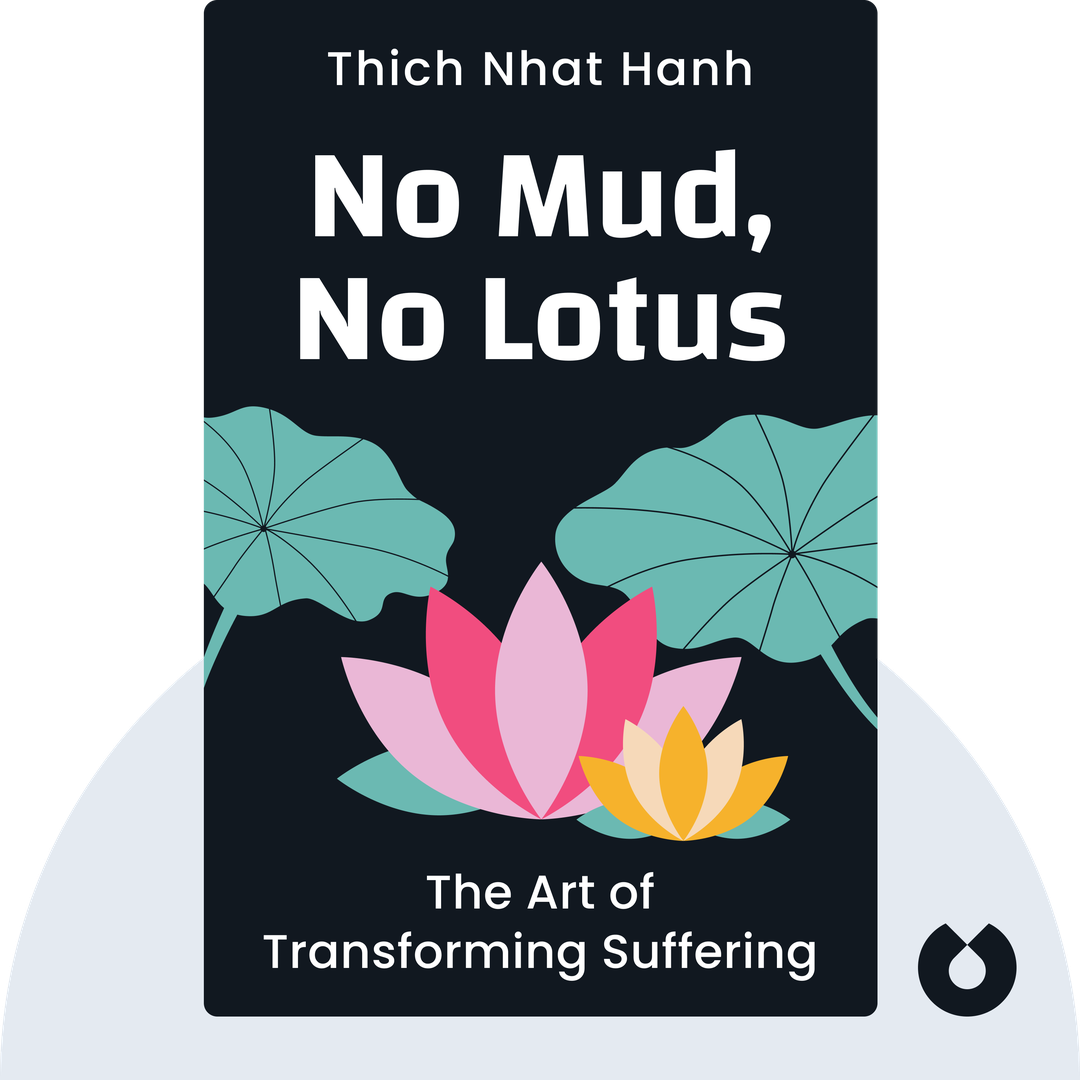
No Mud, No Lotus (2014) explores the paradoxical truth that suffering is essential for achieving genuine happiness. It presents mindfulness practices and meditation techniques that can help you turn toward, and embrace, your direct experience.
Who Should Listen to No Mud, No Lotus?
- People navigating major life transitions or grappling with questions of meaning
- Meditators seeking to bring their practice off the cushion
- Anyone interested in mindfulness and Buddhism
Books Similar to No Mud, No Lotus
Readers who enjoyed this also liked these titles.