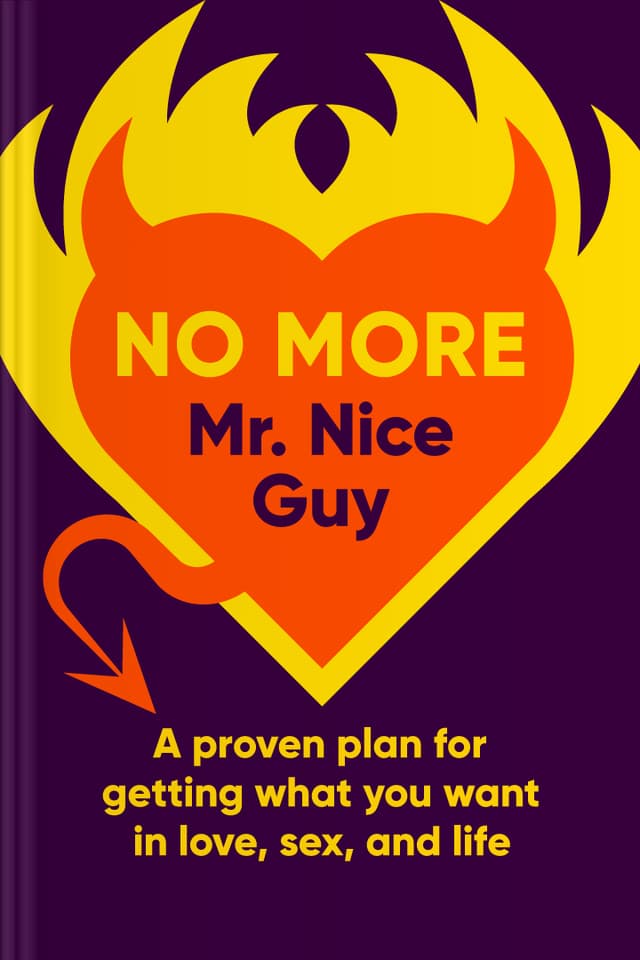
If You're Curious About These Questions...
You should listen to this audiobook
- Have you ever wondered why being 'too nice' often leads to resentment and frustration instead of the love and success you expect?
- What if you could trade your constant need for approval for a life of genuine integrity, confidence, and deeper intimacy?
- Are you curious about the hidden 'Nice Guy' patterns that might be sabotaging your career and relationships without you even realizing it?
Listen to No More Mr. Nice Guy
What You'll Learn from No More Mr. Nice Guy
- — When “Being Good” Becomes a Trap
- — The Social Mask and the Cost of Hiding
- — Choosing Whose Approval Matters
- — Needs, Boundaries, and the Hidden Deals We Make
- — Strength, Brotherhood, and the Return to Self-Respect
No More Mr. Nice Guy Chapter Overview
Chapter 1: AudiobookHub Recommendation
Chapter 2: — When “Being Good” Becomes a Trap
Chapter 3: — The Social Mask and the Cost of Hiding
Chapter 4: — Choosing Whose Approval Matters
Chapter 5: — Needs, Boundaries, and the Hidden Deals We Make
Chapter 6: — Strength, Brotherhood, and the Return to Self-Respect
Chapter 7: — Intimacy Built on Truth, Not Performance
Chapter 8: — Releasing Shame and Growing Sexual Self-Trust
Chapter 9: — From Playing Small to Living Fully
Chapter 10: — A Kinder Recovery: Integrity, Support, and Learning as You Go
About No More Mr. Nice Guy
This narration walks through the core ideas behind “Nice Guy Syndrome,” a pattern where a person tries to stay safe and lovable by being agreeable, selfless, and “doing everything right.” While those intentions can look generous on the surface, they often come with hidden costs: resentment, secrecy, weak boundaries, and relationships that never quite feel secure.
Across these chapters, the focus stays practical and compassionate. Rather than encouraging anyone to become harsh or selfish, the message is to become more real—learning to value personal needs, drop the social mask, build supportive connections, and create love, sex, and success from integrity instead of fear.
Who Should Listen to No More Mr. Nice Guy
- People who feel stuck in people-pleasing, conflict avoidance, or quiet resentment—and want a calmer, more authentic way to relate.
- Men who recognize “Nice Guy” patterns in their relationships, sexuality, or career and want to build confidence without losing kindness.
- Partners or friends of a “Nice Guy” who want language for what’s happening and a more honest, supportive path forward.
More Books Like No More Mr. Nice Guy
Readers who enjoyed this also liked these titles.

Everything You Need to Start Making Money Today

Growing Excellence in Yourself and Those You Lead

Master your emotional skills for lasting success

Born from the rivalries of ancient Chinese states and sharpened by hard-won experience, this concise treatise turns war into a study of mind, timing, and advantage—teaching how to prevail through discipline, deception, and superior strategy rather than brute force alone.