If You're Curious About These Questions...
You should listen to this audiobook
- Did you know that the "born entrepreneur" is actually a myth, and there's a specific set of learnable principles that can turn any determined person into a business success?
- Have you ever wondered why some promising startups skyrocket while others stall, and what the key differentiator is during those critical early planning stages?
- What if you could master the exact blueprint for not just running a business, but building a high-performance organization that's perfectly primed for a lucrative exit?
Listen to Built, Not Born — Cinematic Audio Edition
Loading player...
Key Takeaways from Built, Not Born
- Realize that traditional job security is a myth, and learn to base your entrepreneurial leap on fundamentals like lifestyle freedom and long-term income goals.
- Discover how to map out your business viability on a single page by calculating gross margins, overhead costs, and realistic daily sales targets.
- Learn the crucial steps for buying an existing business, including uncovering the owner's true reason for selling and evaluating the future impact of technology.
- Find out why you should initially fund your own startup rather than using other people's money to minimize pressure while you navigate early entrepreneurial mistakes.
- Master the basics of business mathematics and financial statements so you can make confident, informed decisions before outsourcing the work to an accountant.
Learning Tools
Reinforce what you learned from Built, Not Born
Mind Map
Built, Not Born
Entrepreneurial Mindset+
Business Planning & Management+
Funding & Financials+
Cash Flow & Sales+
Hiring & Culture+
Negotiation & Deals+
Reputation & Branding+
Exit Strategy+
Quiz — Test Your Understanding
Question 1 of 8
According to the text, what is a key factor in deciding whether to pursue entrepreneurship?
Question 2 of 8
What fundamental business question does Golisano suggest you should be able to answer on a single page?
Question 3 of 8
Why does the author advise entrepreneurs to tread carefully when taking money from venture capitalists?
Question 4 of 8
What is Golisano's rule of thumb regarding large clients and revenue?
Question 5 of 8
What is the purpose of using a 'pregnant pause' during a job interview or negotiation?
Question 6 of 8
When does the text suggest you should involve lawyers in a business deal?
Question 7 of 8
How does the author suggest a business owner should manage promises to build a stellar reputation?
Question 8 of 8
According to the text, when is the best time to plan for your exit or sell your business?
Built, Not Born — Full Chapter Overview
- 1Recommendation
- 2Deciding Whether Entrepreneurship Is Right for You
- 3Staying in Control of Your Business
- 4Financing Your Business
- 5Cash Flow and Profitability
- 6Hire for Attitude, Train for Skill
- 7Creating a Good Deal for Everyone
- 8Building a Strong Reputation
- 9Planning Your Business Exit
- 10Final summary
Built, Not Born Summary & Overview
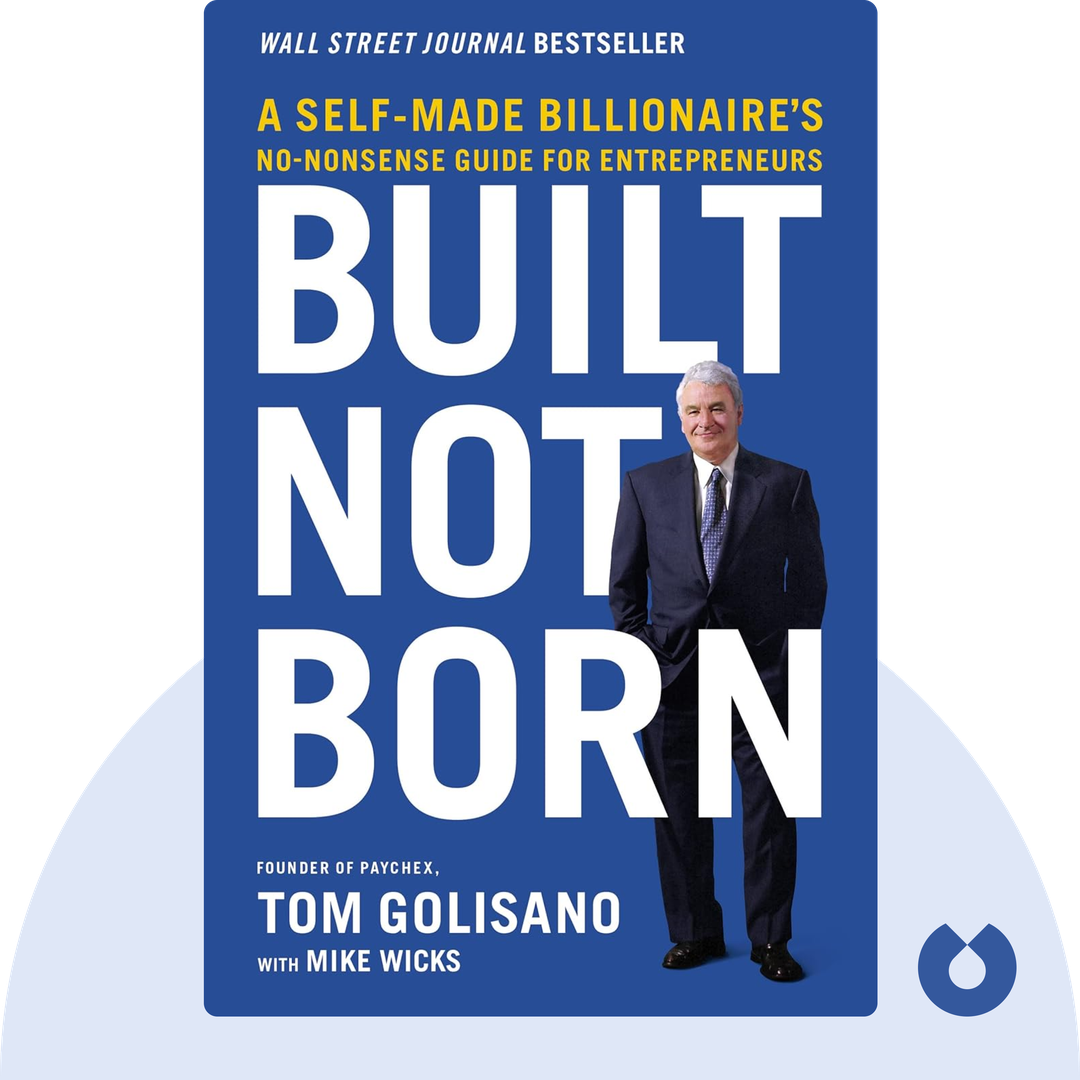
Built, Not Born (2022) is an instruction manual that explores how to transform any promising business idea into a thriving enterprise. Detailing the key steps for success from early planning stages through exits and everything in between, it dismantles the myths of exclusivity surrounding entrepreneurship to prove that concrete and learnable principles can lead any determined person toward sustained success.
Who Should Listen to Built, Not Born?
- Entrepreneurs trying to start, buy, and grow businesses
- Managers intent on building profitable and performant departments within organizations
- Any successful entrepreneur looking for a good exit strategy
Books Similar to Built, Not Born
Readers who enjoyed this also liked these titles.