If You're Curious About These Questions...
You should listen to this audiobook
- Have you ever wondered what secrets and personal struggles lie behind the professional mask of one of the world’s most influential psychotherapists?
- What if you could discover how a master of the human mind navigates his own fears, regrets, and the process of aging?
- Are you curious about the specific life-changing moments that transform a person from a young, insecure boy into a pioneer of existential therapy?
Listen to Becoming Myself — Free Audiobook
Loading player...
Key Takeaways from Becoming Myself
- Discover how complicated childhood family dynamics can serve as a powerful catalyst for intentionally building stronger, more loving relationships in your adult life.
- Understand the profound impact of authentic, comforting care by seeing how a single compassionate doctor inspired Yalom's revolutionary psychiatric practice.
- Learn from Yalom's intense undergraduate struggles with anxiety and insomnia to recognize the critical importance of seeking mental health support during high-pressure times.
- Explore how integrating ancient philosophy with modern psychiatry can bridge the gaps in traditional therapeutic models to offer deeper, more holistic healing.
- Find out how confronting intimidating existential themes like death, isolation, and freedom head-on can actually alleviate chronic anxiety and restore your sense of purpose.
Learning Tools
Reinforce what you learned from Becoming Myself
Mind Map
Becoming Myself
Early Life & Relationships+
Education & Medical Training+
Psychiatry Innovations+
Literary Career+
Aging & Mortality+
Quiz — Test Your Understanding
Question 1 of 6
How did Yalom's fraught relationship with his parents influence his own family life later on?
Question 2 of 6
What was the primary catalyst for Yalom's decision to become a doctor?
Question 3 of 6
What significant hurdle did Yalom face when applying to medical schools?
Question 4 of 6
During his time at Stanford, Yalom developed a new theoretical model called 'existential therapy.' What was the core focus of this approach?
Question 5 of 6
Why did Yalom begin writing narrative fiction alongside his academic work?
Question 6 of 6
What is a surprising revelation Yalom shares about his experience with aging as a prominent existential psychiatrist?
Becoming Myself — Full Chapter Overview
- 1Recommendation
- 2A son, husband, and father
- 3The learner
- 4The therapist and educator
- 5The writer
- 6The later years
- 7Final summary
Becoming Myself Summary & Overview
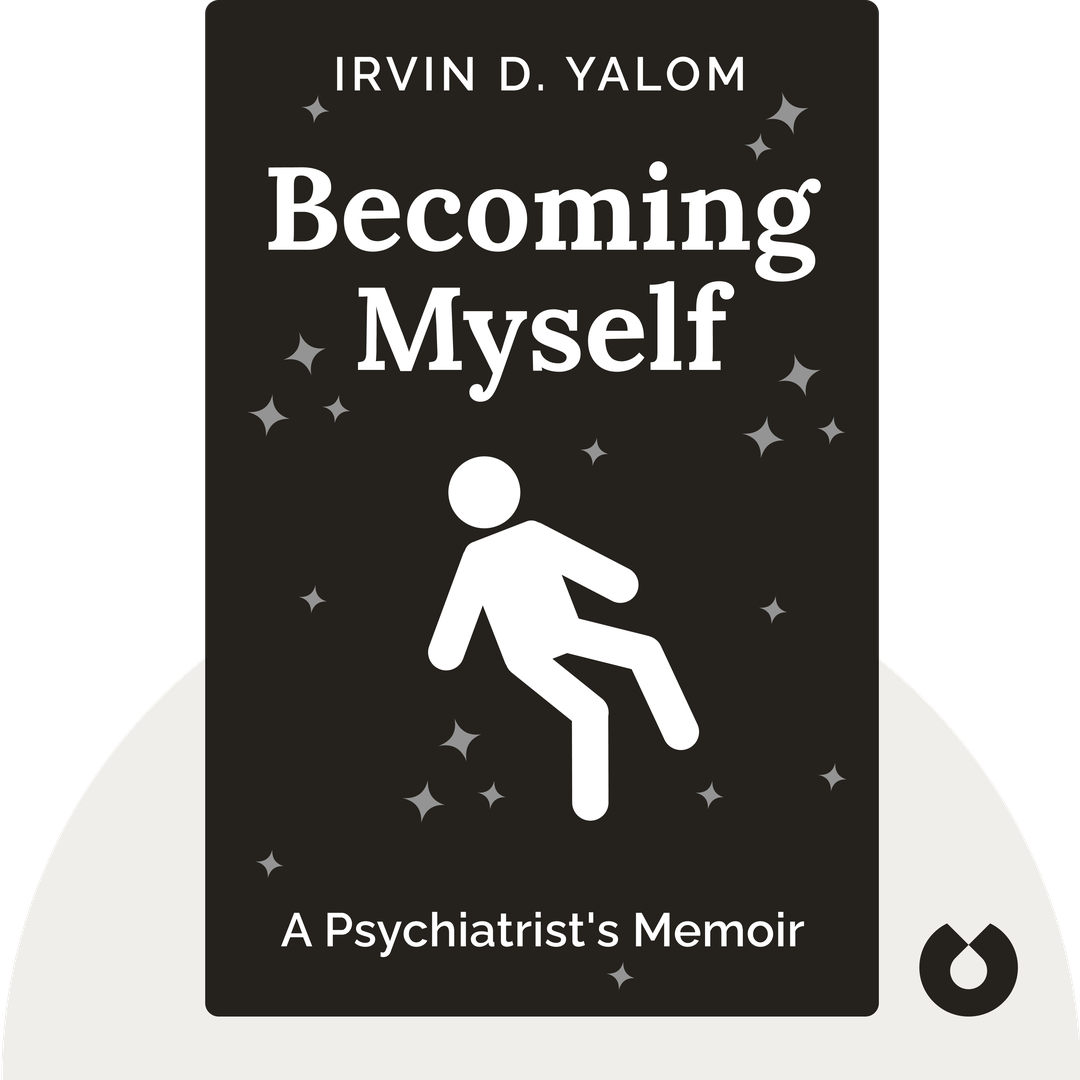
Becoming Myself (2017) is a rare peek behind the curtain at the personal and professional life of one of the world’s most prominent psychotherapists. Weaving intimate anecdotes with therapeutic insights, it offers a unique, strikingly candid perspective on the human condition and the transformative power of psychotherapy.
Who Should Listen to Becoming Myself?
- Practicing psychotherapists and psychiatrists
- Individuals curious about a therapist’s personal and professional experience
- Those interested in existential psychotherapy and self-discovery
Books Similar to Becoming Myself
Readers who enjoyed this also liked these titles.