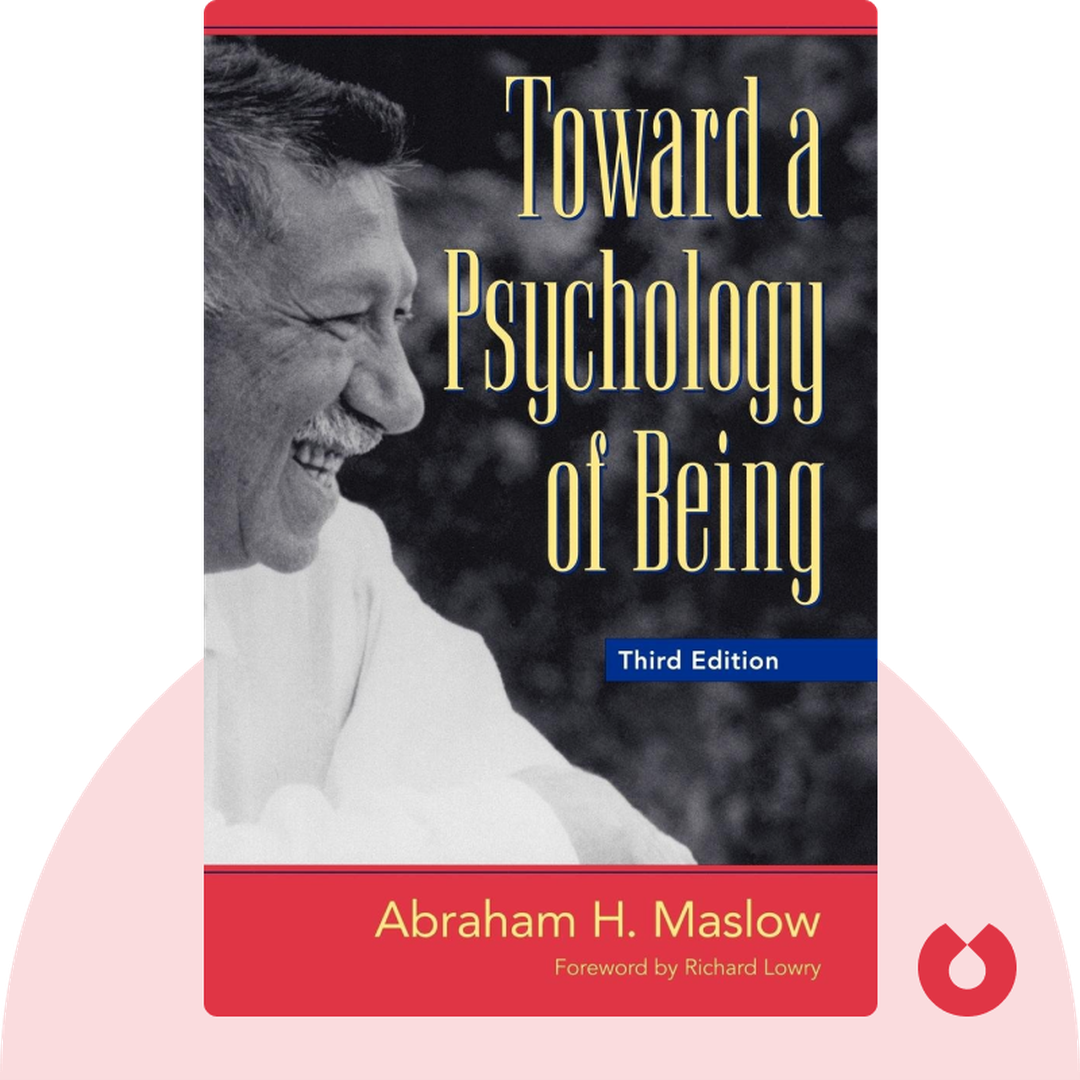
Toward a Psychology of Being
Start ListeningDownload Try free on iPhoneScan to start in 5 seconds
Categories:
If You're Curious About These Questions...
You should listen to this audiobook
- Have you ever wondered why we often choose the safety of the familiar over the potential for growth—and how you can finally break that cycle?
- What’s the secret behind those rare, transcendent moments of pure joy and clarity, and how can they transform your everyday life?
- Did you know that true psychological health isn’t just the absence of illness, but the fulfillment of a hidden, innate potential waiting inside you?
Listen to Toward a Psychology of Being — Free Audiobook
Loading player...
Key Takeaways from Toward a Psychology of Being
- Discover why suppressing your innate drive to self-actualize—like a natural artist choosing a mundane job—unconsciously leads to neuroses and illness.
- Understand the foundation of positive psychology and how shifting focus from merely curing sickness to actively pursuing psychological health unlocks human potential.
- Learn how your needs are structured in a strict hierarchy, requiring you to secure basic safety, belonging, and respect before you can successfully self-actualize.
- Explore why self-actualization relies on the continuous gratification of foundational needs, meaning any sudden threat to your basic safety will immediately pause your psychological growth.
- Grasp the crucial difference between deficiency motivation and growth motivation, and how treating growth as an end in itself allows you to perceive the world objectively.
Learning Tools
Reinforce what you learned from Toward a Psychology of Being
Mind Map
Toward a Psychology of Being
Human Nature & Self-Actualization+
Hierarchy of Needs+
Motivation & Perception+
Peak Experiences (B-Cognition)+
Self-Actualizing (SA) Creativity+
Restructuring Society's Values+
Quiz — Test Your Understanding
Question 1 of 7
Why did Abraham Maslow become frustrated with the field of psychology during his time?
Question 2 of 7
According to Maslow, what is the typical result of individuals repeatedly denying their innate drive to self-actualize?
Question 3 of 7
How do deficiency needs relate to the process of psychological growth?
Question 4 of 7
What distinguishes 'B-love' (love for the Being) from 'D-love' (deficiency love)?
Question 5 of 7
Which of the following best describes 'B-cognition' during a peak experience?
Question 6 of 7
How did Maslow define 'self-actualizing (SA) creativity' compared to typical artistic creativity?
Question 7 of 7
To create a healthier society, Maslow suggested that society's value system should be modeled after:
Toward a Psychology of Being — Full Chapter Overview
- 1Recommendation
- 2Humans possess an inborn need to self-actualize.
- 3Deficiency needs must be satisfied before people can develop.
- 4Growth is concerned with ends, not mere means.
- 5Self-actualizers often undergo many peak experiences.
- 6Self-actualizing creativity differs from ordinary creativity.
- 7Society can build its values from the choices of self-actualizers.
Toward a Psychology of Being Summary & Overview
Toward a Psychology of Being (1962) expands on famed psychologist Abraham Maslow's pivotal theories of motivation and self-actualization, which were first introduced in Maslow's 1954 book, Motivation and Personality. It presents a series of hypotheses about the human condition, dealing with important questions about people’s innate desires, the nature of well-being, and the process of psychological growth.
Who Should Listen to Toward a Psychology of Being?
- Psychology fanatics
- Aspiring self-actualizers who want to get more out of their lives
- Parents, teachers, counselors, and all those who work with young people
Books Similar to Toward a Psychology of Being
Readers who enjoyed this also liked these titles.