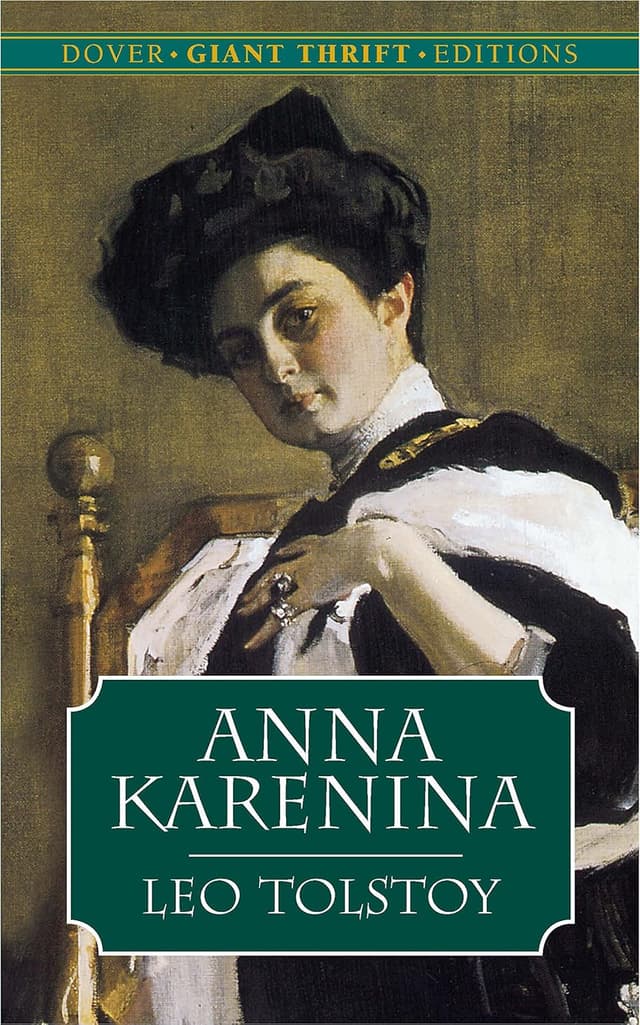
Leo Tolstoy composed *Anna Karenina* between 1873 and 1877 at his rural estate, Yasnaya Polyana, in Russia. The novel emerged during a period of profound transitional anxiety, following Tsar Alexander II’s 1861 emancipation of the serfs. This era was characterized by a deep ideological schism between traditional, agrarian Russian values and the rapid encroachment of Western European industrialization and liberal thought. Through the contrasting lives of his characters, particularly the urbanite Anna and the rural landowner Levin, Tolstoy captured this cultural friction, painting a vivid portrait of a society grappling with modernization, shifting gender roles, and the rigid social dictates of the Russian aristocracy.
Upon its initial serialization in *The Russian Messenger*, the novel proved highly controversial. High society was scandalized not merely by its central theme of adultery, but by Tolstoy’s unsparing critique of the hypocrisy inherent in the upper echelons of St. Petersburg and Moscow. While male infidelity was tacitly accepted, Anna’s public pursuit of passion resulted in brutal social ostracization, highlighting the era's severe double standards and the draconian divorce laws of the Russian Orthodox Church. Furthermore, Tolstoy’s outspoken critiques of Russian military involvement in the Serbo-Turkish war in the novel’s final part alienated his publisher, forcing him to print the conclusion at his own expense.
Despite these early frictions, *Anna Karenina* was quickly recognized as a monumental achievement in literary realism. Fyodor Dostoevsky famously declared it a flawless work of art, a sentiment later echoed by writers like William Faulkner and Vladimir Nabokov. Tolstoy’s innovative use of interior monologue laid the groundwork for the stream-of-consciousness techniques that would define twentieth-century modernist fiction. Today, the novel remains a cornerstone of world literature, celebrated for its unparalleled psychological depth and its enduring inquiry into how one should live a meaningful life.