If You're Curious About These Questions...
You should listen to this audiobook
- Did you know that hundreds of thousands of people once voluntarily migrated from Japan to North Korea, only to realize they had walked into a lifelong trap?
- Have you ever wondered what daily life is truly like under one of the world’s most secretive and brutal regimes, where even a single word can cost you everything?
- Are you curious about the sheer level of desperation and courage it takes to escape a country designed to keep its citizens imprisoned for life?
Listen to A River in Darkness — Free Audiobook
Loading player...
Key Takeaways from A River in Darkness
- Discover why over 100,000 people left capitalist Japan for a promised paradise in socialist North Korea, only to face immediate poverty and harsh discrimination.
- Understand how a rigidly enforced North Korean caste system predetermines a citizen's entire future, permanently denying marginalized students any chance of upward mobility.
- Learn how a totalitarian education system uses endless political brainwashing and the threat of severe punishment to force children into compliance with bizarre state demands.
- Explore how extreme paranoia at the highest levels of the regime directly results in sudden military occupations and the ruthless torment of innocent rural villagers.
- Uncover the devastating corruption behind North Korea's state-controlled food rationing, where survival depends entirely on political connections and bribery rather than actual human need.
Learning Tools
Reinforce what you learned from A River in Darkness
Mind Map
A River in Darkness
False Promises & Arrival+
Education & Caste System+
Repression & Corruption+
Famine & Desperation+
The Perilous Escape+
Tragic Aftermath in Japan+
Quiz — Test Your Understanding
Question 1 of 7
Why did Ishikawa’s family and thousands of others migrate from Japan to North Korea between the late 1950s and mid-1980s?
Question 2 of 7
How was Ishikawa's future career path determined in North Korea?
Question 3 of 7
What harsh social ritual were students like Ishikawa forced to participate in at school to avoid severe punishment?
Question 4 of 7
What did Ishikawa's experience at the supposedly free medical clinic reveal about North Korean society?
Question 5 of 7
What was the primary trigger for the devastating North Korean famine in the 1990s that killed around three million people?
Question 6 of 7
How did Ishikawa realize he had successfully made it across the Yalu river into China?
Question 7 of 7
What was Ishikawa's experience after finally returning to Japan?
A River in Darkness — Full Chapter Overview
- 1Recommendation
- 2Ishikawa’s family was promised a better life in North Korea, but faced brutal persecution.
- 3Ishikawa’s school years were shaped by strict obedience, constant propaganda, and rigid social divisions.
- 4Repression in North Korea was so extreme that it dehumanized its citizens.
- 5The North Korean famine killed millions, and survival often meant turning to crime.
- 6Thousands of North Koreans risk the deadly Yalu River crossing in search of a better life in China.
- 7Even after reaching China, Ishikawa still faced a dangerous journey back to Japan.
- 8Final summary
A River in Darkness Summary & Overview
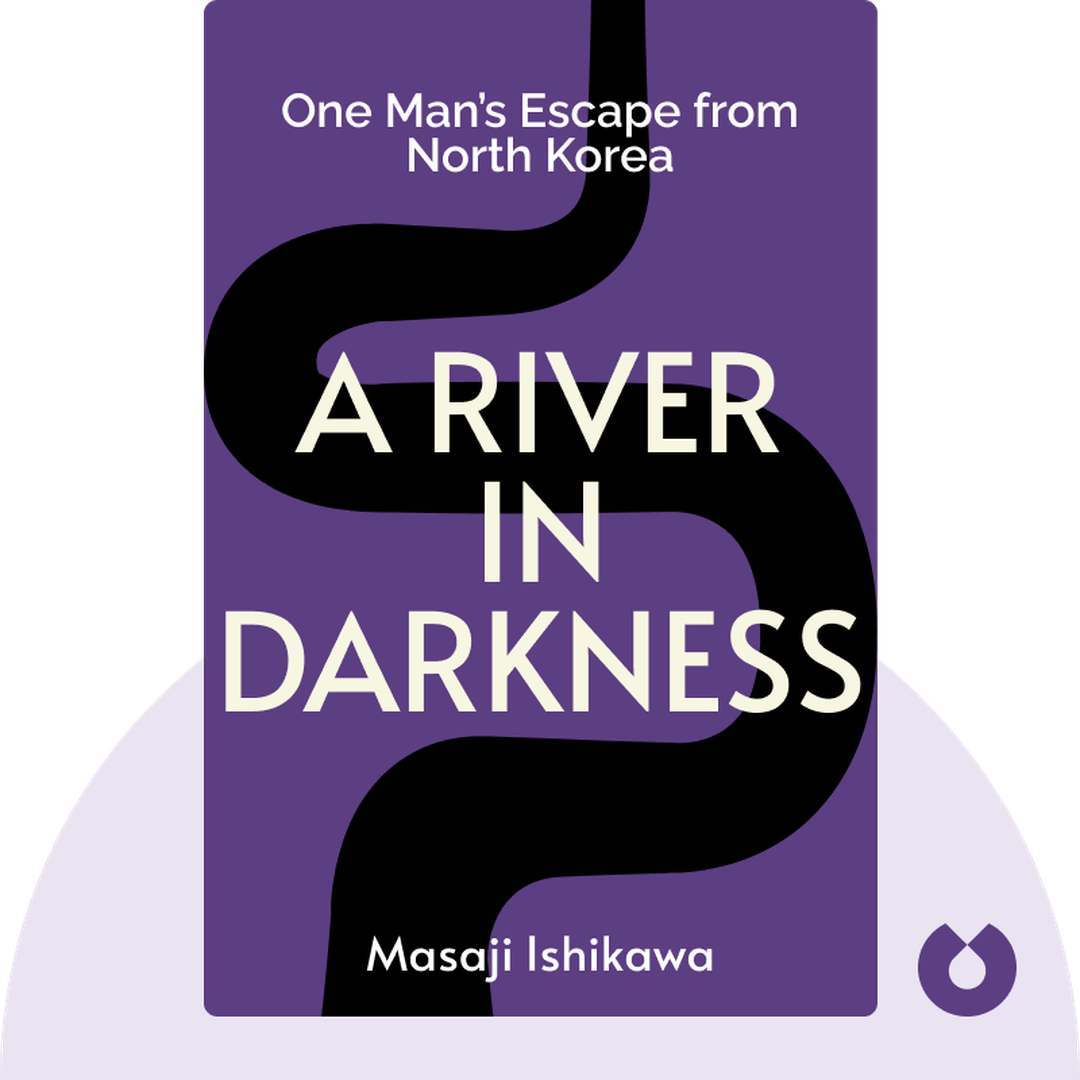
A River in Darkness (2000) is the harrowing true story of one man’s life in and eventual escape from the brutal dictatorship of North Korea. Born in Japan, Masaji Ishikawa was one of hundreds of thousands of Koreans who moved to the country between the 1950s and 1980s. His memoir chronicles the life of drudgery, terror and endless hardship that awaited them.
Who Should Listen to A River in Darkness?
- Human rights advocates
- History buffs fascinated by the Cold War
- Anyone who loves true life stories
Books Similar to A River in Darkness
Readers who enjoyed this also liked these titles.