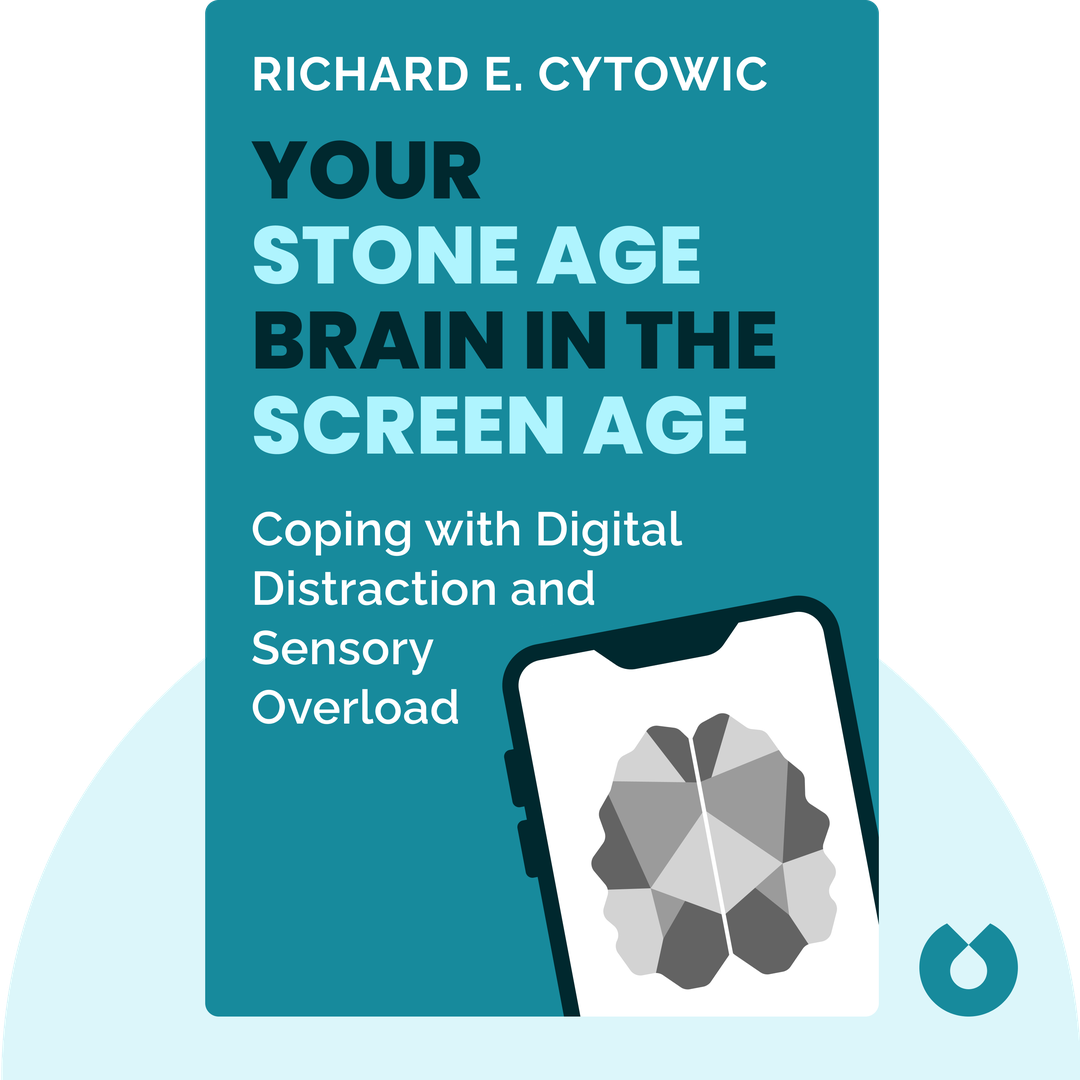
Your Stone Age Brain in the Screen Age
Start ListeningDownload Try free on iPhoneScan to start in 5 seconds
Categories:
If You're Curious About These Questions...
You should listen to this audiobook
- Have you ever wondered why your brain finds it nearly impossible to resist the 'infinite scroll' of social media, even when you’re exhausted?
- Did you know that while our technology has evolved at lightning speed, the grey matter in your head is still essentially the same as a hunter-gatherer’s from 50,000 years ago?
- What if the secret to breaking your digital habits lies in understanding how Big Tech exploits survival instincts meant for the Stone Age?
Listen to Your Stone Age Brain in the Screen Age — Cinematic Audio Edition
Loading player...
Key Takeaways from Your Stone Age Brain in the Screen Age
- Discover why your brain feels overwhelmed by technology due to an evolutionary mismatch between your Stone Age wiring and the modern digital world.
- Learn how constant app-switching and multitasking rapidly drain your brain's finite energy reserves, leaving you less able to concentrate or retain information.
- Understand the physical toll of screen time, including how mindless habits like repetitive swiping can physically rewire your brain's sensory cortex.
- Find out why reading small text on screens causes cognitive strain, and how the predictable, steady visual patterns of nature can soothe your exhausted mind.
- Recognize the symptoms of digital addiction, from diminished empathy to anxiety, and see why treating your attention as a strictly limited resource is key to reclaiming your focus.
Learning Tools
Reinforce what you learned from Your Stone Age Brain in the Screen Age
Mind Map
Your Stone Age Brain in the Screen Age
Evolutionary Mismatch+
The Limits of Attention+
Visual Processing & Environments+
Impact on Child Development+
The Illusion of Digital Learning+
Quiz — Test Your Understanding
Question 1 of 6
Why is multitasking and constantly switching between apps so detrimental to our brains?
Question 2 of 6
According to the text, how does attention fundamentally differ from memory?
Question 3 of 6
Why do natural environments feel soothing to our brains compared to digital screens and urban settings?
Question 4 of 6
What is one of the physical consequences of young children replacing traditional toys with screens?
Question 5 of 6
How does relying on search engines like Google affect our ability to truly learn?
Question 6 of 6
What did the study involving a Chinese-speaking nanny demonstrate about how children learn?
Your Stone Age Brain in the Screen Age — Full Chapter Overview
- 1Recommendation
- 2Our Stone Age brains weren't built for today’s digital era
- 3Attention is a limited resource
- 4Nature soothes our brains; digital patterns drain them
- 5Screens condition young minds to favor quick rewards over their long-term growth
- 6Depending on digital tools weakens our ability to truly learn
Your Stone Age Brain in the Screen Age Summary & Overview
Your Stone Age Brain in the Screen Age (2024) explores how the human brain, largely unchanged since the Stone Age, often struggles to cope with the demands of modern technology. It explains why our brains are vulnerable to digital addiction and Big Tech’s influence, given that they evolved for survival in a prehistoric world, and what that does to us as humans.
Who Should Listen to Your Stone Age Brain in the Screen Age?
- People concerned about digital addiction and its effects
- Anyone interested in brain health and modern technology’s impact
- Readers curious about human evolution and tech’s influence on behavior
Books Similar to Your Stone Age Brain in the Screen Age
Readers who enjoyed this also liked these titles.