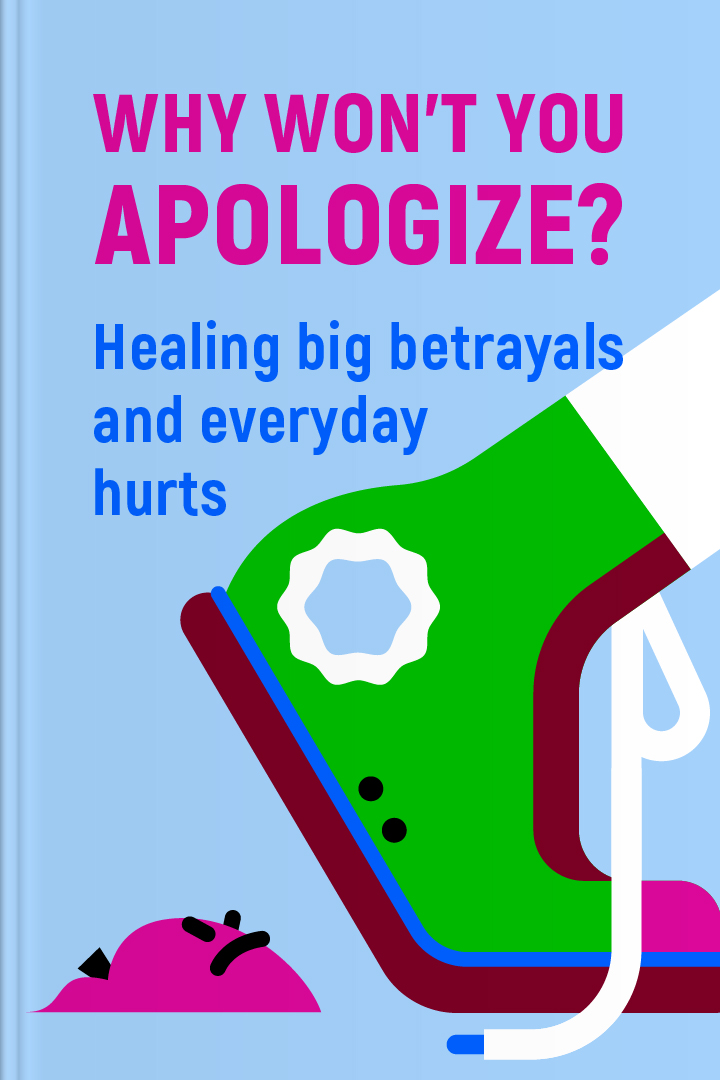
If You're Curious About These Questions...
You should listen to this audiobook
- Have you ever wondered why some people find it nearly impossible to say "I’m sorry," even when they are clearly in the wrong?
- Did you know that adding one specific word to your apology can actually turn a peace offering into a "trap" that makes the conflict worse?
- What if you could find complete emotional release and move on from a betrayal without ever being pressured to "forgive and forget"?
Listen to Why Won't You Apologize? — Free Audiobook
Key Takeaways from Why Won't You Apologize?
- Discover why some people view apologizing as a humiliating threat to their ego, and how taking true responsibility instead of offering unsolicited advice builds genuine connection.
- Learn how to avoid destructive apology traps—like adding the word 'but' or saying 'I'm sorry you feel hurt'—that subtly shift blame and invalidate the other person's experience.
- Understand why demanding immediate forgiveness turns an apology into a manipulative transaction, and how true repair requires making patient room for the injured person's feelings.
- Recognize the dangers of 'obsessive apologizing' to ease your own guilt, and learn why respecting someone's boundary or a simple 'no' is sometimes the healthiest resolution.
- Find out how evolutionary instincts trigger sudden defensiveness during everyday conflicts, and discover how to maintain your self-respect even when a genuine apology isn't possible.
Why Won't You Apologize? — Full Chapter Overview
Chapter 1: Recommendation
Chapter 2: When “I’m Sorry” Feels Impossible
Chapter 3: The Apology Traps That Quietly Make Things Worse
Chapter 4: Staying Close When Defensiveness Takes Over
Chapter 5: Apologies as Culture: Values, Shame, and Stereotypes
Chapter 6: Forgiveness, Forgetting, and the Quiet Option of Letting Go
Chapter 7: Reclaiming Your Mind When You Can’t Forgive
Chapter 8: Choosing Your Words, Your Boundaries, and Your Time
Why Won't You Apologize? Summary & Overview
This audio summary explores the psychology and communication patterns behind apologizing—why it can feel natural for some people and nearly impossible for others. Through practical examples, including Harriet Lerner’s own experiences, it highlights what sincere responsibility sounds like and what common “apology traps” do instead.
It also shifts the focus to the receiving side: how to decide what kind of apology matters, when forgiveness is pressured or unrealistic, and how “letting go” can be a powerful alternative to either forgiving or forgetting. Throughout, the emphasis stays compassionate and realistic: relationships can heal, but not every harm can be neatly repaired—and that truth deserves tenderness.
Who Should Listen to Why Won't You Apologize??
- Anyone who finds apologizing difficult, or who keeps getting stuck in defensiveness, explanations, and “yeah, but…” responses during conflict
- People who often receive vague or manipulative apologies and want language for what feels off—and what healthier repair can look like
- Listeners healing from conflict, betrayal, or relational trauma who want a gentle path toward clarity, boundaries, and emotional release without pressure to “forgive and forget”
Books Similar to Why Won't You Apologize?
Readers who enjoyed this also liked these titles.
The Secret to Healthy Relationships
How the Business World Ruined Sorry and Why We Can’t Stop Saying It

Words can soften conflict, rebuild connection, and make love feel safe again—and with a few simple, honest phrases, everyday moments can turn into chances to understand each other more deeply and gently.
This gentle, step-by-step narration explores how childhood coping strategies, fear of failure, and other people’s opinions can quietly shape adult choices—and offers practical, compassionate tools to reclaim inner clarity, set meaningful goals, and take steady action toward a life that feels like yours.