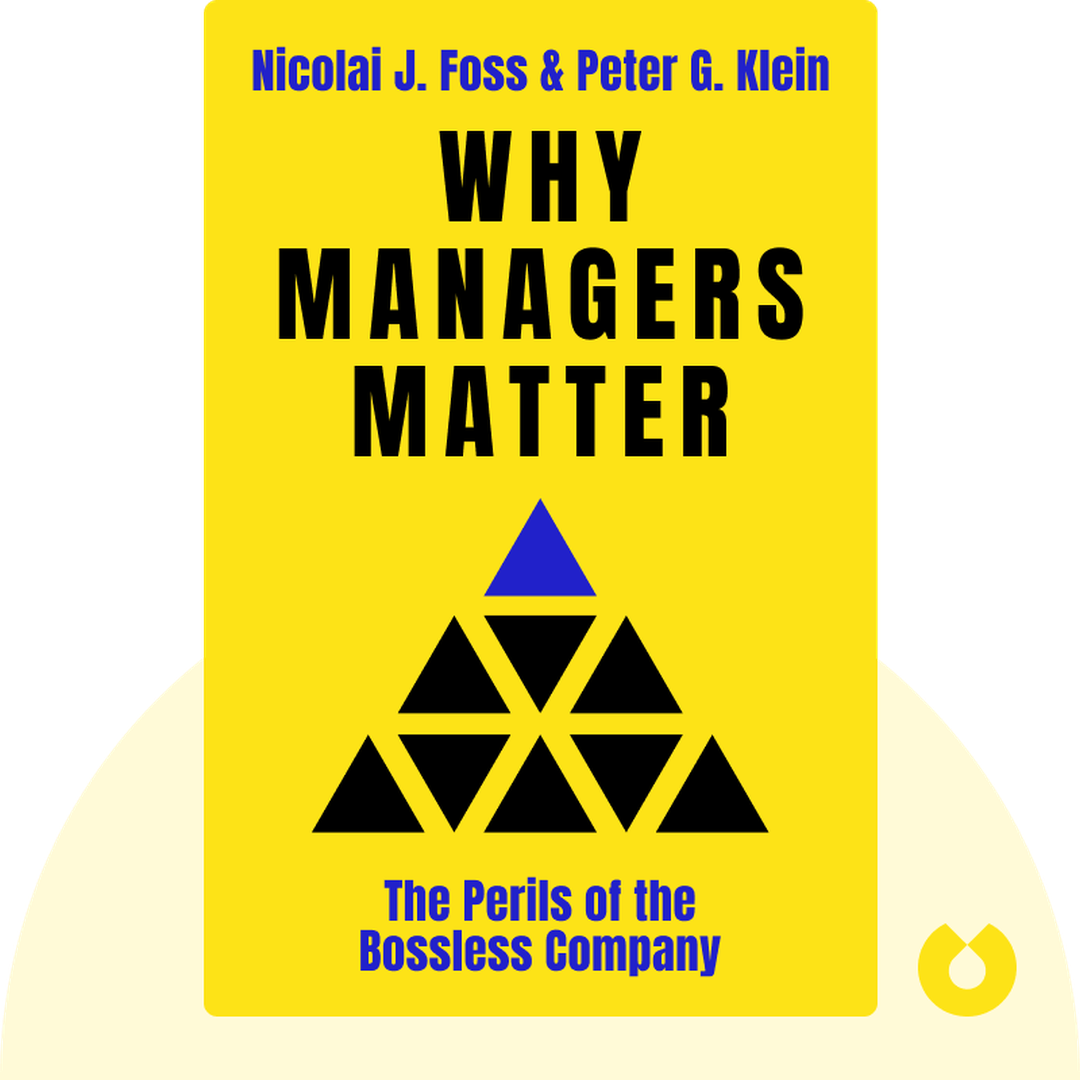
If You're Curious About These Questions...
You should listen to this audiobook
- Have you ever wondered why the trend of "bossless" organizations often fails, while traditional hierarchies continue to thrive in the modern business world?
- Did you know that the secret to a high-performing company isn't just talent, but choosing a specific organizational structure based on your team’s unique workflow?
- Are you curious about the specific situations where a traditional boss is actually more effective for driving innovation than a flat, self-managed team?
Listen to Why Managers Matter — Free Audiobook
Loading player...
Key Takeaways from Why Managers Matter
- Understand why hierarchy is not just about commanding others, but a vital structural support system needed to manage complex cooperation and align employee motives.
- Discover the truth behind the popular trend of bossless companies and why purely flat, leaderless organizations do not actually exist in practice.
- Learn how an effective hierarchy saves time and boosts organizational efficiency by establishing clear procedures, eliminating the need to reach a consensus for every new task.
- Recognize that common workplace frustrations, such as stifled creativity and resentment, stem from improper implementation and micromanagement rather than the hierarchical structure itself.
- Find out how removing middle management to create a flatter company can paradoxically lead to increased micromanagement as top executives intervene directly in everyday tasks.
Learning Tools
Reinforce what you learned from Why Managers Matter
Mind Map
Why Managers Matter
The Organizational Spectrum+
Hierarchical Structure+
Bossless (Flat) Structure+
Real-World Examples+
Finding the Right Balance+
Quiz — Test Your Understanding
Question 1 of 7
According to Foss and Klein, what is the primary purpose of a hierarchy in an organization?
Question 2 of 7
How do the authors view common negative stereotypes of hierarchy, such as micromanaging bosses or overly rigid structures?
Question 3 of 7
What do Foss and Klein conclude about the reality of purely flat, leaderless organizations?
Question 4 of 7
According to a 14-year study of Fortune 500 companies, what often happens when companies 'de-layer' by removing middle management?
Question 5 of 7
Why is Wikipedia cited as an example of a balanced organizational structure rather than a purely bossless one?
Question 6 of 7
How does Morning Star, the tomato processing company, successfully operate on a near-bossless model?
Question 7 of 7
What is the ultimate conclusion drawn by the authors regarding the choice between a hierarchical and a flat organizational structure?
Why Managers Matter — Full Chapter Overview
- 1Recommendation
- 2What does a hierarchical or bossless company structure really mean today?
- 3Benefits and downsides of hierarchy.
- 4Benefits and downsides of a leaderless organization.
- 5Striking a balance.
Why Managers Matter Summary & Overview
Why Managers Matter (2022) outlines the benefits and drawbacks of different company organizational styles. It explains when and why a company might prefer hierarchies vs. a bossless environment depending on its workflows.
Who Should Listen to Why Managers Matter?
- Business executives deciding on the best structure for their companies
- Scholars and leaders comparing hierarchical structures and flat organizations
- Anyone interested in organizational structure and managerial strategy
Books Similar to Why Managers Matter
Readers who enjoyed this also liked these titles.