If You're Curious About These Questions...
You should listen to this audiobook
- What if you could achieve record-breaking business success by treating your employees like family members instead of just cogs in a machine?
- Have you ever wondered why traditional management often kills motivation, and what radical shift in leadership can inspire lifelong company loyalty?
- What’s the secret to creating a high-performance culture where every single person feels they truly matter and is empowered to reach their full potential?
Listen to Everybody Matters — Free Audiobook
Loading player...
Key Takeaways from Everybody Matters
- Understand why true company success is measured by employee well-being, and learn to treat leadership as a form of stewardship that nurtures your team like family.
- Discover how crafting a company charter with direct input from your staff can uncover hidden concerns and forge a powerful bond of trust between employees and management.
- Learn to prove your trust through action by dismantling oppressive rules, such as time clocks and rigid break schedules, that hinder creativity and morale.
- Master the 'just enough' approach to empower your employees with responsible freedom, defining clear goals while trusting them to use their own unique skills to achieve them.
- Find out how to overcome company stagnation by combining a strong cultural vision that prioritizes your team's happiness with a bold business vision that drives growth.
Learning Tools
Reinforce what you learned from Everybody Matters
Mind Map
Everybody Matters
Leadership as Stewardship+
Building Trust+
Responsible Freedom+
Dual Visioning+
Meaningful Recognition+
Active Listening+
Quiz — Test Your Understanding
Question 1 of 5
How does the author suggest leaders should view their role in relation to their employees?
Question 2 of 5
When Bob Chapman created his company's charter, how did he prove to his employees that management truly trusted them?
Question 3 of 5
What is the 'just enough' method used at Barry-Wehmiller to foster responsible freedom?
Question 4 of 5
According to the text, why is it necessary for a company to have both a cultural vision and a business vision?
Question 5 of 5
Why does the author argue that personalized, peer-nominated awards are more effective than monetary bonuses?
Everybody Matters — Full Chapter Overview
- 1Recommendation
- 2To succeed, treat your employees like family.
- 3A company charter shaped with employee input can build trust in management.
- 4Empower employees by giving them freedom and trusting their decisions.
- 5Inspire employees with a clear cultural and business vision.
- 6Bring your team closer by regularly celebrating their achievements.
- 7Final summary
Everybody Matters Summary & Overview
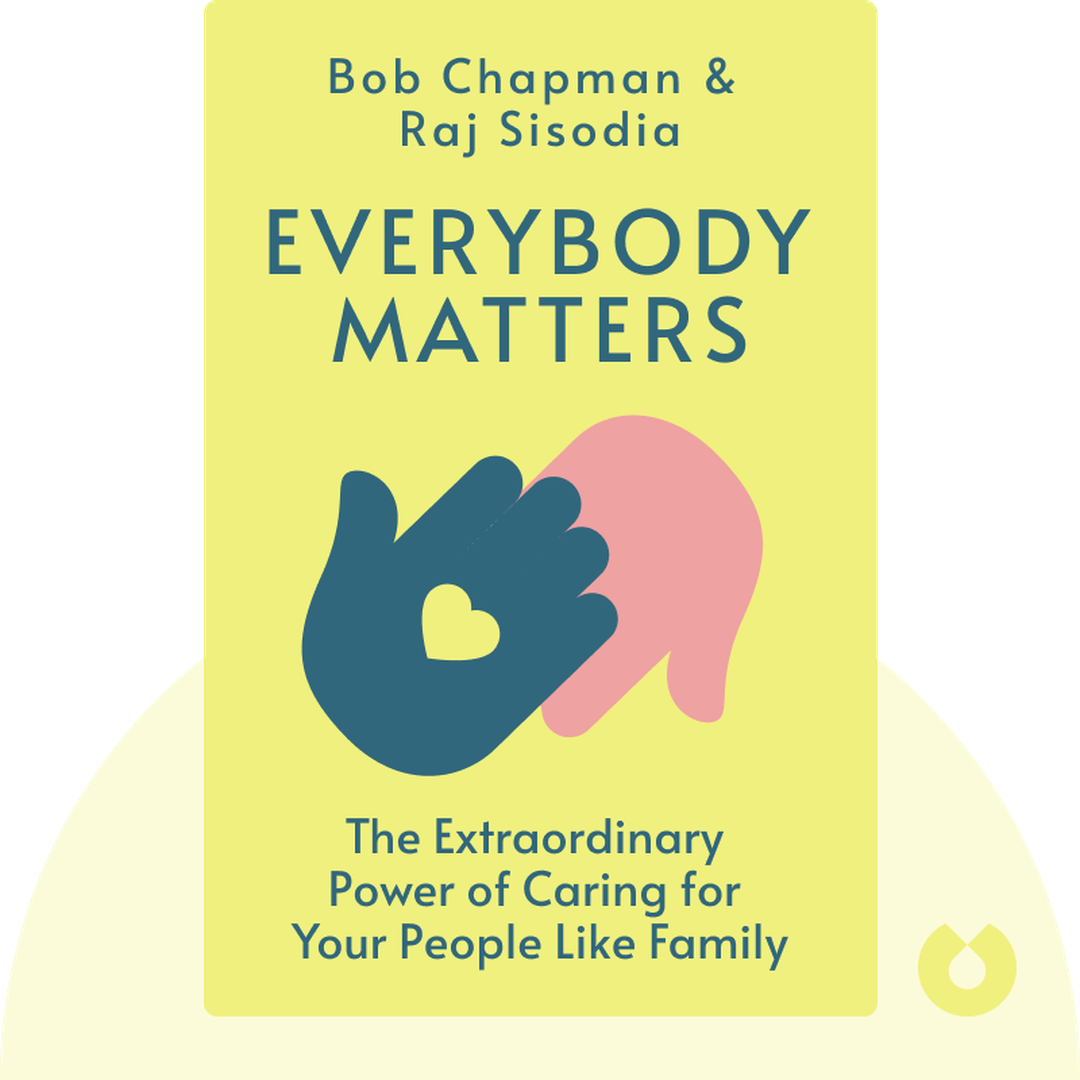
Everybody Matters (2015) chronicles Bob Chapman’s quest to find the best approach to business and leadership style. Traditional approaches to management often treat employees like cogs in the machine. The authors explain that by caring for employees as if they were family, you can not only experience unprecedented success but inspire company loyalty and allow all employees to reach their full potential as well.
Who Should Listen to Everybody Matters?
- Anyone seeking to better their company or business
- Managers wanting to improve employee relations
- Small business owners or CEOs looking to inspire their employees
Books Similar to Everybody Matters
Readers who enjoyed this also liked these titles.