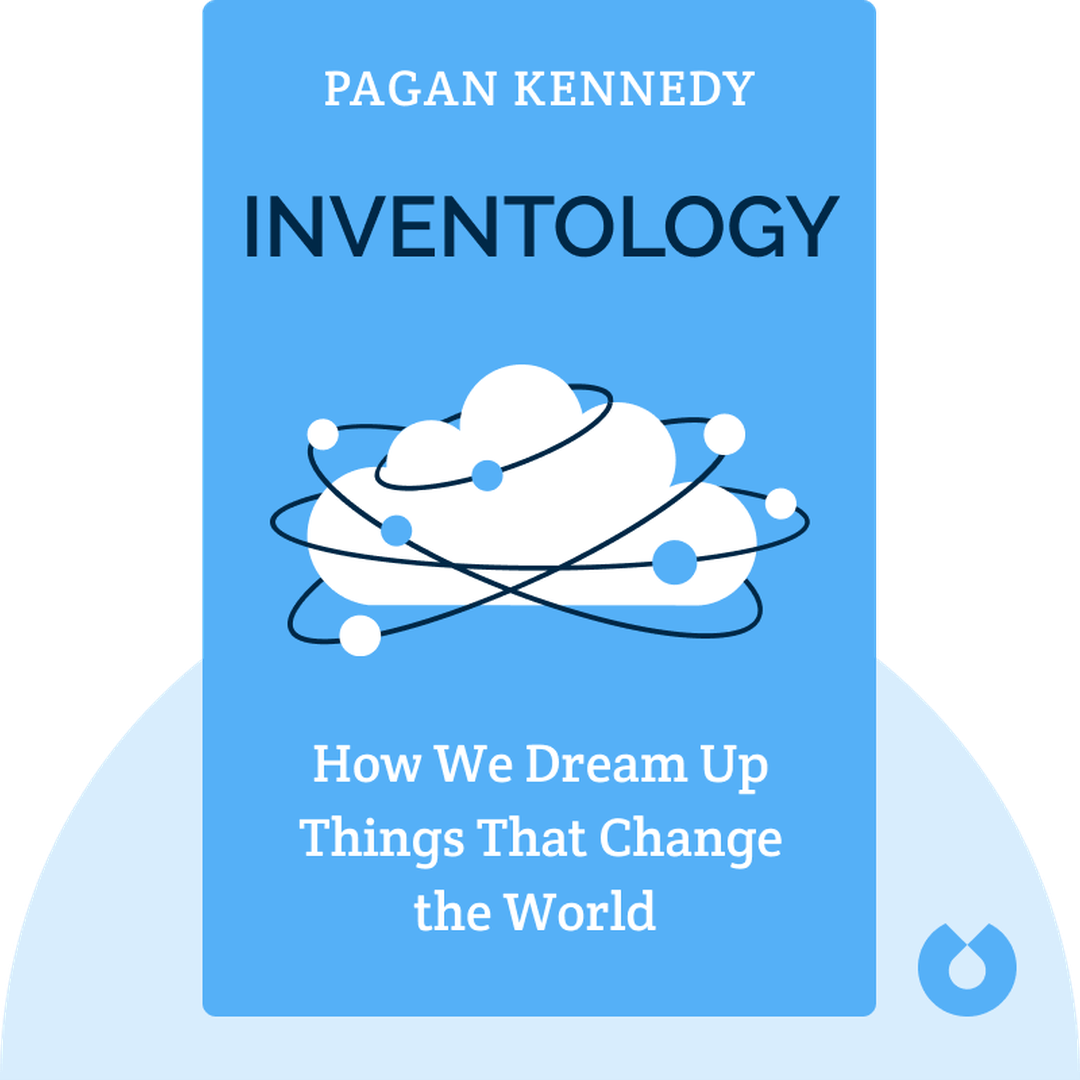
If You're Curious About These Questions...
You should listen to this audiobook
- What’s the secret to spotting a million-dollar problem before anyone else even realizes it exists?
- Did you know that most groundbreaking inventions aren't just strokes of luck, but the result of a specific mental framework that anyone can learn?
- Have you ever wondered how top innovators seem to 'see' the future and anticipate massive trends years before they hit the mainstream?
Listen to Inventology — Free Audiobook
Loading player...
Key Takeaways from Inventology
- Discover how encountering everyday problems firsthand is the ultimate catalyst for creating successful inventions, just like the airline pilot who perfected the wheeled suitcase.
- Learn how daily repetition and frustration can spark ingenious ideas when you identify hidden problems that will eventually impact a large audience.
- Understand the psychology behind feeling lucky and how adopting an open, observant mindset makes you significantly faster at spotting ingenious solutions.
- Master the habits of a 'Super-Encounterer' by exploring challenges broadly rather than focusing narrowly, a strategy proven to foster long-term creative success.
- Find out how modern innovators create their own luck by utilizing Big Data and data-mining to reveal hidden connections that lead to breakthrough discoveries.
Learning Tools
Reinforce what you learned from Inventology
Mind Map
Inventology
Problem Identification+
Observation & Exploration+
Data-Driven Discovery+
Imagination & Forecasting+
The Outsider Advantage+
Actionable Steps+
Quiz — Test Your Understanding
Question 1 of 8
Why was Robert Plath able to successfully improve upon Bernard Sadow's initial wheeled suitcase design?
Question 2 of 8
According to the book, what is one of the crucial components for turning a frustrating, hidden problem into a successful invention, as demonstrated by Jack Dorsey's creation of Twitter?
Question 3 of 8
Based on Mihaly Csikszentmihalyi's experiment with art students, how do 'Super-Encounterers' approach problems differently than others?
Question 4 of 8
How has the rise of 'Big Data' and bioinformatics changed the landscape of medical discoveries?
Question 5 of 8
What does Lawrence Herbert’s creation of the Pantone color-coding system illustrate about the nature of invention?
Question 6 of 8
What does the example of Moore's Law demonstrate about technological forecasting?
Question 7 of 8
How did Nikola Tesla utilize his mind as a 'test lab' for his inventions?
Question 8 of 8
What do the stories of John Harrison (a carpenter) and Adam Rivers (a marine biologist) reveal about problem-solving?
Inventology — Full Chapter Overview
- 1Recommendation
- 2Every great invention begins with a problem that needs solving.
- 3To find a strong solution, you need to truly understand the problem.
- 4Feeling lucky can make you more observant and help discoveries come easier.
- 5Today’s discoveries rely less on luck and more on data.
- 6Creating something from nothing is possible—and can even save lives.
- 7Forecasting the future can help you come up with great inventions.
- 8Using your mind as a test lab can help you develop great inventions.
- 9Anyone can come up with great ideas; you don’t have to be an expert.
- 10Final summary
Inventology Summary & Overview
Inventology (2016) shows us how the world’s brightest minds identify problems and come up with brilliant solutions. Find out how you need to think in order to discern future trends and create the next great invention!
Who Should Listen to Inventology?
- Anyone interested in coming up with new ideas
- Business owners looking for great solutions
- Entrepreneurs looking for inspiration to start a new business
Books Similar to Inventology
Readers who enjoyed this also liked these titles.