If You're Curious About These Questions...
You should listen to this audiobook
- Have you ever wondered why giving your products away for free might actually be the most profitable business strategy in the digital age?
- What if you could apply Google’s 'reverse' logic to your own business to turn your customers into your most powerful marketing force?
- Are you curious about the secret rules of the internet that allow small startups to disrupt entire industries by giving up control instead of taking it?
Listen to What Would Google Do? — Free Audiobook
Loading player...
Key Takeaways from What Would Google Do?
- Discover why the rise of the Internet means a single unhappy customer can severely damage your brand, and learn how fast, proactive customer service can turn public critics into brand advocates.
- Understand the importance of involving your audience in product development by embracing openness, launching beta versions, and crowdsourcing ideas to gain a lasting competitive edge.
- Learn how to navigate today's highly transparent digital world by communicating honestly and openly admitting mistakes to quickly build lasting public credibility.
- Master the art of attracting web traffic by building simple, informative, and Google-friendly websites that directly answer the specific questions your customers are searching for.
- Find out how hyperlinks have completely transformed the fundamental structure of modern media by driving niche specialization, increasing content quality, and fostering unprecedented online cooperation.
Learning Tools
Reinforce what you learned from What Would Google Do?
Mind Map
What Would Google Do?
Customer Engagement+
Radical Transparency+
The Link Economy+
New Business Models+
Quiz — Test Your Understanding
Question 1 of 10
According to the author's experience with Dell, what is the most effective way for companies to handle customer feedback in the internet age?
Question 2 of 10
How does Google use 'beta' releases to its advantage?
Question 3 of 10
What is the recommended approach for a company or public figure when a mistake is exposed online?
Question 4 of 10
Which of the following strategies is recommended to make a website more 'Google-friendly' and increase traffic?
Question 5 of 10
How has the ability to link content online changed the structure of media and journalism?
Question 6 of 10
Why did Google allow other websites to freely embed and build applications on top of Google Maps?
Question 7 of 10
How has the Internet affected the concept of the 'mass market'?
Question 8 of 10
Despite selling physical goods, Amazon is described as primarily being in the 'knowledge business.' What does this mean?
Question 9 of 10
What was the result of the New York Times erecting a paywall on its website in 2005?
Question 10 of 10
Why does the author recommend tapping into online discussions over using traditional focus groups?
What Would Google Do? — Full Chapter Overview
- 1Recommendation
- 2Engage your customers in creating and promoting your products.
- 3To thrive today, companies must be honest and own mistakes openly.
- 4Make your site informative and Google-friendly to help far more people find it.
- 5Links between web pages have reshaped the media’s structure: they now spur specialization, quality and cooperation.
- 6The way to build a business in the Internet age is to join a network or provide a platform for others to build networks upon.
- 7The era of big companies serving the mass market is over; small specialized firms are now on the rise.
- 8Successful companies like Amazon and Google focus on the knowledge business: how their insights can truly benefit their customers.
- 9Today, many successful businesses and networks thrive by offering their core services for free.
What Would Google Do? Summary & Overview
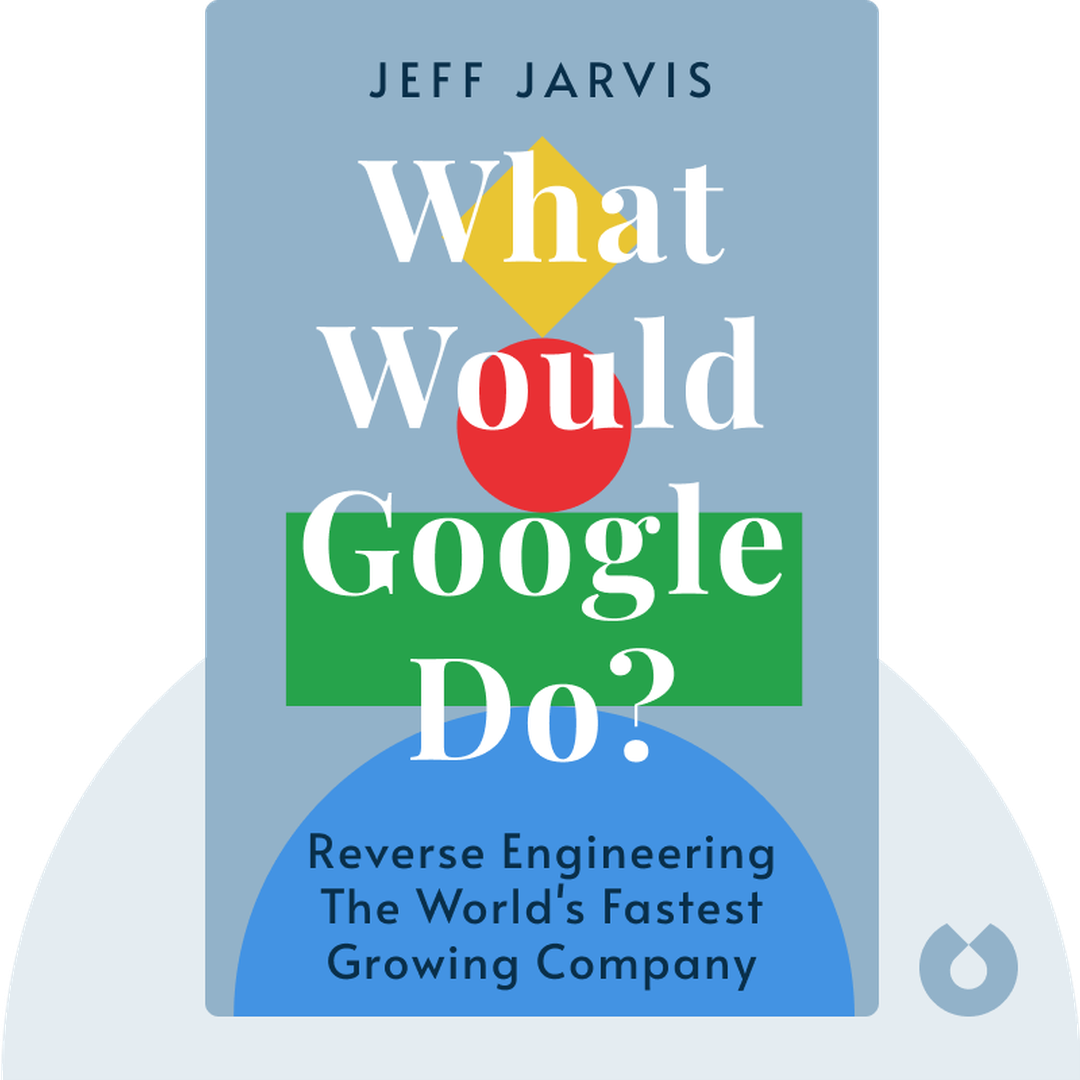
The age of the Internet has dawned, but very few companies seem to understand how profoundly it has changed the business landscape and what they must do to thrive. The most obvious exception? Google. What Would Google Do? endeavors to explain what strategic choices fuel the success of Google and other web 2.0 companies like Amazon.
Who Should Listen to What Would Google Do??
- Anyone who wants to learn the secrets to the success of Google and other web 2.0 companies
- Anyone who wants to drive more traffic to their websites
- Anyone who wants to emulate Google’s strategy in their own business
Books Similar to What Would Google Do?
Readers who enjoyed this also liked these titles.