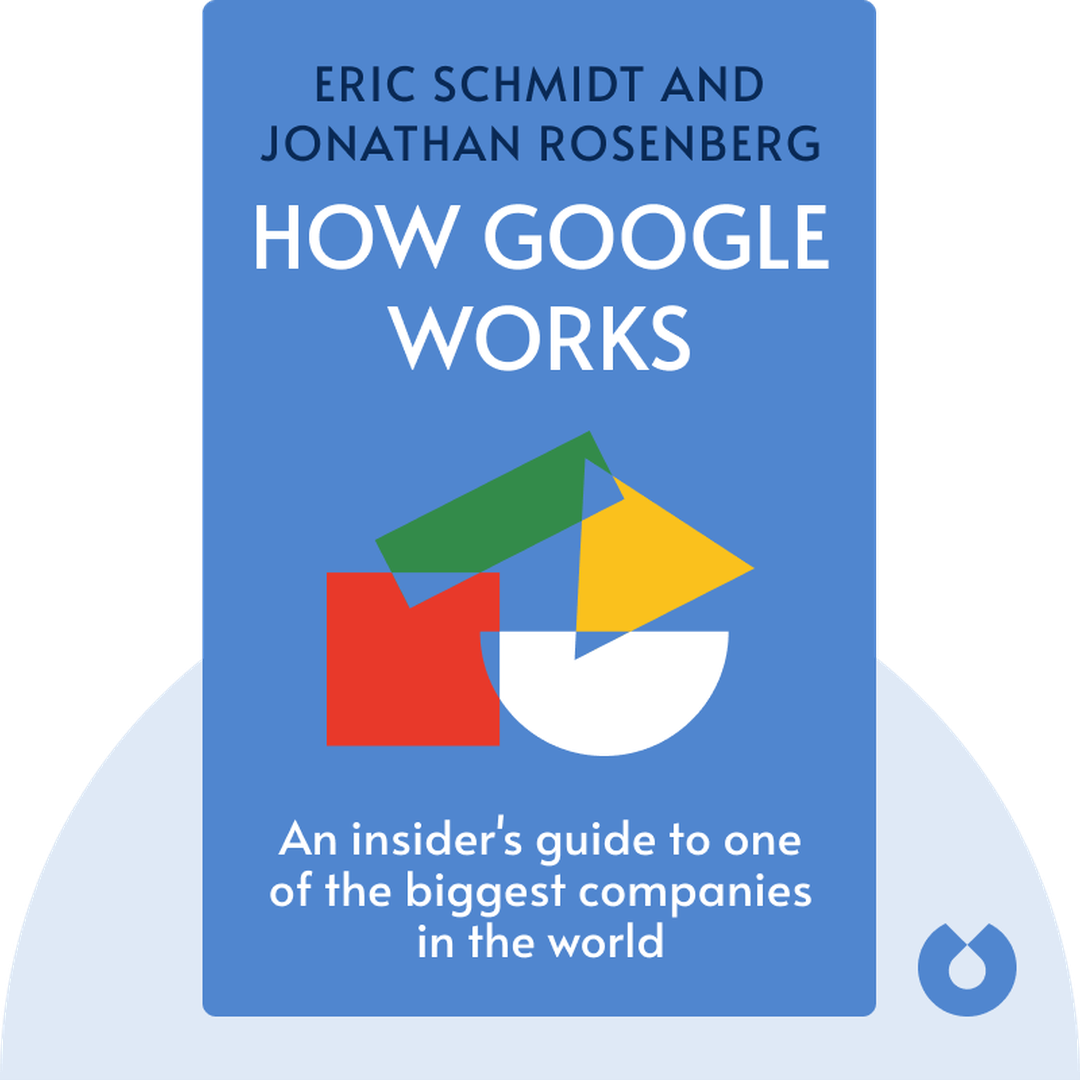
If You're Curious About These Questions...
You should listen to this audiobook
- Have you ever wondered how Google manages to stay as fast and innovative as a tiny start-up, even while scaling into a global powerhouse?
- What’s the secret to attracting and leading 'smart creatives'—the rare breed of employees who are the real engine behind Google’s massive success?
- Are you curious about the unconventional management rules Google used to transform from a chaotic tech start-up into one of the most successful companies in history?
Listen to How Google Works — Free Audiobook
Loading player...
Key Takeaways from How Google Works
- Learn how to identify and recruit 'smart creatives' who powerfully combine technical expertise, business savvy, and a highly curious, ambitious mindset.
- Understand why superior product development trumps fancy marketing strategies in a digital world where consumers demand the highest quality.
- Discover the benefits of using a diverse hiring committee rather than a single manager to objectively evaluate a candidate's data, imagination, and passion.
- Find out how to retain restless, top-tier talent by constantly challenging their intellect and actively engaging them in high-level strategic discussions.
- Master the art of building a free-thinking corporate culture that empowers independent decision-making and attracts intrinsically motivated problem solvers.
Learning Tools
Reinforce what you learned from How Google Works
Mind Map
How Google Works
The Core Asset: Smart Creatives+
Hiring & Retention+
Company Culture+
Strategy & Planning+
Decision Making+
Information & Openness+
Fostering Innovation+
Quiz — Test Your Understanding
Question 1 of 8
What does Google consider the most crucial factor for winning and retaining customers in the modern business world?
Question 2 of 8
How does Google approach the hiring process to avoid subjective decisions?
Question 3 of 8
According to the text, what is an effective way to retain restless and ambitious 'smart creatives'?
Question 4 of 8
Why do the authors argue against creating traditional, step-by-step business plans?
Question 5 of 8
When managing smart creatives, what is the primary role of a leader during the decision-making process?
Question 6 of 8
How does Google foster an open and collaborative environment regarding company information?
Question 7 of 8
Which of the following is an effective method mentioned in the text for creating a climate that encourages innovation?
Question 8 of 8
What was the result of Google allowing engineers to spend 20 percent of their time at work pursuing whatever projects they liked?
How Google Works — Full Chapter Overview
- 1Recommendation
- 2Outstanding products built by exceptional employees are essential for business success.
- 3Make hiring and keeping smart creatives a top priority in your company.
- 4Create a free-thinking, creative company culture that attracts excellence-driven employees.
- 5Prepare for unexpected challenges by building a strategic foundation that allows for change.
- 6When leading smart creatives, your role is to encourage lively debate, not dictate decisions.
- 7Smart creatives flourish in open, collaborative work environments.
- 8You can’t force innovation, but you can build a climate that encourages it.
- 9Final summary
How Google Works Summary & Overview
How Google Works shares business insights from one of the most successful technology start-ups in history. Written by the former top executives at the company, the book lays out, step by step, Google’s path to success; a roadmap that your company can follow, too.
Who Should Listen to How Google Works?
- CEOs or managers at start-up companies
- Anyone with a start-up idea looking for the fast path to success
- Anyone interested in a behind-the-scenes look at Google
Books Similar to How Google Works
Readers who enjoyed this also liked these titles.