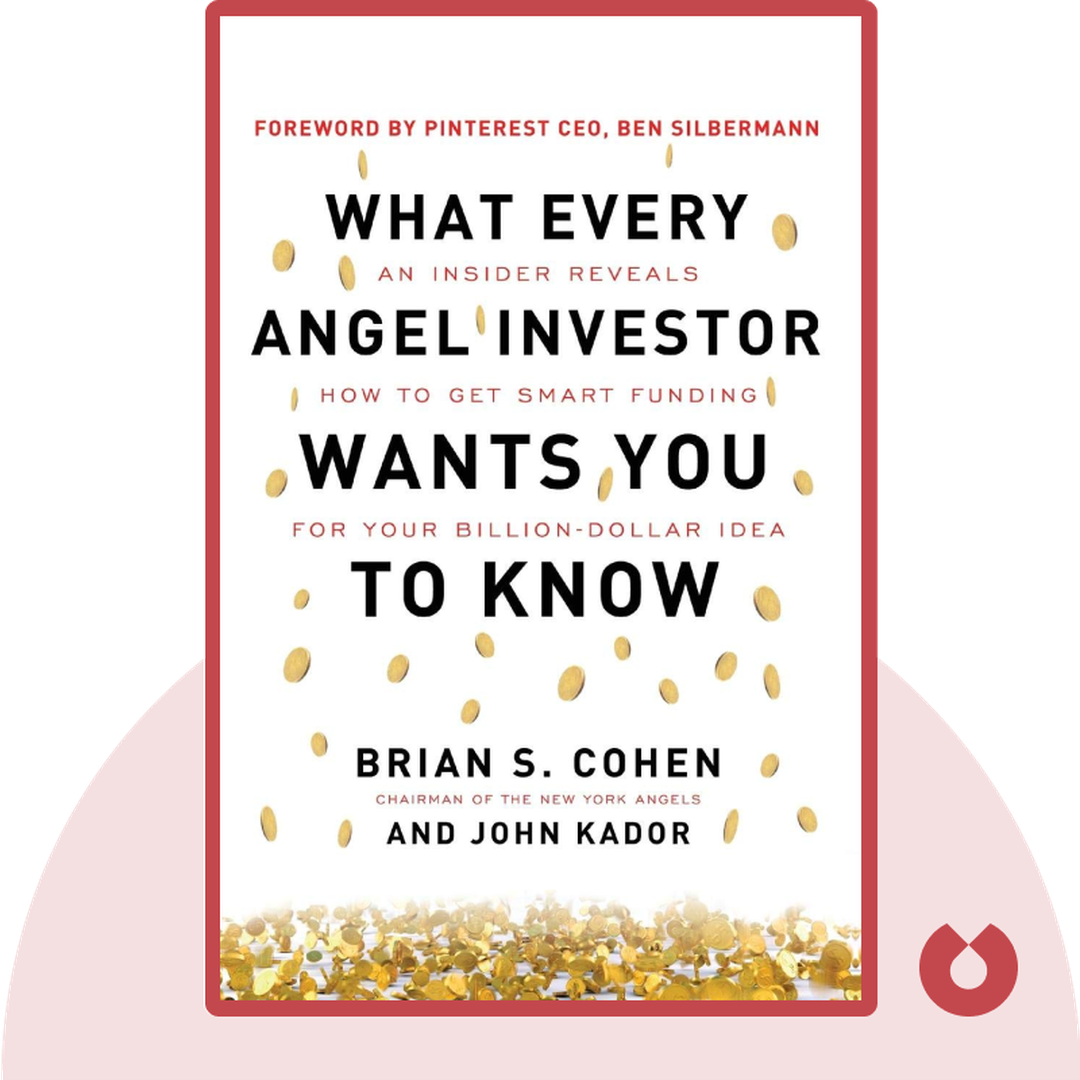
What Every Angel Investor Wants You to Know
Start ListeningDownload Try free on iPhoneScan to start in 5 seconds
Categories:
If You're Curious About These Questions...
You should listen to this audiobook
- Did you know that the secret to landing an angel investment often has less to do with your product and more to do with a specific trait you might be overlooking?
- Have you ever wondered what truly motivates an investor to say 'yes' when they’ve already seen a hundred other pitches just like yours?
- What if you could identify the hidden red flags that make investors walk away from even the most promising ideas before you ever step into the room?
Listen to What Every Angel Investor Wants You to Know — Free Audiobook
Loading player...
Key Takeaways from What Every Angel Investor Wants You to Know
- Discover why you should treat an angel investor like a spouse by seeking their long-term commitment, experience, and valuable connections rather than just quick cash.
- Learn how to hook potential investors by researching their background, hobbies, and past investments to personalize your approach and create an instant connection.
- Master the creation of a powerful elevator pitch by keeping it under 150 words and focusing directly on the specific problem your product solves.
- Understand the value of bringing up your start-up's issues yourself during due diligence to build immediate trust and demonstrate integrity.
- Find out why pressing for a quick 'no' avoids wasting time in limbo, and how to gracefully use rejection to gain actionable feedback for future pitches.
Learning Tools
Reinforce what you learned from What Every Angel Investor Wants You to Know
Mind Map
What Every Angel Investor Wants You to Know
Finding the Right Investor+
Securing the Investment+
Proving Your Worth+
Quiz — Test Your Understanding
Question 1 of 8
Why does the book compare the relationship between an entrepreneur and an angel investor to a marriage?
Question 2 of 8
What are the recommended constraints and key elements for an effective elevator pitch?
Question 3 of 8
How should a founder handle their start-up's existing issues or flaws when communicating with an angel investor?
Question 4 of 8
Why does the author suggest that entrepreneurs should appreciate receiving a quick 'no' from an investor?
Question 5 of 8
What does the author emphasize as a crucial indicator of a team's entrepreneurial skills?
Question 6 of 8
According to the text, what must founders balance their 'big ideas' and vision with?
Question 7 of 8
Why is having a clear exit strategy so important to angel investors?
Question 8 of 8
When asking for capital, what specific actionable advice does the book give regarding the requested funds?
What Every Angel Investor Wants You to Know — Full Chapter Overview
- 1Recommendation
- 2Savvy founders seek out savvy capital.
- 3To win angel investors, craft the perfect pitch.
- 4Be ready to tackle tough questions when courting angel investors.
- 5Learn to accept a firm “no” with grace, and don’t be afraid to ask for honest, actionable feedback from investors directly.
- 6Demonstrate to investors that your team has integrity, entrepreneurial skills, and can work well together.
- 7Founders need bold ideas and execution plans; don’t forget the numbers when your head’s up in the clouds.
- 8Startups should begin with a clear exit plan in mind.
What Every Angel Investor Wants You to Know Summary & Overview
What Every Angel Investor Wants You to Know (2013) offers start-up entrepreneurs tips on what to look for in an investor – and how to actually get an “angel” to invest. With solid preparation and a good understanding of what motivates an investor, any entrepreneur can secure financing for her next big idea.
Who Should Listen to What Every Angel Investor Wants You to Know?
- Founders of start-ups and entrepreneurs
- Investors looking for the next great idea
- Anyone seeking funding for a project
Books Similar to What Every Angel Investor Wants You to Know
Readers who enjoyed this also liked these titles.