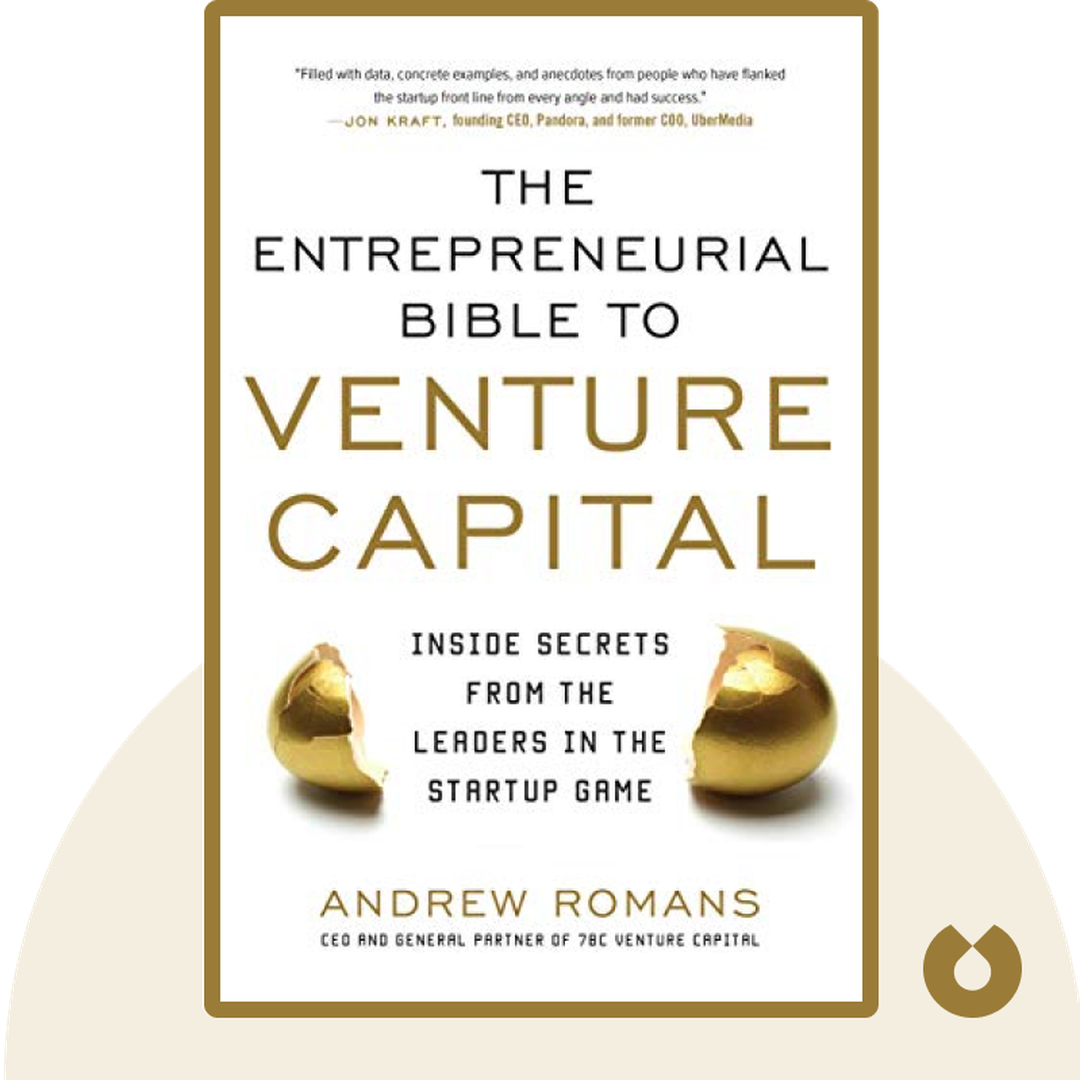
The Entrepreneurial Bible to Venture Capital
Start ListeningDownload Try free on iPhoneScan to start in 5 seconds
Categories:
If You're Curious About These Questions...
You should listen to this audiobook
- Have you ever wondered what truly separates the startups that secure millions in funding from the thousands that get rejected?
- What if you could decode the hidden language of venture capitalists to negotiate a deal that protects your vision and your company's future?
- Are you curious about the specific, high-stakes metrics that can make or break your chances of landing a venture capital partnership?
Listen to The Entrepreneurial Bible to Venture Capital — Free Audiobook
Loading player...
Key Takeaways from The Entrepreneurial Bible to Venture Capital
- Discover why securing an angel investor is often the crucial first step to financing your early stages and building the network needed to attract larger venture capital funds.
- Understand the hierarchy of venture capital firms, which operate as limited partnerships, so you can target your pitches directly to the decision-making general partners and managing directors.
- Learn why venture capitalists prioritize investing in well-balanced management teams over great ideas, seeking a powerful trio of a visionary, a technical expert, and a salesperson.
- Grasp the ultimate goal of venture capital firms—achieving a profitable exit through a company sale or IPO—to ensure your start-up's strategy aligns with their financial expectations.
- Recognize how the plunging costs of launching tech start-ups have fueled a high-stakes VC boom, where investors accept a 60 percent failure rate in hopes of funding the next massive success.
Learning Tools
Reinforce what you learned from The Entrepreneurial Bible to Venture Capital
Mind Map
The Entrepreneurial Bible to Venture Capital
Venture Capital Fundamentals+
The Funding Pathway+
What VCs Look For+
Pitching & Materials+
The Exit Strategy+
Quiz — Test Your Understanding
Question 1 of 8
Why do venture capital firms willingly invest in early-stage startups despite the fact that roughly 60 percent of them go bankrupt?
Question 2 of 8
How is a typical venture capital firm structured and funded?
Question 3 of 8
What is a primary advantage of securing funding from an angel investor before approaching a venture capital firm?
Question 4 of 8
According to the text, what do venture capitalists value most when evaluating a startup for potential investment?
Question 5 of 8
What approach does the book recommend startups take regarding marketing and product development in their early stages?
Question 6 of 8
When planning an exit strategy, which type of buyer is likely to offer the most lucrative deal for a startup?
Question 7 of 8
What documentation do modern venture capitalists prefer to see when initially evaluating a startup's pitch?
Question 8 of 8
How should an entrepreneur describe their startup during a pitch to potential investors?
The Entrepreneurial Bible to Venture Capital — Full Chapter Overview
- 1Recommendation
- 2Expansion in technology start-ups has fueled a recent boom in venture capital investing.
- 3Venture capital firms rest on partnerships united by one single aim: ultimately achieving a profitable exit.
- 4A cash boost from an angel investor often precedes, and enables, later, larger successful funding rounds from a VC.
- 5VCs seek start-ups led by strong, well-balanced, experienced management teams.
- 6A start-up must grow value creatively and innovate in order to effectively win venture capital investment.
- 7A start-up must not only build a strong business; it also has to carefully craft a sound exit strategy.
- 8Venture capitalists have no time for lengthy presentations, so keep yours brisk and snappy.
- 9Prepare a few distinct versions of your pitch to present it to the right audience effectively.
The Entrepreneurial Bible to Venture Capital Summary & Overview
The Entrepreneurial Bible to Venture Capital (2013) is a must-read for any entrepreneur or business leader looking to fund their next great idea. Venture capital firms seek start-ups that show potential and often commit to the tune of millions of dollars. If you want to make it in today’s competitive start-up world, you need to understand how venture capital works.
Who Should Listen to The Entrepreneurial Bible to Venture Capital?
- Entrepreneurs and business leaders seeking venture funding
- Business students curious about the start-up scene
- Investors looking to become venture capitalists
Books Similar to The Entrepreneurial Bible to Venture Capital
Readers who enjoyed this also liked these titles.