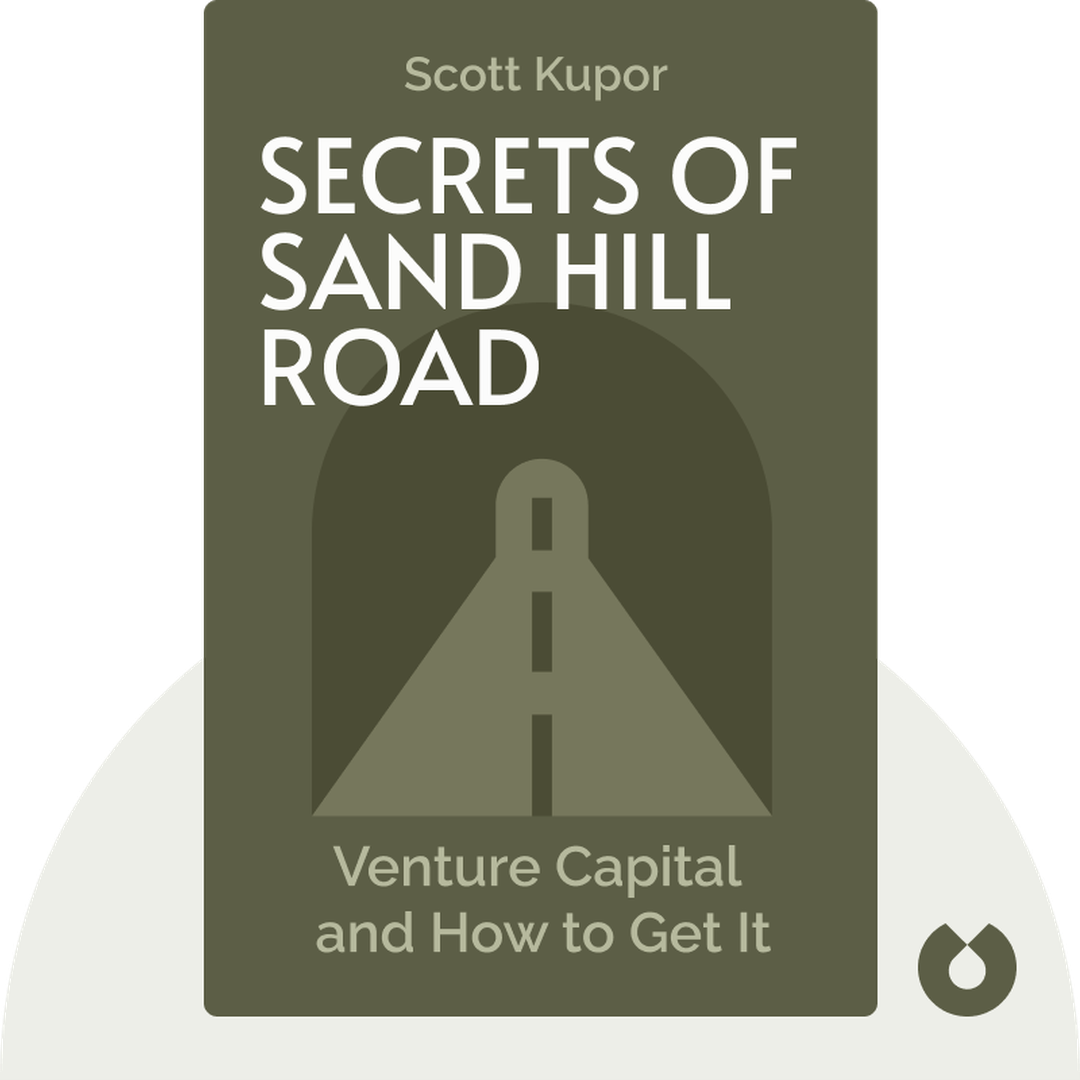
Secrets of Sand Hill Road
Start ListeningDownload Try free on iPhoneScan to start in 5 seconds
Categories:
If You're Curious About These Questions...
You should listen to this audiobook
- Have you ever wondered what really happens behind the closed doors of Silicon Valley’s most elite venture capital firms before they write a multi-million dollar check?
- Did you know that the specific terms of a VC deal can be far more critical to your company's survival than the actual amount of money you raise?
- What's the secret to navigating the high-stakes power dynamics of Sand Hill Road to ensure you don't lose control of your own startup?
Listen to Secrets of Sand Hill Road — Cinematic Audio Edition
Loading player...
Key Takeaways from Secrets of Sand Hill Road
- Understand how the role of venture capitalists has evolved beyond simply providing funding to offering essential strategic guidance in networking, recruiting, and marketing.
- Discover how technological advancements and educational hubs like Y Combinator have lowered startup costs and shifted the balance of power toward entrepreneurs.
- Learn the three crucial qualitative elements VC firms evaluate in early-stage startups: the people involved, a truly revolutionary product, and massive potential market size.
- Find out why demonstrating a strong 'founder-market fit' with unique, firsthand experience is critical to convincing investors to back your unproven idea.
- Master the art of the pitch by presenting a bold 'conquer-the-world' strategy instead of an early acquisition plan, and prepare to defend it through the investor's challenging 'idea maze'.
Learning Tools
Reinforce what you learned from Secrets of Sand Hill Road
Mind Map
Secrets of Sand Hill Road
Evolution of Venture Capital+
Evaluating Early-Stage Startups+
Mastering the Pitch+
Navigating Term Sheets+
CEO-Board Dynamics+
The Exit Stage+
Quiz — Test Your Understanding
Question 1 of 8
What two converging phenomena in the early 2000s shifted the balance of power between venture capitalists and entrepreneurs?
Question 2 of 8
According to the text, what realization led Marc Andreessen and Ben Horowitz to create a new winning formula for their VC firm?
Question 3 of 8
When evaluating early-stage companies with little actual data, which three qualitative factors do VC firms primarily consider?
Question 4 of 8
What is a common mistake founders make during a pitch that goes against what VCs actually want to hear?
Question 5 of 8
During a pitch, why do venture capitalists put founders through the 'idea maze'?
Question 6 of 8
Which component of a term sheet typically has the greatest ramifications for a company in the long run?
Question 7 of 8
What board of directors structure does Andreessen Horowitz typically propose in an initial term sheet?
Question 8 of 8
Following a successful IPO, why is it advisable for VC firms to withdraw their stock over a period of time rather than all at once?
Secrets of Sand Hill Road — Full Chapter Overview
- 1Recommendation
- 2Venture capital’s very nature has changed markedly over the past few decades.
- 3There are three key factors VC firms assess when deciding which early-stage companies to ultimately finance.
- 4Mastering the craft of pitching demands a delicate balance of true flexibility and steadfast determination.
- 5Term sheets are challenging to navigate, since they address both economic and governance aspects for virtually any venture.
- 6Maintaining a strong CEO–board relationship is essential to the success of any VC-backed company.
- 7When a VC life cycle ends successfully, boards must choose between two paths for how their companies will continue operating into the future.
Secrets of Sand Hill Road Summary & Overview
Secrets of Sand Hill Road (2019) unveils the inner workings of one of Silicon Valley’s most iconic streets. Many of the area’s top venture capital firms are located here and have played a part in funding some of the biggest names in tech today. VC insider Scott Kupor has worked with many of them, and these blinks share their secrets – allowing the rest of us to decipher the mystery of venture capital, how to get it and why it can make or break a company.
Who Should Listen to Secrets of Sand Hill Road?
- Founders and CEOs seeking advice on how to navigate the world of venture capital
- Beginner venture capitalists looking for wisdom from an industry veteran
- Tech enthusiasts curious about how their favorite apps came to fruition
Books Similar to Secrets of Sand Hill Road
Readers who enjoyed this also liked these titles.