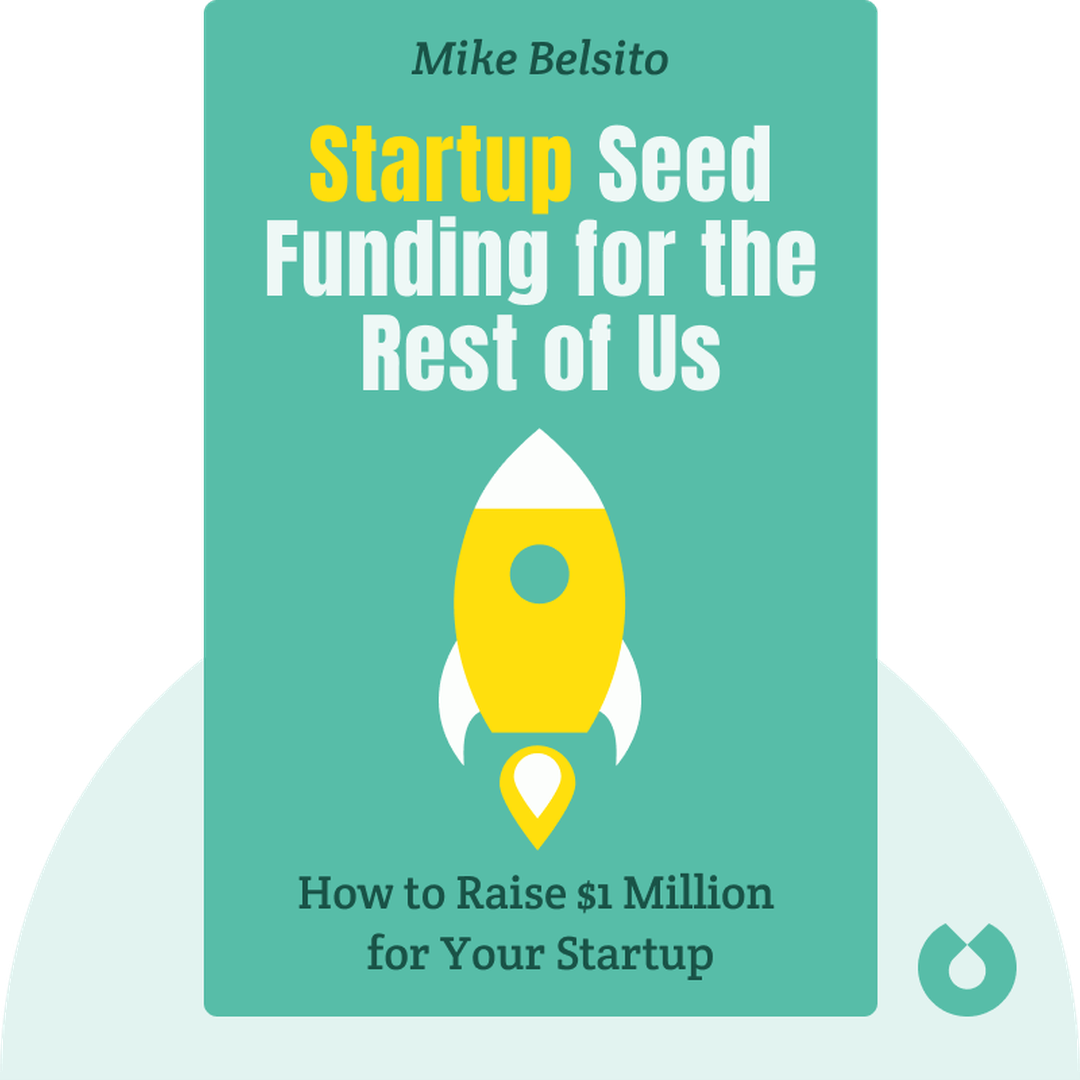
Startup Seed Funding for the Rest of Us
Start ListeningDownload Try free on iPhoneScan to start in 5 seconds
Categories:
If You're Curious About These Questions...
You should listen to this audiobook
- What's the secret to making your business attractive to investors even if you're not in a major startup hub?
- Are you curious about how to build relationships with investors that lead to startup capital?
- What if you could secure funding for your business without sacrificing equity or control?
Listen to Startup Seed Funding for the Rest of Us — Free Audiobook
Loading player...
Key Takeaways from Startup Seed Funding for the Rest of Us
- Learn how to secure startup capital outside of Silicon Valley by shifting your focus from chasing celebrity investors to proving your business's financial viability.
- Discover how to demonstrate crucial market traction before launching by creating simple prototypes and building a waitlist of potential customers.
- Master the art of the pitch by focusing on the 'why' behind your business, highlighting the specific problem you solve to emotionally engage investors.
- Avoid critical red flags that instantly lose investor trust by eliminating baseless assumptions and overly rounded figures from your revenue forecasts.
- Understand how to prove you've done your homework by replacing a bloated business plan with a data-backed, one-page spreadsheet detailing revenue and marketing spend.
Learning Tools
Reinforce what you learned from Startup Seed Funding for the Rest of Us
Mind Map
Startup Seed Funding for the Rest of Us
Proving Business Viability+
Crafting the Pitch+
Building the Business Model+
Establishing Leadership+
Assembling the Team+
Pitch Preparation (The Playbook)+
Creating Investor Connections+
Securing the First Investment+
Managing Investor Relations+
Quiz — Test Your Understanding
Question 1 of 10
How can founders best demonstrate their business's viability to potential investors before receiving funding?
Question 2 of 10
According to the text, what is the most effective way to make a pitch stand out and capture an investor's attention?
Question 3 of 10
What does the author identify as a major 'red flag' for investors reviewing a startup's financial plan?
Question 4 of 10
According to the author, what is a hidden benefit of being an entrepreneur outside of a major startup hub like Silicon Valley?
Question 5 of 10
What is 'mirror syndrome' in the context of building a startup team?
Question 6 of 10
When preparing a pitch deck, how many versions does the author recommend creating?
Question 7 of 10
How does the author suggest approaching a 'cold call' to a target investor you have no mutual connections with?
Question 8 of 10
Why does the author compare investors to sheep?
Question 9 of 10
What strategy is recommended if an investor is interested but hesitant to be the very first to invest?
Question 10 of 10
What actionable advice does the author give for keeping investors informed after they have provided funding?
Startup Seed Funding for the Rest of Us — Full Chapter Overview
- 1Recommendation
- 2To win investors, you must show that your business is viable.
- 3A strong pitch feels relatable and emotionally engaging.
- 4Avoid assumptions while drafting your company’s business model.
- 5Investors gravitate toward strong leaders.
- 6Select your founding team carefully.
- 7Prepare extensively before pitching.
- 8Build your own investor connections.
- 9Your most vital investment isn’t the largest; it’s the first.
Startup Seed Funding for the Rest of Us Summary & Overview
Startup Seed Funding for the Rest of Us (2015) provides insight into how to secure investors for your new business, even if you’re located outside a major start-up community. Its practical advice will explain how to make your business more attractive to investors and how to build the relationships you need to secure start-up capital.
Who Should Listen to Startup Seed Funding for the Rest of Us?
- Start-up founders looking for investors
- Entrepreneurs working outside a major start-up community
- Innovators wanting to commercialize a product
Books Similar to Startup Seed Funding for the Rest of Us
Readers who enjoyed this also liked these titles.