If You're Curious About These Questions...
You should listen to this audiobook
- Have you ever wondered why, in an age of unprecedented access to information, the pursuit of truth has actually become more dangerous and difficult than ever before?
- Did you know that the same digital tools used to uncover secrets are now being turned against journalists to monitor their every move and silence their sources?
- Are you curious about how the hidden 'rules of the game' between governments and the media are fundamentally changing what you’re allowed to know about the world?
Listen to The War on Journalism — Free Audiobook
Loading player...
Key Takeaways from The War on Journalism
- Understand why democratic governments are actively fighting independent journalism to keep inconvenient truths hidden from the public.
- Discover the crucial role of the media as the 'fourth estate,' tasked with investigating powerful institutions so citizens can make informed decisions.
- Learn how groundbreaking investigative reports possess the power to alter history, from toppling corrupt leaders to ending major conflicts like the Vietnam War.
- Find out why whistleblowers like Edward Snowden increasingly trust freelance journalists over mainstream publications paralyzed by self-censorship and fear.
- Explore how organizations like WikiLeaks are reshaping the media landscape by taking on the risky investigative work that traditional journalists are often too afraid to pursue.
Learning Tools
Reinforce what you learned from The War on Journalism
Mind Map
The War on Journalism
The Role of the Free Press+
Mainstream vs. Freelance Media+
The Internet's Dual Impact+
Government War on Information+
Quiz — Test Your Understanding
Question 1 of 8
What is the primary role of the media as the 'fourth estate' in a democracy?
Question 2 of 8
According to the text, what was the historical impact of Daniel Ellsberg leaking the Pentagon Papers?
Question 3 of 8
Why do whistleblowers with sensitive information increasingly turn to freelance journalists rather than mainstream media publications?
Question 4 of 8
According to the book, why have many mainstream journalists criticized organizations like WikiLeaks?
Question 5 of 8
How has the internet become a 'curse' for investigative journalism?
Question 6 of 8
What critical mistake did Fox News reporter James Rosen make when working with whistleblower Stephen Kim?
Question 7 of 8
How did global government surveillance change following Edward Snowden's revelations?
Question 8 of 8
In the United States, how does the First Amendment apply to the leaking of sensitive government information?
The War on Journalism — Full Chapter Overview
- 1Recommendation
- 2In a democracy, the media must be free to investigate independently and report the news faithfully.
- 3Media possess a power so immense that it can decide the destiny of entire nations.
- 4Freelance reporters are likelier than mainstream outlets to investigate sensitive information concerning the state closely.
- 5Internet technology is now both a blessing and a curse for investigative journalism.
- 6The US government seeks to control information by aggressively pursuing and prosecuting whistleblowers today.
- 7Instead of shrinking, government surveillance has expanded in recent years.
The War on Journalism Summary & Overview
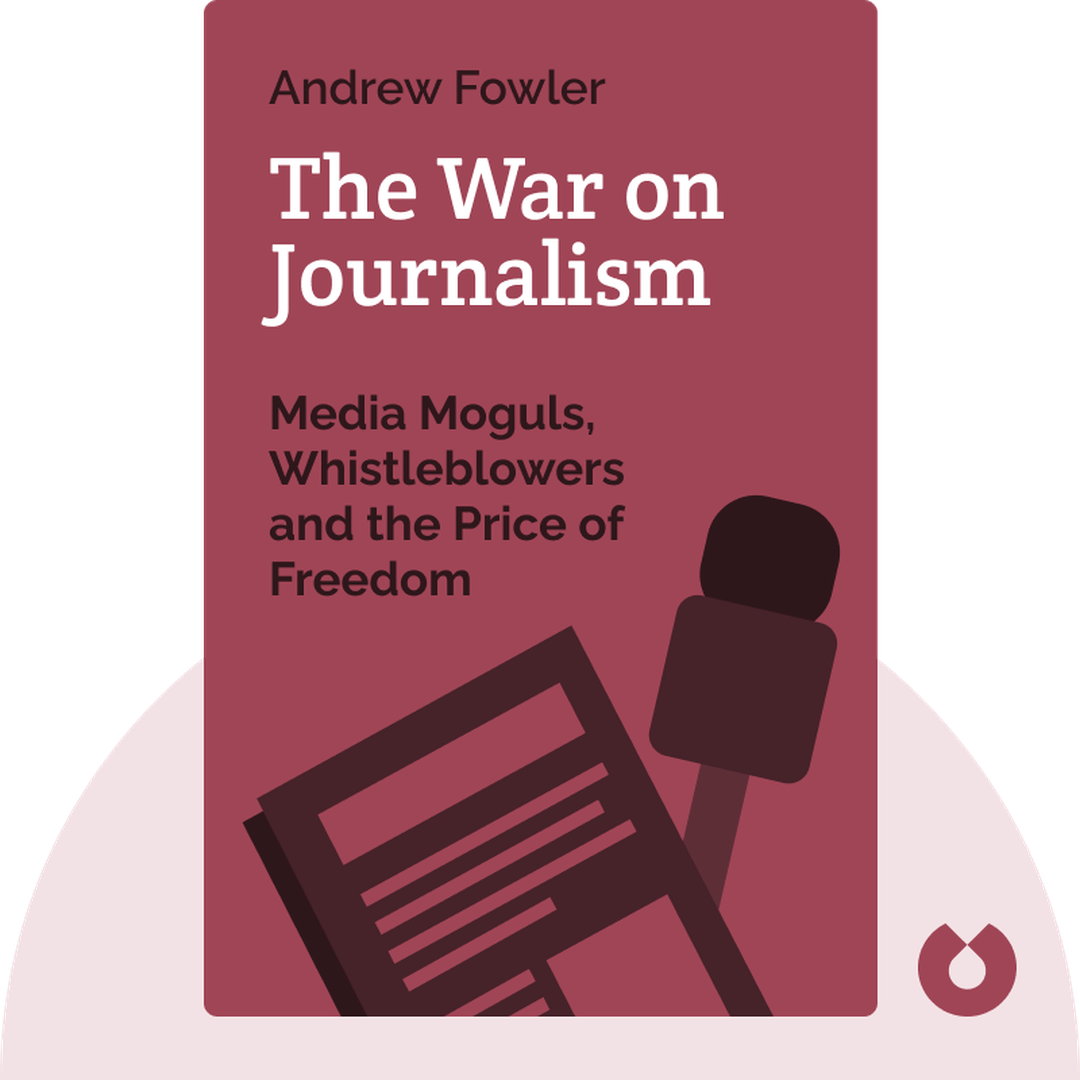
The War on Journalism (2015) explores the challenges journalists face while seeking the truth amid increasing state control and private sector criticism. Even though the internet has allowed those in the media unprecedented access to people and information, equally technology and new rules of the game have made fact-seeking a far more problematic pursuit.
Who Should Listen to The War on Journalism?
- Aspiring journalists and media professionals
- Students of politics or sociology
- Anyone who follows the news
Books Similar to The War on Journalism
Readers who enjoyed this also liked these titles.