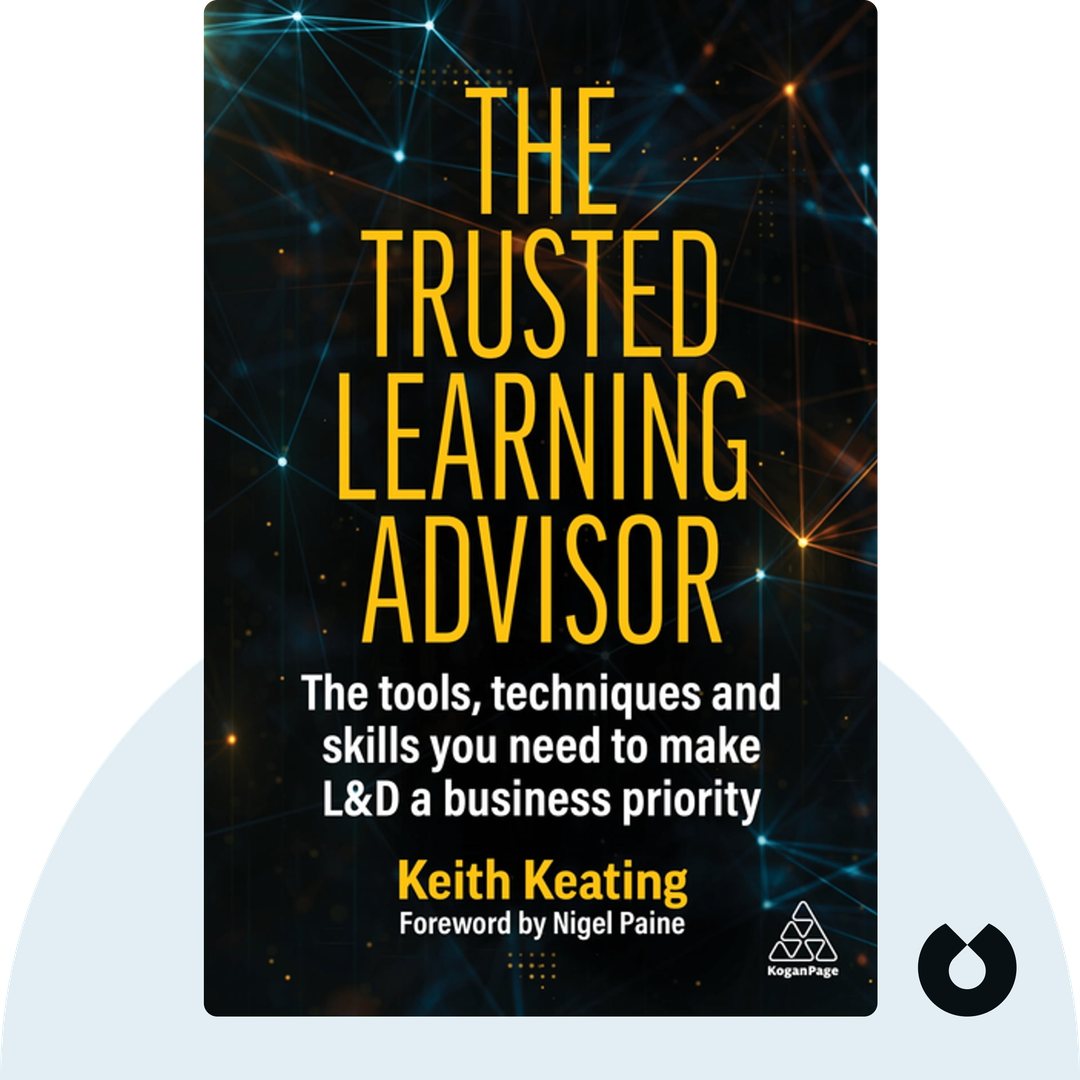
The Trusted Learning Advisor
Start ListeningDownload Try free on iPhoneScan to start in 5 seconds
Categories:
If You're Curious About These Questions...
You should listen to this audiobook
- What's the secret to transforming learning and development from a reactive to a proactive role?
- Are you curious about how to build trust with stakeholders and gain a seat at the table?
- What if you could evolve from an order-taker to a trusted learning advisor and unlock your full impact?
Listen to The Trusted Learning Advisor — Cinematic Audio Edition
Loading player...
Key Takeaways from The Trusted Learning Advisor
- Discover how to transition your Learning and Development role from a passive order taker to a proactive, trusted learning advisor.
- Understand how your organization's culture and structural placement dictate whether your L&D function is viewed as a costly support role or a strategic profit center.
- Learn why blindly fulfilling training requests often fails to solve root problems, and how to dig deeper to uncover the true issues holding employees back.
- Realize the importance of challenging stakeholder assumptions and pushing back against ineffective constraints to establish your credibility.
- Master the essential power skills of a trusted advisor, including curiosity, empathy, and the 70/20/10 communication rule for active listening.
Learning Tools
Reinforce what you learned from The Trusted Learning Advisor
Mind Map
The Trusted Learning Advisor
Role Transformation+
Core Power Skills+
The Five Pillars of Trust+
The IDAD Process+
Overcoming Resistance+
Quiz — Test Your Understanding
Question 1 of 7
According to the text, what is the primary difference between an 'order taker' and a 'trusted learning advisor' in L&D?
Question 2 of 7
Which two organizational factors are highlighted as significantly affecting how L&D professionals are perceived within a company?
Question 3 of 7
What does the 70/20/10 communication rule recommend for a trusted learning advisor?
Question 4 of 7
Which of the five pillars of trust involves fostering a space for open communication and engaging head-on with the aspirations and concerns of stakeholders?
Question 5 of 7
In the IDAD process for handling requests, what is the primary goal of the 'Discovery' phase?
Question 6 of 7
What core lesson is illustrated by the example of the sales team failing to use the Customer Relationship Management (CRM) system?
Question 7 of 7
When a stakeholder resists a proposed change and says 'no,' what is recommended as an effective strategy to overcome this resistance?
The Trusted Learning Advisor — Full Chapter Overview
- 1Recommendation
- 2From order follower to trusted advisor
- 3Why you’re trapped taking orders
- 4The core skills of a trusted learning advisor
- 5The five foundations of trust
- 6IDAD — the four steps for taking an order
- 7Overcoming pushback
The Trusted Learning Advisor Summary & Overview
The Trusted Learning Advisor (2023) offers an alternative for learning and development professionals to evolve beyond mere order-takers and become trusted learning advisors. It provides the tools, techniques, and skills needed to transform L&D into a proactive role through trust, stakeholder relationships, and strategic processes. This blueprint for L&D professionals aims to enhance their impact and give them a seat at the table.
Who Should Listen to The Trusted Learning Advisor?
- L&D professionals at any stage of their career
- Leaders who want to foster a learning culture
- Anyone who believes professional development is important
Books Similar to The Trusted Learning Advisor
Readers who enjoyed this also liked these titles.