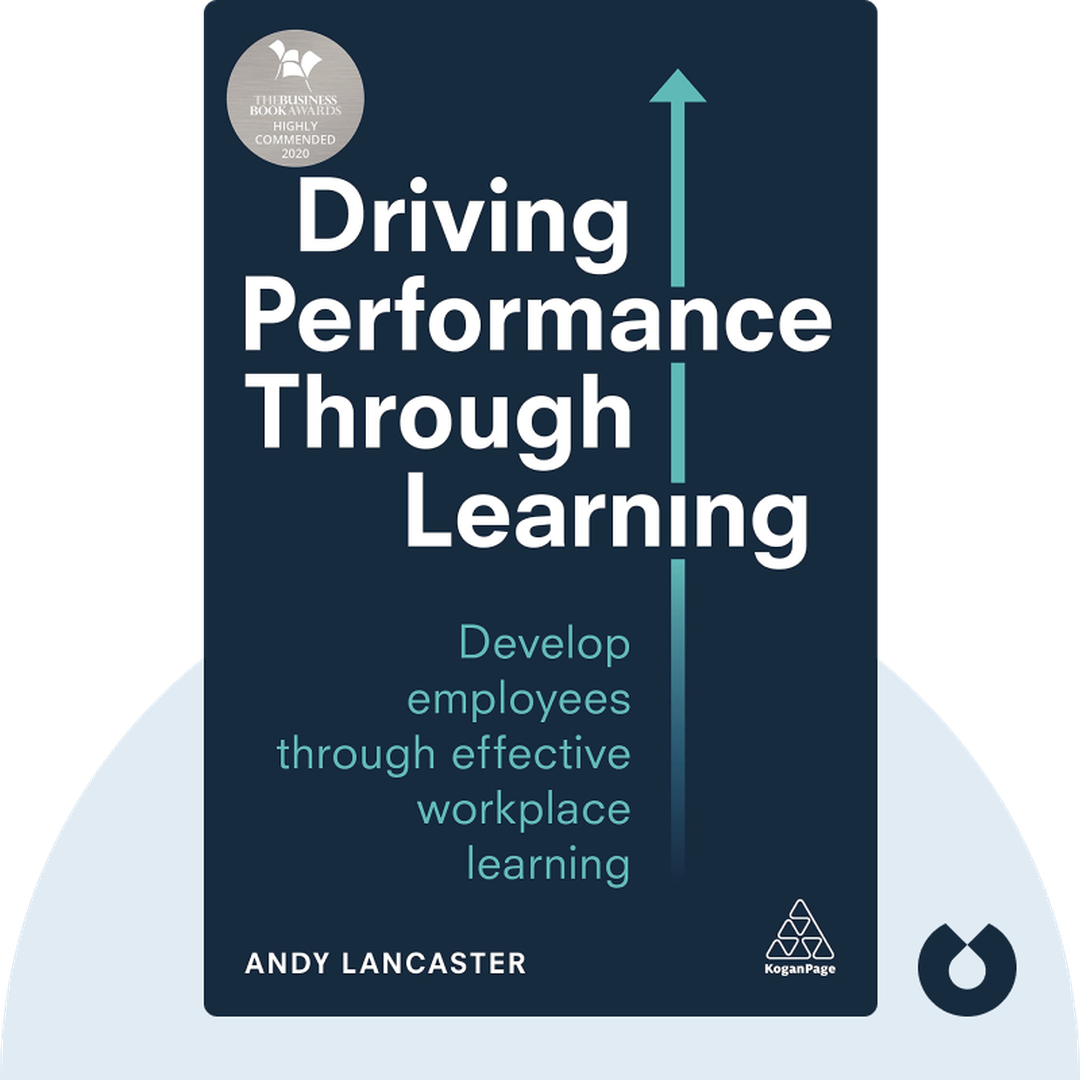
Driving Performance Through Learning
Start ListeningDownload Try free on iPhoneScan to start in 5 seconds
Categories:
If You're Curious About These Questions...
You should listen to this audiobook
- Did you know that the most impactful professional growth actually happens during your daily tasks rather than in a formal classroom?
- What’s the secret to transforming workplace training from a mandatory chore into a high-octane engine for team performance?
- What if you could harness the 'natural flow of work' to master complex new skills without ever needing to step away for a seminar?
Listen to Driving Performance Through Learning — Cinematic Audio Edition
Loading player...
Key Takeaways from Driving Performance Through Learning
- Discover why the most effective employee development happens 'in-the-flow' of daily work rather than inside traditional training courses.
- Understand the 70:20:10 principle to shift your organization's mindset toward continuous, experience-based learning.
- Learn how to conduct a forensic learning needs analysis to pinpoint actual organizational problems instead of simply acting as an order-taker for new classes.
- Master the design of agile, responsive learning solutions that prioritize speed and minimum viable propositions over time-consuming perfectionism.
- Find out how to leverage continuous testing, stakeholder feedback, and targeted microlearning to iteratively adapt your training initiatives.
Learning Tools
Reinforce what you learned from Driving Performance Through Learning
Mind Map
Driving Performance Through Learning
Evolution of Workplace Learning+
Diagnosing True Needs+
Agile Solution Design+
Measuring Impact & Data+
Digital Tools & Curation+
Community & Social Learning+
Coaching & Culture+
Quiz — Test Your Understanding
Question 1 of 8
According to the 70:20:10 concept, where does the vast majority (70 percent) of workplace learning take place?
Question 2 of 8
What is the recommended approach for an L&D team when dealing with a complex issue like a sudden spike in staff turnover and customer complaints?
Question 3 of 8
Why does the author recommend prioritizing an 'agile' approach over chasing perfection when designing learning solutions?
Question 4 of 8
Why is the traditional Kirkpatrick Model, particularly the use of 'happy sheets,' considered flawed for measuring the impact of learning?
Question 5 of 8
How can L&D teams most effectively utilize existing external digital resources like YouTube tutorials and podcasts?
Question 6 of 8
In the context of supporting self-directed learning, what does the acronym COGS stand for?
Question 7 of 8
For coaching to have a real impact on workplace performance, how should it be structured?
Question 8 of 8
How does the author suggest L&D teams and organizations view mistakes made at work?
Driving Performance Through Learning — Full Chapter Overview
- 1Recommendation
- 2Employees often learn more effectively in the flow of work than in a course.
- 3Effective learning starts with accurately diagnosing needs.
- 4Design agile, responsive learning solutions instead of pursuing perfection.
- 5Measuring learning’s exact impact on performance is difficult but essential.
- 6Digital learning solutions can be transformational.
- 7Encouraging community involvement helps support workplace learning.
- 8Coaching is a time-tested learning method, but it must be embedded in the flow of work.
- 9Final summary
Driving Performance Through Learning Summary & Overview
Driving Performance Through Learning (2019) is a guide to help learning and development professionals understand the full breadth of possibilities for learning in the modern workplace. It explains the benefits of learning during the natural flow of work, encouraging a wide range of innovative methods.
Who Should Listen to Driving Performance Through Learning?
- Learning and development professionals expanding their horizons
- Managers who want to understand L&D better
- Workers who love learning new professional skills
Books Similar to Driving Performance Through Learning
Readers who enjoyed this also liked these titles.