If You're Curious About These Questions...
You should listen to this audiobook
- Did you know that applying 'lean startup' principles to your company’s training could be the secret to outperforming your competition?
- What’s the secret to transforming a traditional L&D department into a high-speed, strategic engine for business growth?
- What if you could ditch long, outdated training cycles and start delivering high-impact learning results at the speed of a modern startup?
Listen to Learning at Speed — Free Audiobook
Loading player...
Key Takeaways from Learning at Speed
- Discover why learning and development teams must adopt the agile, growth-driven mindset of a successful startup to keep pace with modern business changes.
- Learn how to avoid solving non-existent problems by implementing 'lean learning,' an approach focused on rapid action, continuous improvement, and measurable outcomes.
- Understand the importance of identifying the root cause of a business problem before automatically assigning a traditional, one-size-fits-all training course.
- Master the 'Learning Canvas' strategy to map out your value proposition, pinpoint necessary resources, and define concrete metrics for success.
- Find out how to cultivate a dynamic learning ecosystem by leveraging open online resources, collaborative peer-to-peer networks, and internal coaching.
Learning Tools
Reinforce what you learned from Learning at Speed
Mind Map
Learning at Speed
The L&D Crisis+
Lean Learning Principles+
Strategy Formulation+
The Learning Ecosystem+
Minimum Valuable Learning+
Startup Tactics for L&D+
Measurement & Metrics+
Quiz — Test Your Understanding
Question 1 of 8
According to the book, what is a primary reason why traditional Learning and Development (L&D) initiatives fail, similar to the startup Quibi?
Question 2 of 8
What are the three main principles of the 'Lean learning' mindset?
Question 3 of 8
When a department requests a training course, what does the 'Lean L&D' approach suggest doing first?
Question 4 of 8
What does a 'pull' approach to Learning and Development entail?
Question 5 of 8
To maximize the impact of a learning solution, when is the best time to deliver it to an employee?
Question 6 of 8
How does the concept of a 'minimum valuable learning' product apply to L&D?
Question 7 of 8
According to the text, how should an L&D team calculate which learning resource to develop first?
Question 8 of 8
Why does the author recommend using 'influencer marketing' tactics within an organization?
Learning at Speed — Full Chapter Overview
- 1Recommendation
- 2Learning and development teams are like startups — and can fail for similar reasons.
- 3Effective L&D starts by identifying the problem to solve, then planning your strategy.
- 4The goal of L&D is to deliver the right learning resource to the right person at the right time.
- 5Learning solutions don’t need to be comprehensive — begin with a minimum valuable learning product.
- 6Use startup ideas like sprints and marketing to help you learn at speed.
- 7Final summary
Learning at Speed Summary & Overview
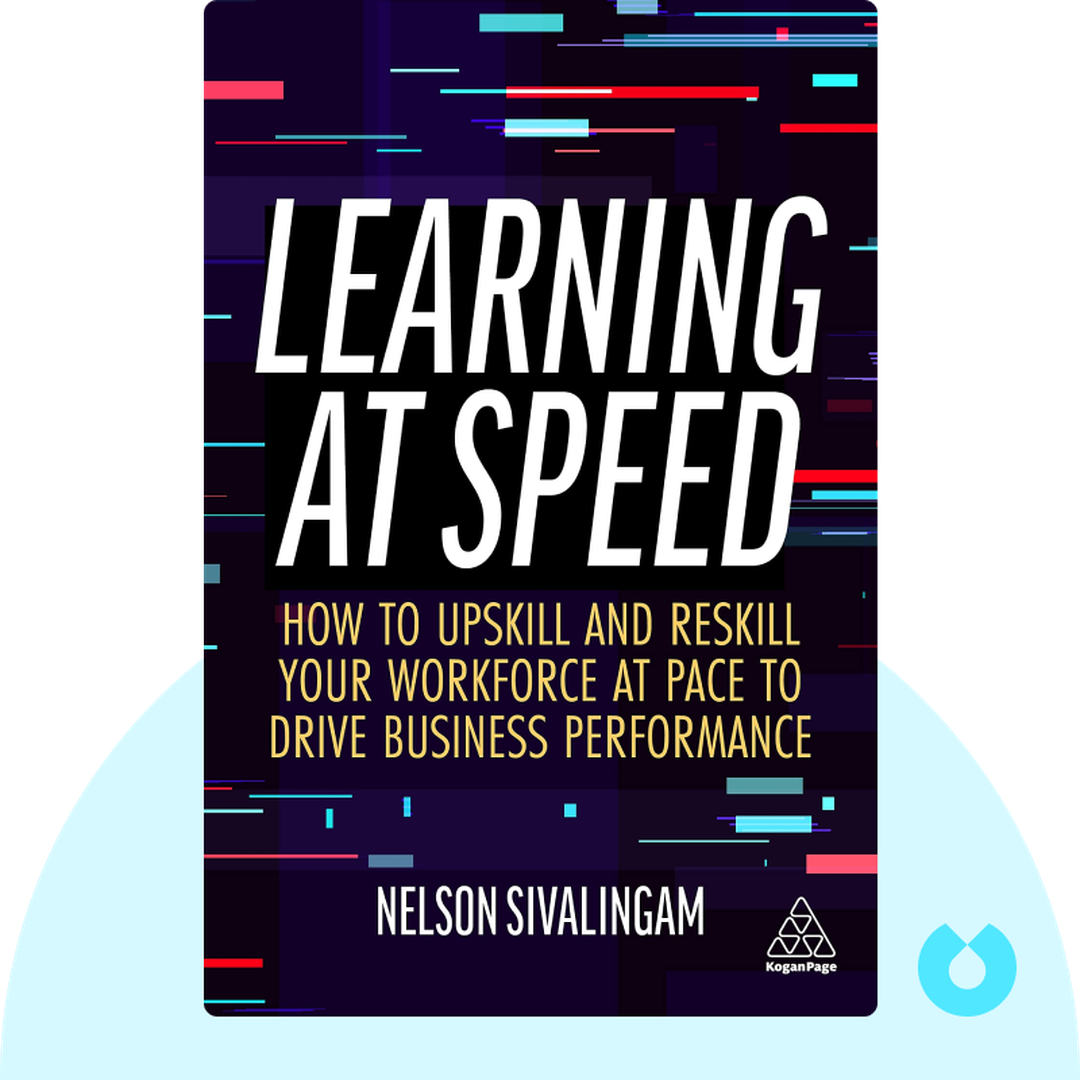
Learning at Speed (2022) is your guide to professional learning and development in the modern world. By adopting a lean methodology inspired by startups, L&D can help businesses thrive.
Who Should Listen to Learning at Speed?
- Learning and development professionals in search of new ideas
- Managers looking to upskill their staff
- Business professionals seeking to understand modern L&D
Books Similar to Learning at Speed
Readers who enjoyed this also liked these titles.