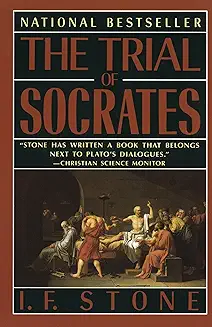
If You're Curious About These Questions...
You should listen to this audiobook
- Have you ever wondered why Athens, the historic cradle of free speech, suddenly decided to execute its most famous philosopher for simply asking questions?
- Did you know that Socrates’ trial might have been less about 'truth' and more about his dangerous connections to the violent coups that nearly destroyed Athenian democracy?
- Are you curious about the 'missing' evidence the defense ignored—and why the prosecution believed Socrates was a genuine threat to the city’s survival?
Listen to The Trial of Socrates — Free Audiobook
Key Takeaways from The Trial of Socrates
- — The Hemlock Problem
- — A Reporter Learns Greek
- — Four Socrateses, One Missing Prosecution
- — Socrates vs. The Polis
- — Homer, Thersites, and the Hidden Clue
The Trial of Socrates — Full Chapter Overview
Chapter 1: Recommendation
Chapter 2: The Hemlock Problem
Chapter 3: A Reporter Learns Greek
Chapter 4: Four Socrateses, One Missing Prosecution
Chapter 5: Socrates vs. The Polis
Chapter 6: Homer, Thersites, and the Hidden Clue
Chapter 7: Virtue, Knowledge, and the War on Definitions
Chapter 8: Sparta Envy and Civic Withdrawal
Chapter 9: The Three Earthquakes
Chapter 10: Anytus, the Close Vote, and the Freedom-of-Speech That Never Came
The Trial of Socrates Summary & Overview
The Trial of Socrates is I. F. Stone’s investigative reconstruction of how a famously free society put its most famous philosopher to death. Working like a reporter, Stone compares the surviving portraits of Socrates—Plato’s loving drama, Xenophon’s memoir, Aristophanes’ comedy, and Aristotle’s cooler assessments—then asks what the defense accounts omit: the Athenian side.
Stone argues the clash was not just “philosophy vs. ignorance.” It was political and civic: Socrates’ distrust of democracy, his admiration for rule by “the one who knows,” his contempt for popular rhetoric, and the shadow cast by his associates Critias and Alcibiades in the city’s recent traumas. The book tracks the philosophical disputes (virtue, knowledge, definition) and ties them to the instability of Athens after coups and civil violence—showing why the trial erupted late, when Socrates was seventy.
Who Should Listen to The Trial of Socrates?
- Listeners who love history told like an investigation—sources compared, contradictions exposed, and motives reconstructed.
- Students of democracy, civil liberties, and political thought who want the Socrates case framed as a crisis of civic order, not a simple morality play.
- Readers of Plato and Greek tragedy who want context: Athens’ assemblies, courts, coups, and the cultural meaning of “free speech.”
Books Similar to The Trial of Socrates
Readers who enjoyed this also liked these titles.
In a tense, searching conversation led by Socrates, a group of Athenians tries to prove whether justice actually makes a person happier—then follows the question to its extreme: designing a whole city around virtue, education, and the shocking idea that philosophers must rule.
Philosophical Insights on Death
Explore a Labyrinth of Absurdity in This Timeless Legal Odyssey
A foundational work in the history of Western political philosophy