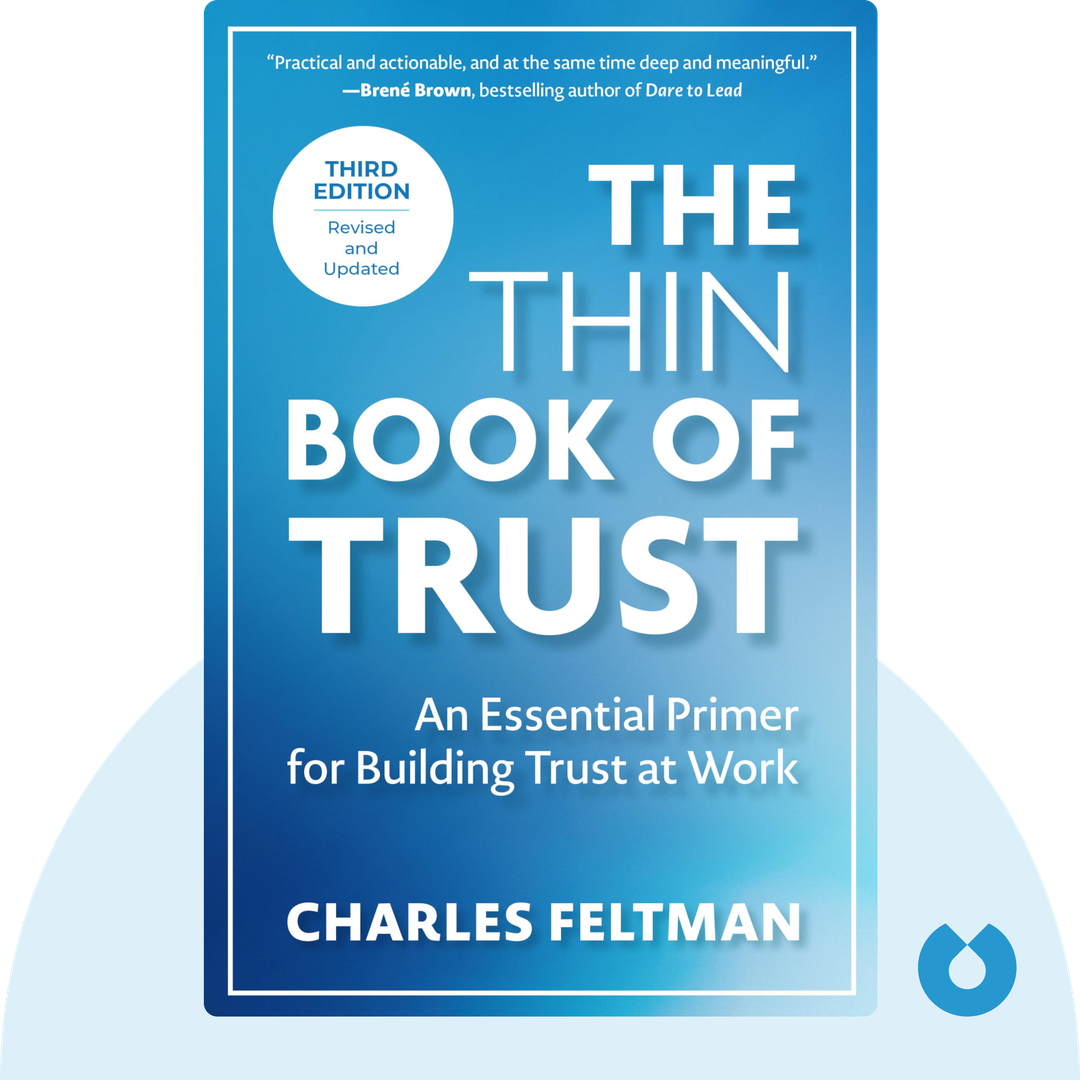
The Thin Book of Trust
Start ListeningDownload Try free on iPhoneScan to start in 5 seconds
Categories:
If You're Curious About These Questions...
You should listen to this audiobook
- What's the secret to building unshakable trust at work using just four simple yet powerful attributes?
- Have you ever wondered why even the most competent professionals sometimes fail to gain their team’s trust?
- What if you could pinpoint the exact reason a professional relationship is failing and know precisely how to fix it?
Listen to The Thin Book of Trust — Free Audiobook
Loading player...
Key Takeaways from The Thin Book of Trust
- Discover how to actively build workplace trust by mastering its four distinct, measurable attributes: care, sincerity, reliability, and competence.
- Understand why 'care' is the most crucial element of trust, and learn how to demonstrate it by actively listening and prioritizing mutual interests.
- Learn to evaluate trustworthiness as a nuanced, multi-faceted trait rather than an all-or-nothing judgment, allowing you to maintain working relationships even when coworkers falter in one specific area.
- Master the attribute of sincerity by ensuring your internal thoughts align with your spoken words, preventing hidden discrepancies from leaking into your body language and undermining your credibility.
- Utilize a practical two-column reflection exercise to evaluate your past conversations and ensure you are communicating with genuine honesty and integrity.
Learning Tools
Reinforce what you learned from The Thin Book of Trust
Mind Map
The Thin Book of Trust
Core Principles of Trust+
Care+
Sincerity+
Reliability+
Competence+
Quiz — Test Your Understanding
Question 1 of 7
What revealing finding did Charles Feltman discover when he surveyed people about trustworthiness in the workplace?
Question 2 of 7
How does the book define 'trust' in the context of workplace relationships?
Question 3 of 7
Which of the following best describes the 'all-or-nothing' nature of trust according to the book?
Question 4 of 7
Out of the four attributes of trust, which one is considered the most important for building a solid foundation of trust?
Question 5 of 7
What is the primary purpose of the 'what I thought' versus 'what was said' exercise recommended in the section on Sincerity?
Question 6 of 7
According to the section on Reliability, what is a primary reason that workplace promises frequently get broken?
Question 7 of 7
What lesson does the story of Luisa, the newly promoted director, teach about the 'Competence' attribute of trust?
The Thin Book of Trust — Full Chapter Overview
- 1Recommendation
- 2The structure of trust
- 3Care
- 4Sincerity
- 5Reliability
- 6Competence
The Thin Book of Trust Summary & Overview
The Thin Book of Trust (2008) provides a framework for building trust at work. By focusing on four different attributes – care, sincerity, reliability, and competence – you can improve your relationships and create a culture of trust in the workplace.
Who Should Listen to The Thin Book of Trust?
- Leaders who want to improve the culture in their workplace
- People aiming to create stronger, trust-based working relationships
- Anyone who wants to understand the nature of trust
Books Similar to The Thin Book of Trust
Readers who enjoyed this also liked these titles.