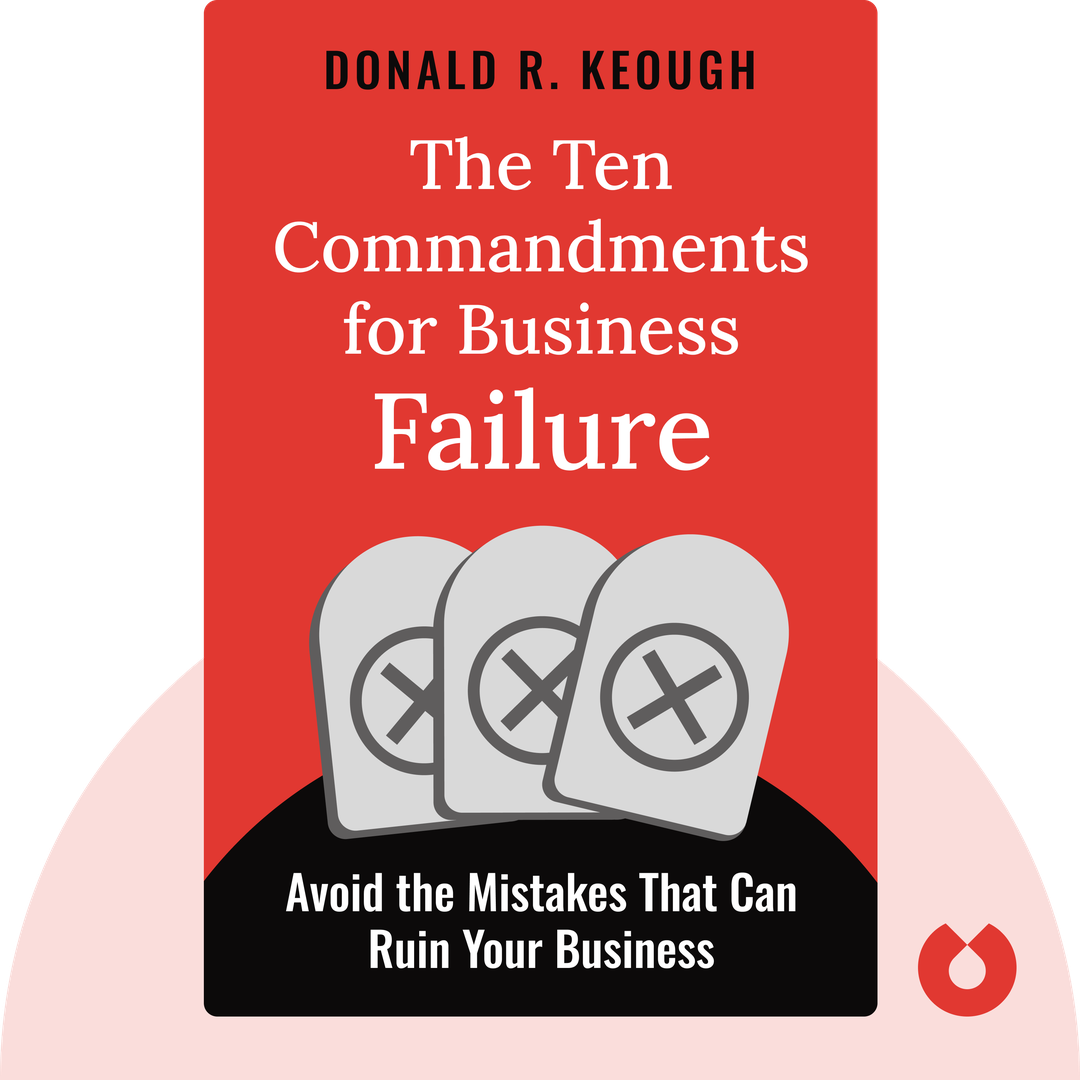
The Ten Commandments for Business Failure
Start ListeningDownload Try free on iPhoneScan to start in 5 seconds
Categories:
If You're Curious About These Questions...
You should listen to this audiobook
- Have you ever wondered why some of the most successful companies in history suddenly crumble, even when they seem to be doing everything right?
- What if the secret to lasting business success isn't about following a growth strategy, but about identifying the ten specific behaviors that guarantee failure?
- Are you curious about the hidden leadership traps that cause even seasoned executives to lose their competitive edge and unintentionally sabotage their own organizations?
Listen to The Ten Commandments for Business Failure — Free Audiobook
Loading player...
Key Takeaways from The Ten Commandments for Business Failure
- Discover a counterintuitive playbook for business success that focuses on the spectacular leadership missteps and hazards you must avoid at all costs.
- Understand why isolating yourself in an executive bubble guarantees failure by cutting you off from the unvarnished truth of your company's operations.
- Learn how to build deep employee trust and loyalty by stepping out of your office to engage directly with the messy, vital reality of daily business.
- Realize the danger of the infallibility mindset and see why refusing to admit mistakes can force catastrophic consequences, such as Coca-Cola's historic product recall.
- Find out how sending mixed messages and cutting corners destroys customer trust and alienates stakeholders, as demonstrated by the sudden collapse of Schlitz brewing.
Learning Tools
Reinforce what you learned from The Ten Commandments for Business Failure
Mind Map
The Ten Commandments for Business Failure
Isolate Yourself+
Assume Infallibility+
Send Mixed Messages+
Be Fearful of the Future+
Cultivate Passionate Leadership+
Quiz — Test Your Understanding
Question 1 of 6
What is Donald Keough's unique approach to teaching business strategy in the book?
Question 2 of 6
According to the text, what is a primary danger of a leader isolating themselves within an 'executive bubble'?
Question 3 of 6
What lesson can be learned from the examples of Coca-Cola in Belgium and the Schlitz brewing company?
Question 4 of 6
How did the Coca-Cola soda fountain department inadvertently send 'mixed messages' to the market in the late 1960s?
Question 5 of 6
How does the text describe the impact of overwhelming fear on business leadership?
Question 6 of 6
Which practice does the text recommend to help leaders maintain a strong, passionate connection with their customer base?
The Ten Commandments for Business Failure — Full Chapter Overview
- 1Recommendation
- 2Isolated leaders breed toxic workplaces and failing companies
- 3The surest way to alienate your customers? Assume you’re always right
- 4Mixed signals breed confusion and erode trust
- 5There is no surer way to fail in life and business than fear itself
- 6Successful organizations are led by passionate leaders
The Ten Commandments for Business Failure Summary & Overview
The Ten Commandments for Business Failure (2011) is a light-hearted “how-not-to” business guide that illustrates how companies prosper – or falter. Packed with insights into the pitfalls even seasoned executives overlook, it offers a unique perspective on the art of business.
Who Should Listen to The Ten Commandments for Business Failure?
- Business leaders seeking insights on avoiding common pitfalls
- Entrepreneurs interested in learning from past corporate failures
- Executives aiming to improve decision-making and leadership skills
Books Similar to The Ten Commandments for Business Failure
Readers who enjoyed this also liked these titles.